

AppLovin's Stock Plunge Amid Weak Guidance
Tuesday, August 18, 2026
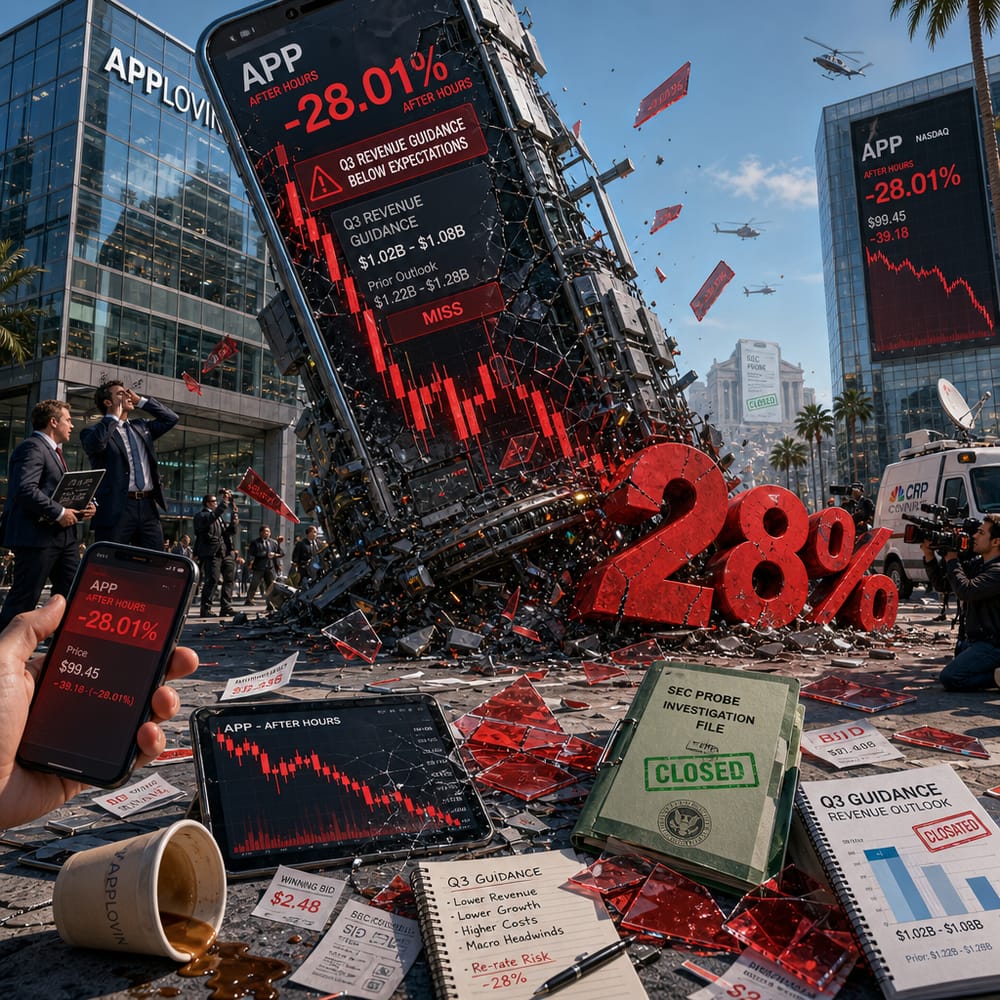
APPLOVIN'S STOCK PLUNGE: WHEN GOOD NEWS JUST ISN'T GOOD ENOUGH
What's a tech company got to do to keep investors happy these days? For AppLovin Corp., apparently, sidestepping a Securities and Exchange Commission (SEC) probe isn’t enough. After closing the pesky probe without a slap on the wrist, you’d think investors might let out a collective sigh of relief. Instead, AppLovin’s stock took a nosedive of 28% in after-hours trading—not exactly the ticker tape parade they were hoping for.
Here's the catch: The market's not mad about the SEC. Oh no, it’s the company's gloomy Q3 revenue prediction that’s got them shaking their fists. A little like walking out of a courtroom scot-free only to get hit by a bus. The shocking reality? In the world of Wall Street, tomorrow's numbers matter more than today's good news.
WHY THE GLOOMY GUIDANCE?
Let’s dive into the nitty-gritty. AppLovin has been waving its tech wand in the mobile app world, helping developers market their apps and monetize them through advertising. So far, so good. But it seems the magic spell is losing a bit of its sparkle. As ad spend faces a bit of a slowdown, coupled with increased competition, AppLovin’s revenue predictions were more "meh" than "marvelous."
Every seasoned investor knows that guidance is like a fortune cookie message for the next quarter—sometimes sweet, often cryptic, but always influential. And in the cutthroat tech sector, even the slightest whiff of revenue shrinkage can send investors running for the hills. Add to that the macroeconomic backdrop—with rising bond yields and inflationary jitters—and you’ve got the perfect cocktail for cautious investing.
THE SEC PROBE: A MINOR FOOTNOTE
Now, about that SEC probe. In any other context, an investigation closure without penalties would be like finding a $20 bill in your winter coat pocket—unexpectedly delightful. But in this case, it barely moved the needle on investor sentiment. Why? Because in the labyrinthine world of stocks, it’s all about future potential, not just past hurdles.
MARKET REACTION: EXPECTED OR EXCESSIVE?
Why such a dramatic sell-off? It all comes down to one thing: sensitivity. Investors are as jumpy as a cat on a hot tin roof, especially with tech stocks that can ping-pong on a whisper of good or bad news. A guidance cut, no matter how slight, is often met with a magnified market reaction, as if investors collectively shout, “Abandon ship!”
Imagine if every market reaction was this sensitive—Amazon announces slower shipping speeds, and suddenly everyone’s convinced Bezos is personally delivering packages on rollerblades. But jokes aside, this is just the kind of volatility that keeps retail investors, the ones scrolling through Robinhood on their lunch break, on their toes.
WHAT’S NEXT FOR APPLOVIN?
So, does AppLovin have a path to redemption, or are they now on the Wall Street naughty list indefinitely? The company has a few tricks left up its sleeve. Diversifying their app portfolio, investing in new technology, and tightening their grip on costs could help steady the ship. And let’s not forget, the tech world loves a good comeback story.
Plus, if they manage to weather this storm, AppLovin could emerge leaner, meaner, and ready to reclaim investor confidence. Remember, stock market fortunes are often one earnings report away from redemption—or ruin.
THE BIGGER PICTURE
AppLovin’s tumble is a cautionary tale of market sentiment’s power. In today’s fast-paced financial world, a company's forecast can overshadow even the most positive developments. It's a game of expectations, where you’re only as good as your next quarter.
For everyday investors, the lesson here? Stay informed, stay diversified, and don’t panic with every market gyration. After all, today’s low might just turn into tomorrow’s opportunity. So, keep your eyes on the ball, or in AppLovin's case, the app.
This article is for informational purposes only and is not investment advice. Always do your own research or consult a licensed financial professional before making investment decisions.
© Copyright 2024. All Rights Reserved.
© Copyright 2024. All Rights Reserved.