

Applied Materials (AMAT): Q3 Results Disappoint — Shares Slide
Tuesday, August 18, 2026
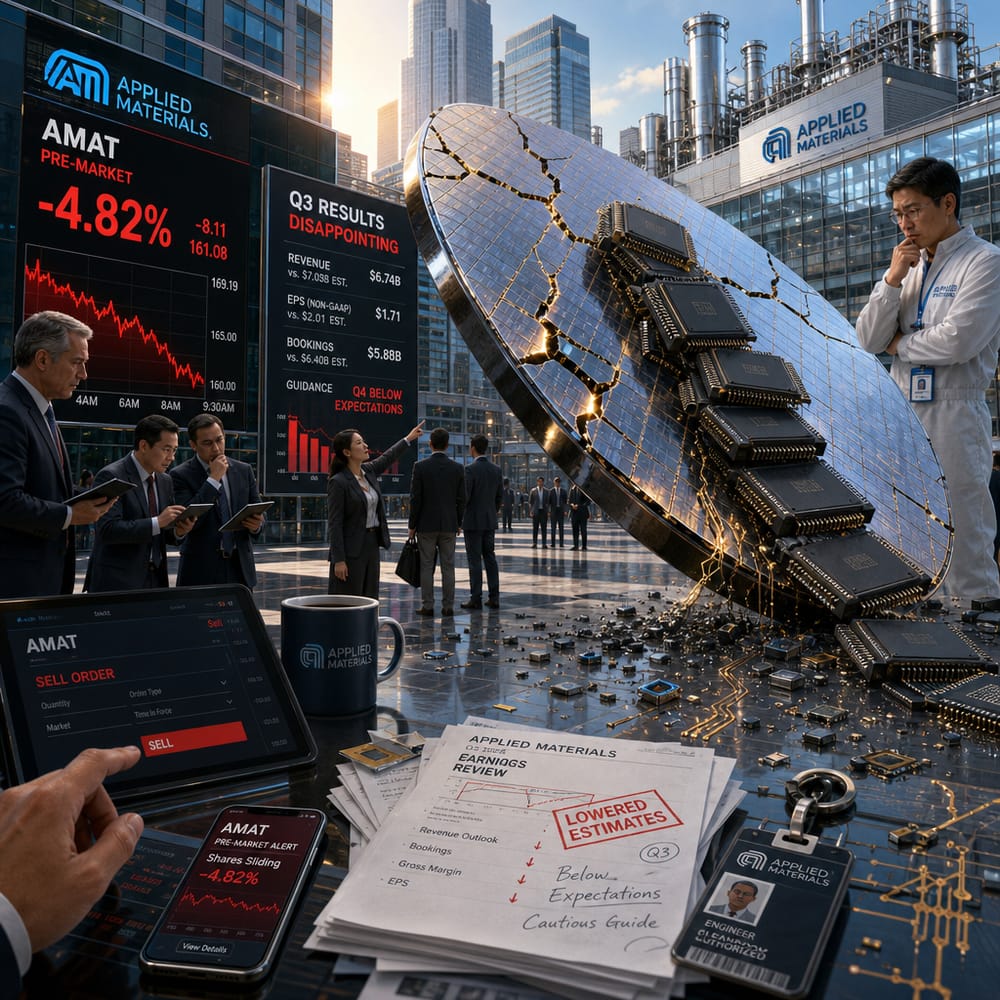
EARNINGS PITFALL: APPLIED MATERIALS SLUMPS AFTER Q3 MISS
There's nothing like a sprinkle of bad news to start your morning. If you were expecting rainbows and unicorns from Applied Materials' latest earnings report, think again. The semiconductor equipment titan released its third-quarter results, and let's just say, the markets were not amused. Investors had their hopes set sky-high, but the numbers fell short, causing Applied Materials' stock to stumble down by about 5% in pre-market trading.
WHAT WENT WRONG?
While the semiconductor industry has been on a wild ride with demand peaking and plunging, Applied Materials (AMAT) seemed poised to ride the wave to glory. But even the giants trip, and this time it was an earnings miss that clipped their wings. So what happened?
First, let's talk about the elephant in the room — supply chain snarl-ups and elevated material costs. Despite signs of recovery, the semiconductor supply chain is a tangled mess that even the sharpest of minds struggle to navigate. Add to that the rising costs of raw materials, and you've got a recipe for squeezed margins. It seems that this was one headache too many for AMAT, and it showed in their earnings.
Beyond the supply issues, there's the broader market context. The S&P 500 has been feeling the heat from bond yields and oil prices flirting with new highs. This kind of macroeconomic tango isn't kind to tech stocks, and AMAT is no exception. As bond yields rise, investors start to expect more from stocks — and when they don't deliver, well, you see what happens.
THE AFTERSHOCKS: GUIDANCE AND SENTIMENT
Now that Applied Materials has stubbed its toe, what does it mean for the future? For starters, analysts might retreat to their drawing boards to reassess their projections. Was the miss a mere blip on the radar, or a sign of rough seas ahead? There might be revisions in guidance, margins, or capital expenditure assumptions to better align with the gritty realities of operating in today’s semiconductor market.
But this isn’t just about numbers and graphs. Investor sentiment can be as fickle as a cat in a room full of rocking chairs. AMAT's stumble might not just trigger re-evaluations by analysts but also skepticism among investors. Confidence, once dented, takes time to heal, and in such a volatile environment, patience is often in short supply.
RISKS ON THE HORIZON
Every silver lining has its cloud. The supply chain issues that contributed to AMAT’s earnings miss aren't going to disappear overnight. If anything, they might intensify as geopolitical tensions and economic uncertainties continue to simmer.
There's also the looming specter of a global recession, which could dampen demand for semiconductors and, by extension, the equipment used to manufacture them. If consumers and businesses tighten their belts, AMAT and its ilk could feel the squeeze.
THE SILVER LINING: OPPORTUNITIES AHEAD
But let's not get drowned in doom and gloom. AMAT's current dip could be a golden ticket for the opportunistic investor. As Warren Buffet famously quipped, "Be fearful when others are greedy, and greedy when others are fearful." With AMAT’s stock taking a hit, adventurous investors might find a window to buy at a relative discount, banking on the company’s long-term prospects.
The megatrends driving semiconductor demand — think AI, 5G, and cloud computing — aren’t going away. These technological revolutions need chips, and as long as the world remains digital-hungry, AMAT will have a market.
CONCLUSION
So there you have it: Applied Materials might be licking its wounds from an earnings miss, but all is not lost. For investors with a stomach for volatility and an eye on the bigger picture, AMAT’s stumble could just be the opportunity they’ve been waiting for. As always, stay informed, keep your wits about you, and remember that in the stock market, fortune favors the bold.
This article is for informational purposes only and is not investment advice. Always do your own research or consult a licensed financial professional before making investment decisions.
© Copyright 2024. All Rights Reserved.
© Copyright 2024. All Rights Reserved.