

Apple’s Supplier Breach: Why the iPhone 18 Leak Is Bigger Than a Gadget Story
Tuesday, June 30, 2026
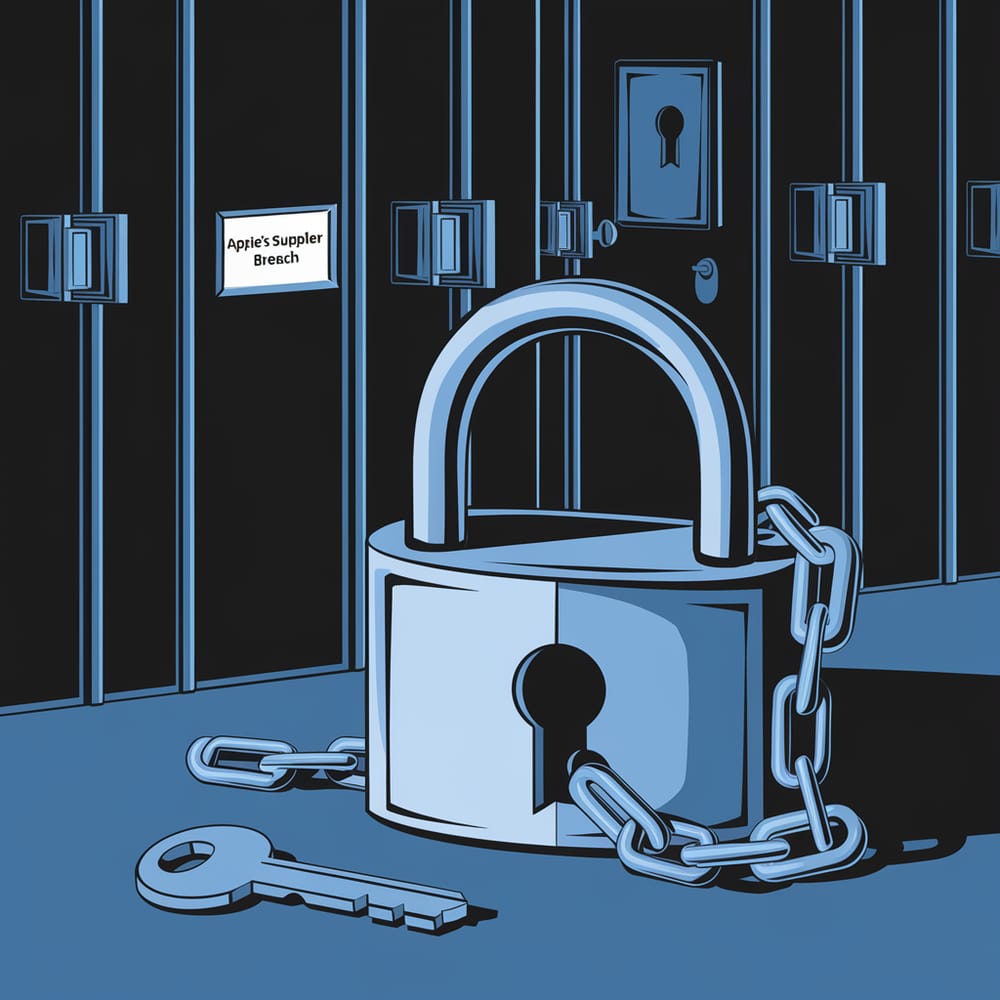
It would be easy to treat this like another Apple rumor cycle.
A leaked photo here. A parts list there. A blurry image of an unreleased iPhone floating around the internet. For most consumer-tech watchers, that is the usual pre-launch circus.
But this one is different.
The reported leak tied to Apple supplier Tata Electronics is not just about what the iPhone 18 Pro might look like. It is about something much bigger: whether the world’s most valuable consumer hardware company can still protect product secrecy across a sprawling global manufacturing network.
That is why investors should not look at this as a gadget story.
They should look at it as a supply-chain cybersecurity story.
Apple’s magic has always been partly built on control. Control over design. Control over hardware. Control over software. Control over suppliers. Control over the launch narrative. When that control gets disrupted, even slightly, Wall Street pays attention.
The question now is simple: did this breach merely expose some embarrassing product-development material, or did it reveal a deeper cyber-risk sitting inside Apple’s global supply chain?
The Leak Behind the Leak
Apple leaks happen all the time.
A case mold appears online. A dummy unit shows up before launch. A supplier rumor hints at camera changes. An analyst note predicts screen sizes, chip upgrades, or production volumes.
That is normal.
What is not normal is a supplier breach reportedly exposing internal files, component information, supplier lists, testing materials, and manufacturing-related documents tied to an unreleased iPhone.
That shifts the risk category.
A normal product leak can spoil a marketing surprise. A supplier breach can expose the system behind the product: who makes what, which components are being used, how parts are tested, how production is organized, and where Apple’s dependencies sit.
That is far more sensitive.
Apple can live with consumers knowing that the next iPhone may have a new camera layout. Apple has a much bigger problem if competitors, counterfeiters, suppliers, or hostile actors gain insight into component sourcing, board layouts, quality-control standards, manufacturing files, or vendor relationships.
In other words, the device is only the surface story.
The supply chain is the real story.
Product Secrecy Is a Business Asset
Apple’s product secrecy is not just corporate culture. It is strategy.
The company uses secrecy to control launch timing, manage consumer expectations, preserve pricing power, protect supplier negotiations, and create a sense of event-driven demand around new hardware.
When Apple launches an iPhone, it wants the market focused on the story Apple tells — not on months of leaked engineering files, supplier maps, and dark-web screenshots.
That matters because the iPhone is not just another product. It is the center of Apple’s ecosystem. It drives device revenue, services attachment, accessories, upgrade cycles, carrier promotions, and consumer lock-in.
So when unreleased iPhone information leaks through a supplier cyberattack, the risk is not simply that consumers see the phone early.
The risk is that Apple loses control over the information advantage around its most important product cycle.
Even if the leak does not change a single unit of demand, it can still create friction. Apple may need to tighten vendor access, audit suppliers more aggressively, investigate internal controls, change documentation practices, and potentially rethink how much sensitive information sits inside partner systems.
That is costly.
Not necessarily catastrophic. But costly.
The Supplier Weak Link
The uncomfortable truth is that companies like Apple can have world-class internal security and still be exposed through partners.
That is the supplier weak-link problem.
Modern hardware companies do not build everything inside one fortress. They rely on assembly partners, component vendors, testing labs, logistics providers, tooling partners, contract manufacturers, and regional suppliers.
Every one of those partners becomes a potential door.
The bigger and more global the supply chain, the harder it becomes to enforce the same cybersecurity standard everywhere. Apple can write strict rules. Apple can audit. Apple can demand controls. But the attack surface still expands every time sensitive data moves outside Apple’s walls.
That is why this story matters beyond Apple.
Hardware supply chains are becoming a larger cyber-risk category because the crown jewels are no longer only inside corporate headquarters. They are spread across vendors, engineering partners, factories, and manufacturing systems.
A supplier does not need to have access to Apple’s full product roadmap to create risk. It only needs access to one valuable slice of the puzzle.
A parts list here.
A supplier map there.
A test image.
A board layout.
A component specification.
Put enough slices together, and the picture becomes valuable.
Could This Hurt Apple’s Product Strategy?
In the near term, probably not in a dramatic way.
A product leak does not mean Apple suddenly cannot launch the iPhone 18. It does not mean customers will stop upgrading. It does not mean the supply chain is broken. And it does not mean Apple’s competitive position collapses overnight.
But the strategic risk is real.
If sensitive component or supplier information is exposed, Apple may lose some negotiating leverage. Suppliers may know more about Apple’s dependencies. Competitors may gain clues about design direction. Counterfeiters may get better information earlier. Security teams may have to assume leaked documents could be used for social engineering, fraud, phishing, or vendor impersonation.
That last point matters.
A supply-chain breach is not always dangerous because of what it reveals to the public. It can be dangerous because of how attackers use the information afterward.
If threat actors know supplier names, internal file structures, quality-control processes, project codenames, or component workflows, they can craft more convincing attacks. They can impersonate vendors. They can target employees. They can send fake purchase orders, fake engineering requests, fake firmware updates, or fake compliance messages.
The leak becomes a playbook.
That is the part investors should care about.
India Manufacturing Gets a Scrutiny Test
This also lands at a delicate time for Apple’s manufacturing strategy.
Apple has spent years diversifying parts of its supply chain outside China, with India becoming a more important manufacturing hub. That diversification is strategically important because it reduces geopolitical concentration risk, gives Apple more production flexibility, and supports long-term growth in one of the world’s largest smartphone markets.
But diversification creates a new challenge.
Apple cannot simply move production capacity and assume the risk profile stays the same. Every new manufacturing region brings different suppliers, different regulatory environments, different infrastructure, different labor dynamics, and different cybersecurity maturity levels.
That does not mean India is the problem.
It means expansion itself creates complexity.
The more Apple decentralizes its manufacturing footprint, the more important supplier cybersecurity becomes. A diversified supply chain can reduce geopolitical risk while increasing operational and cyber-governance complexity.
That is the tradeoff.
Investors usually focus on whether Apple can move production efficiently. This breach raises another question: can Apple move production while maintaining the same secrecy and control standards that made its hardware machine so powerful?
Cybersecurity Stocks Get a New Angle
This is where the market angle broadens.
A supplier breach at an Apple partner does not automatically mean cybersecurity stocks should explode higher. But it does reinforce the long-term demand case for third-party risk management, identity security, endpoint protection, cloud security, data-loss prevention, and supply-chain monitoring.
Companies like CrowdStrike, Palo Alto Networks, Zscaler, Okta, Fortinet, SentinelOne, and others are not trading on one Apple supplier incident alone. But every high-profile breach reminds boards that cybersecurity is no longer just about protecting internal networks.
It is about protecting the ecosystem.
For large companies, the question is not only, “Are we secure?”
It is, “Are the people connected to us secure enough?”
That is a much harder problem.
Apple may have some of the strictest supplier standards in the world, and yet this story still happened. That is exactly why vendor-risk management is becoming a board-level issue across technology, manufacturing, defense, healthcare, finance, and consumer hardware.
The cybersecurity trade is no longer just ransomware protection.
It is supply-chain protection.
What Investors Should Watch Next
The first thing to watch is whether Apple or Tata provides more detail.
So far, the market appears to be treating the incident as contained rather than operationally damaging. That could change if more sensitive files surface, if production processes are affected, or if regulators begin asking questions.
The second thing to watch is whether Apple tightens supplier controls.
That could mean restricting access to sensitive systems, reducing how much information vendors can store, increasing audits, segmenting project data more aggressively, or requiring stricter authentication and monitoring across supplier environments.
The third thing to watch is whether other Apple suppliers come under cyber scrutiny.
Attackers pay attention. If one supplier breach generates headlines, other suppliers may become more attractive targets. Apple’s manufacturing ecosystem is too valuable for threat actors to ignore.
The fourth thing to watch is whether the leak has any product-cycle impact.
Most likely, the iPhone 18 launch schedule does not hinge on this story. But leaks involving component details, testing materials, or design data could create reputational, legal, or supplier-management headaches.
The fifth thing to watch is whether the market starts pricing cyber risk into hardware supply chains more seriously.
That is the broader lesson.
For years, investors thought about supply-chain risk mostly in terms of tariffs, China exposure, shipping disruptions, labor costs, factory shutdowns, and component shortages. Cybersecurity now belongs in that same conversation.
The Takeaway for Investors
Apple’s supplier breach is bigger than an iPhone leak because it hits the core of Apple’s operating model: secrecy, control, and supply-chain discipline.
The near-term financial impact may be limited. Apple is not suddenly losing its ecosystem. The iPhone 18 is not suddenly derailed. Customers are not going to abandon Apple because a future device appeared online early.
But the strategic warning is real.
Modern hardware supply chains are massive digital networks. They move designs, specifications, testing files, supplier data, quality standards, and manufacturing documentation across companies and countries. That makes them powerful. It also makes them vulnerable.
For Apple, the challenge is not just building the best device. It is making sure the thousands of partners involved in building that device do not become the weakest link.
For investors, the lesson is clear: supply-chain security is now part of the hardware story.
AAPL may still trade on iPhone demand, services growth, margins, AI features, and capital returns. But this breach is a reminder that product secrecy and vendor cybersecurity are also part of the valuation equation.
Apple built its empire on controlling the experience.
Now the market has to ask whether it can keep controlling the information behind it.
This article is for informational purposes only and is not investment advice. Always do your own research or consult a licensed financial professional before making investment decisions.
© Copyright 2024. All Rights Reserved.
© Copyright 2024. All Rights Reserved.