

Apple’s memory-cost price hikes: margin defense or demand risk?
Friday, June 26, 2026
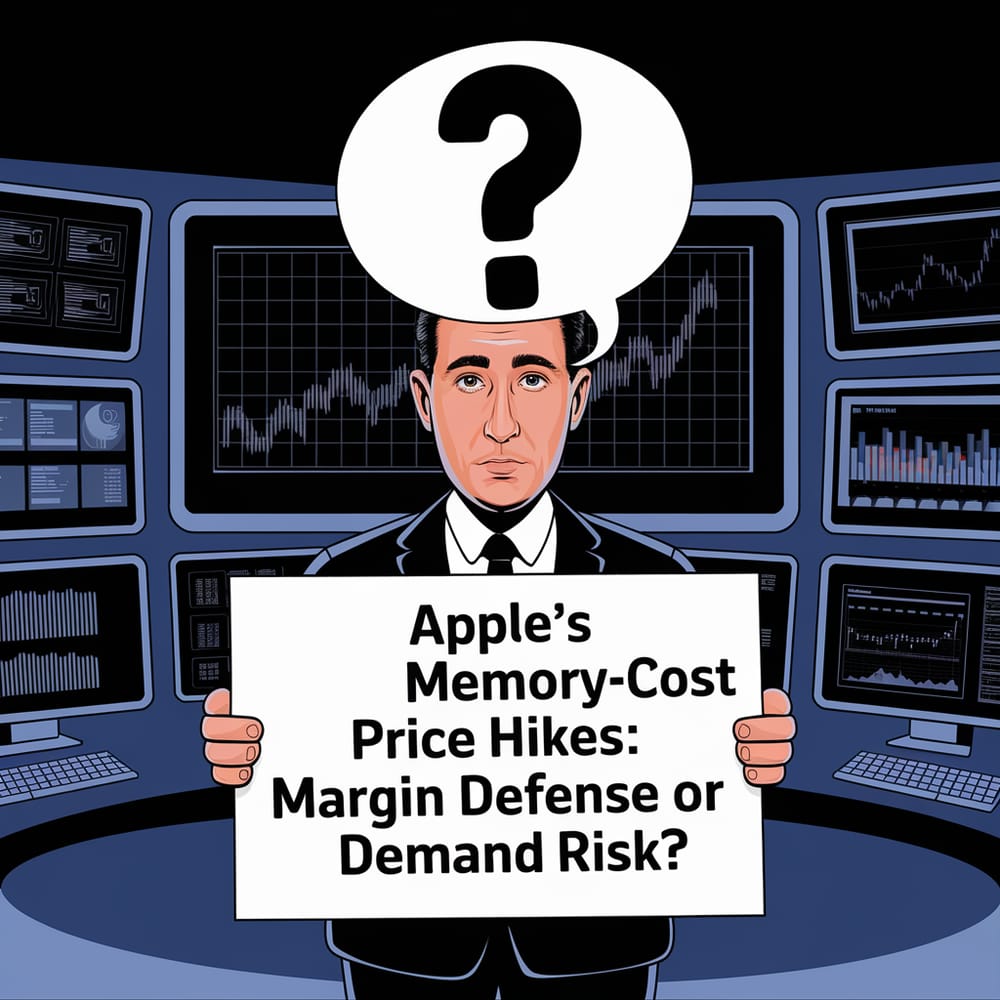
The premium hardware products that were supposed to easily absorb global inflationary pressures while locking in high-margin growth have been doing the opposite lately. Heading into late June, Apple shocked the tech sector by executing a sweeping, uniform overnight price increase across its iPad and MacBook lineups, blaming a severe memory chip shortage. For a company historically known for using its immense supply chain gravity to shield consumers from component price swings, it has been a sobering reality check.
The scale of the increases
The numbers are striking. Abandoning its standard playbook of reserving price hikes for major generation redesigns, Apple lifted prices for several core products by 15% to 25%. The entry-level MacBook Neo jumped from $599 to $699, while the 512GB MacBook Air rose by $200 to land at $1,299. The iPad lineup suffered a similar blow, with the base iPad Air climbing to $749 and the iPad Pro pushing to $1,199. Industry analysts warn this is just the tip of the iceberg, with firms like UBS and IDC projecting an inevitable $100 to $200 price hike for upcoming iPhone models this fall to combat the component crisis.
What it did to the price
The aggressive adjustments left an immediate mark on Wall Street. Apple’s stock plummeted 6.1% in a single session following the announcement—wiping out a staggering $263 billion in market capitalization and triggering a broader tech selloff across the Nasdaq. While Apple suffered its second-largest valuation drop on record, the pain crossed the Pacific, briefly suspending trading on South Korea’s Kospi index due to tech volatility. Conversely, the memory suppliers squeezing consumer hardware makers saw a massive wind: Micron surged after reporting a 15-fold increase in quarterly profits, highlighting a stark divergence in the tech supply chain.
Why Apple is forcing the consumer to pay
Several forces are at work behind this phenomenon, widely dubbed "RAMageddon." The rapid and massive buildout of AI infrastructure has created an insatiable demand for advanced high-bandwidth memory (HBM). With finite manufacturing facilities, the big three memory giants—Micron, Samsung, and SK Hynix—are prioritizing high-margin server chips for AI hyperscalers over consumer-grade DRAM and NAND flash. This supply crunch has caused memory costs to rise up to sixfold over the past year. With projections showing that memory could jump from 15% to more than 45% of an iPhone's total manufacturing cost by 2027, Apple had no choice but to pass the inflation down to protect its coveted gross margins.
Signs of resilience
It is not all downside for the tech giant. Despite the shock of the price hikes, Wall Street bulls argue Apple possesses a unique weapon: unparalleled pricing power. Analysts note that with the rollouts of upgraded Siri AI capabilities, a large cohort of existing Apple users are already primed for a necessary upgrade cycle. Because a vast majority of these devices are financed through multi-year carrier installment plans, a $100 to $200 increase distributed over 36 months may not be a major barrier to sales. Furthermore, Apple's high-margin Services ecosystem continues to expand, offering a reliable financial buffer even if hardware unit sales take a minor short-term hit.
What it means for consumer tech investors
The episode underscores a key truth: consumer hardware is no longer insulated from the AI infrastructure boom. The massive capital expenditures of software giants are directly penalizing traditional hardware supply chains. For tech investors, this means the era of banking on cheap storage and memory to pad consumer electronic margins is officially over. Moving forward, assessing a tech stock requires analyzing its component securement contracts, retail demand elasticity, and luxury brand loyalty just as closely as its software ecosystem.
The bottom line
A 25% price hike on fundamental consumer hardware is a dramatic gamble that tests the limits of Apple's brand loyalty. While the move defends near-term margins against an unprecedented chipflation crisis, it introduces genuine demand risks ahead of the critical fall upgrade cycle. As always with hyper-extended tech supply chains, volatility cuts both ways, and position sizing matters more than ever.
This article is for informational purposes only and is not investment advice. Consumer technology and equity markets are highly volatile and risky. Always do your own research or consult a financial professional before making investment decisions.
© Copyright 2024. All Rights Reserved.
© Copyright 2024. All Rights Reserved.