

Apple’s Margin Squeeze: “Unprecedented” RAM Cost Surge Hits Investors
Friday, November 06, 2026
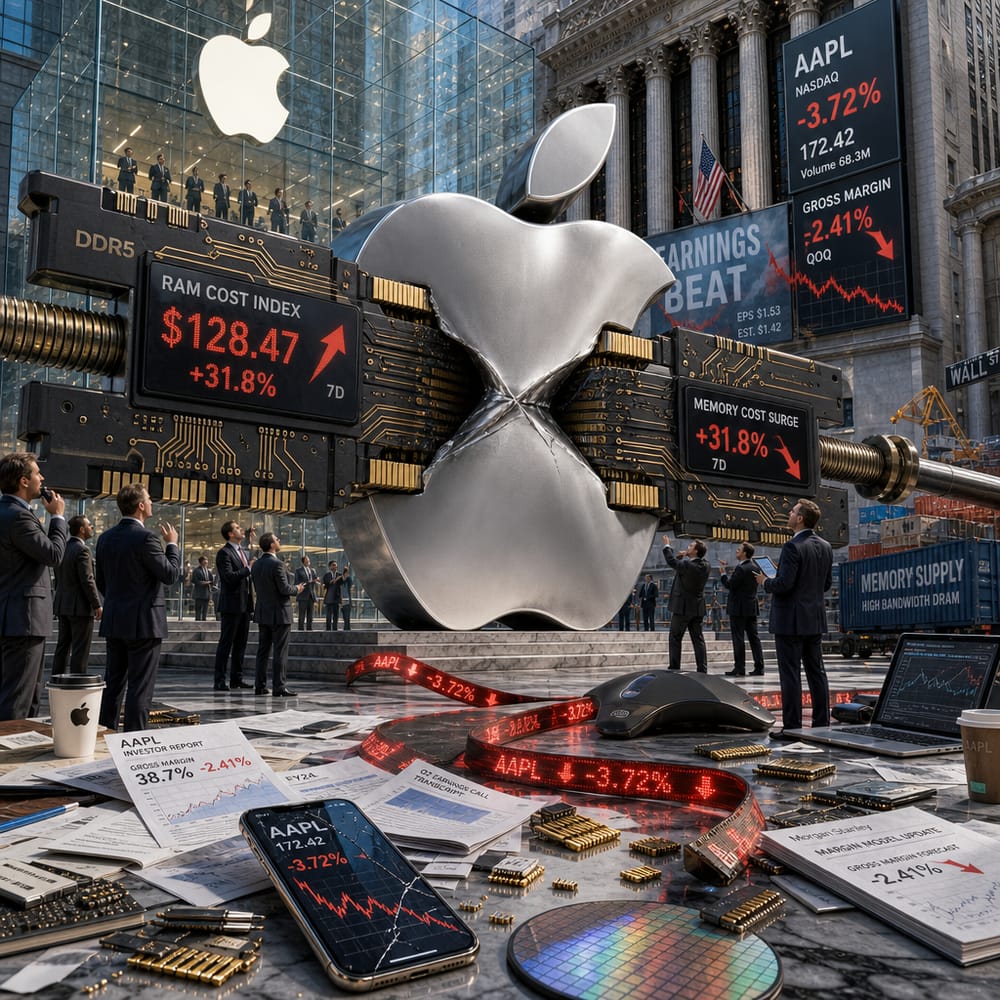
APPLE'S MARGIN SQUEEZE: "UNPRECEDENTED" RAM COST SURGE HITS INVESTORS
If you thought Apple's latest earnings call would be a victory lap after outpacing Wall Street's revenue forecasts, think again. Hold onto your AirPods, because there's a spicy twist: Apple dropped a bombshell about facing “unprecedented” increases in memory (RAM) costs, souring the sweet music of their earnings beat. This operational hiccup might be the cloud on Apple’s otherwise shiny horizon, and it's sparking a conversation that could ripple through the tech market.
Apple, the perennial darling of Wall Street, just revealed a hurdle that could have Tim Cook reaching for more than his morning espresso. RAM, the unsung hero of your iPhone's seamless operation, is suddenly demanding a bigger slice of Apple's budget pie. And while Apple’s known for its innovative flair, no amount of clever engineering can completely dodge the reality of supply chain economics.
You might wonder why this matters to you, the average investor flicking through stock alerts in the checkout line. Well, a squeeze on Apple's margins could translate to ramifications beyond Cupertino. When a titan like Apple feels the pinch, the rest of the tech fleet might as well brace for impact.
STRATEGIES FOR NAVIGATING THE STORM
So, what’s on Tim Cook’s plate for tackling this RAM conundrum? Apple might need to dig into its strategy playbook. One tactic could be diversifying its supplier base to mitigate price hikes. If you can play multiple suppliers against each other, you might just wiggle out with a more favorable deal.
Then there’s the potential for Apple to lean into its sizable cash reserves — think of it as the company's secret sauce for soothing operational headaches. But, relying solely on deep pockets isn't always the most sustainable long-term strategy.
CUTTING COSTS WITHOUT CUTTING CORNERS
Apple might also consider tinkering with its product lineup. Could we see a push towards models with lower RAM configurations marketed as budget-friendly options? It’s a possibility. Apple has a history of enticing its customers with tiered pricing and convincing them to shell out a few extra Benjamins for those sweet, sweet upgrades.
But raising product prices to offset costs? That’s a delicate dance. Apple has to balance between maintaining its premium brand image and not scaring off its loyal fan base. With iPhone sales being the company’s backbone, any misstep in pricing strategy could cascade through its financials.
RIPPLE EFFECTS IN THE TECH WORLD
The ramifications of Apple’s RAM predicament could ripple across the tech landscape. If Apple’s feeling the squeeze, smaller tech firms might be squashed under the weight of similar cost increases. In an industry where margins are king, rising costs could spell disaster for lesser-resourced companies.
Moreover, Apple's predicament could compel other tech giants to reassess their supply chains. The need for more efficient, cost-effective manufacturing processes might spark innovation in itself, potentially leading to industry-wide shifts in how tech products are made.
WHAT'S NEXT FOR INVESTORS?
For those with a keen eye on Apple stocks, the RAM debacle adds a layer of nuance to investment strategies. Investors now have to weigh Apple's robust earnings performance against these unexpected operational headwinds. And while Apple has famously navigated past challenges with grace, this RAM cost drama is a reminder that no company, not even Apple, is immune to the whims of global supply chains.
The broader question remains: can Apple’s innovation and brand loyalty outpace the financial pressures of soaring component costs? Investors will be watching closely, looking for signs of strategic pivots or unexpected innovations.
As Apple charts its course through these choppy financial waters, the tech sector and its investors will be there, riding the waves alongside them. Whether we're on the cusp of a tech sector shake-up or just witnessing another chapter in Apple's storied resilience, one thing's for sure – this RAM story is far from over.
This article is for informational purposes only and is not investment advice. Always do your own research or consult a licensed financial professional before making investment decisions.
© Copyright 2024. All Rights Reserved.
© Copyright 2024. All Rights Reserved.