

Apple's Earnings Preview Amid Economic Stress
Friday, July 10, 2026
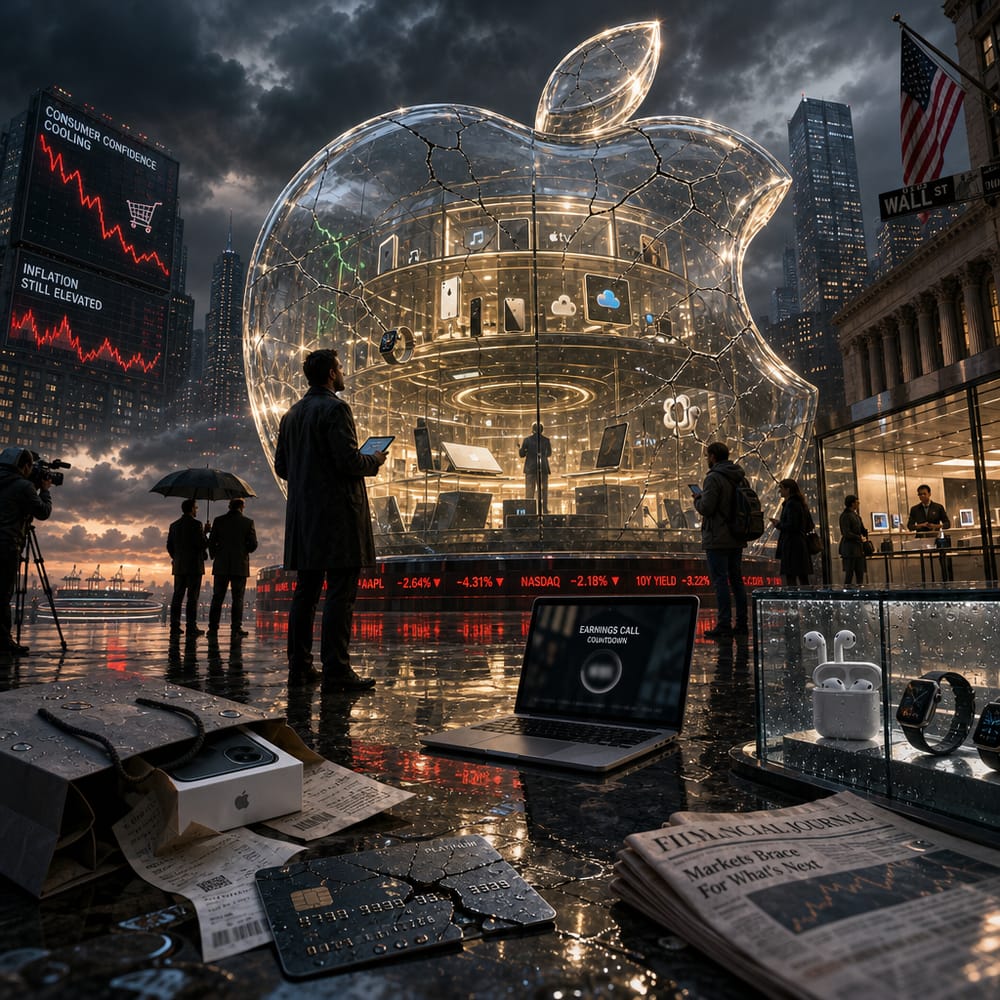
APPLE'S EARNINGS PREVIEW AMID ECONOMIC STRESS
Listen up, Apple fans and stock market watchers alike—grab your AirPods and settle in because it's that time again. Apple's about to spill the beans on its earnings, and this one might just have more plot twists than the latest season of your favorite streaming show. The tech titan's performance isn't just about shiny new gadgets; it's a pulse check on the entire market. So what should we expect? Let's dive in.
THE ECONOMIC STORM CLOUDS
First, let's set the stage. The global economy is throwing a few curveballs our way. Oil demand's taking its first annual dip since the pandemic, and geopolitical tensions could give the plot more twists than a daytime soap. Apple's earnings, set to be released in the coming days, will offer a sneak peek into how one of the world's most valuable companies is weathering these storms.
In times of economic stress, consumers tighten their belts. The first question on everyone's mind is, how might this affect Apple's sales? The iPhone, Apple's cash cow, isn't exactly a cheap date, even with trade-in deals. If consumers start eyeing their older models like long-lost friends, we could see a dent in sales. But remember, Apple isn't just about hardware anymore.
THE SERVICES SAFETY NET
Ah, services—the unsung hero in Apple's lineup. We're talking about the App Store, Apple Music, Apple TV+, and those tempting iCloud storage plans that always seem to run out of space at the worst times. These have become key players in Apple's strategy to keep the money rolling in no matter what's happening in the broader economy.
With everyone glued to their screens more than ever—thanks, work-from-home life—Apple's services segment has room to grow. It's a steady stream of revenue that doesn't rely on convincing someone to drop a grand on a new gadget every year. It'll be interesting to see if Apple leans even more into this area if hardware sales hit a speed bump.
HARDWARE HICCUPS?
Let's talk about hardware, which still accounts for a significant chunk of Apple's cash flow. From iPhones to MacBooks, these products are bread and butter. However, with the current economic climate, supply chain disruptions and inflation could make producing these goods more costly. Apple has historically managed these issues with finesse, but this time might be different.
Could Apple pivot its strategy or streamline production to save costs? Or will they pass some of those costs onto us, the eager consumers? Watch this space.
RIPPLE EFFECT ON TECH STOCKS
Now, why should you care if Apple sneezes? Because when Apple sneezes, the entire tech sector catches a cold. Apple's performance is a beacon for tech investors. A strong report could buoy tech stocks and send the market soaring. A weak one? Well, you might want to keep that extra coffee handy to deal with the market jitters.
Apple's resilience or vulnerability in these times will set the tone for other tech giants. From Amazon to Facebook (Meta, if you're feeling fancy), they all watch Apple's steps closely. If Apple shows signs of a slowdown, it could spell trouble for the entire sector.
THE BIGGER PICTURE
Let's zoom out. Apple's earnings report is more than just a numbers game. It's a reflection of consumer sentiment and forecasts for future spending. If there's one company that consistently feels the economic pulse, it's Apple.
As investors, it's crucial to watch how Apple adapts. Will they pull a rabbit out of their Silicon Valley hat to keep growing? Or will the economic headwinds be too strong even for this heavyweight?
Whether you're a devoted shareholder or just a curious bystander, Apple's report is one you won't want to miss. The results could give us all a clue about where the economy's headed and what we should expect from one of the most influential sectors on the planet.
So, mark your calendars and keep your notifications on—Apple's earnings are coming, and they're bound to make waves.
This article is for informational purposes only and is not investment advice. Always do your own research or consult a licensed financial professional before making investment decisions.
© Copyright 2024. All Rights Reserved.
© Copyright 2024. All Rights Reserved.