

Apple Expands U.S. Manufacturing with New Houston Facility
Thursday, August 13, 2026
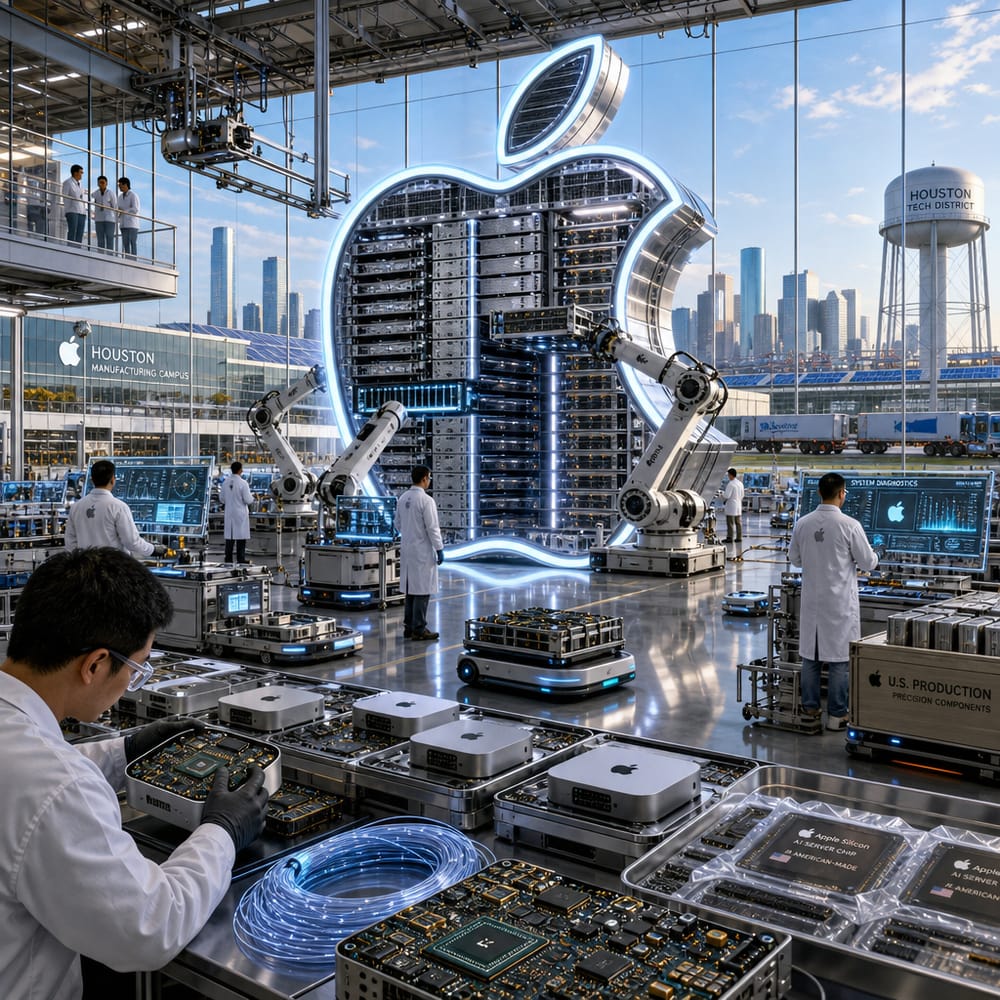
APPLE EXPANDS U.S. MANUFACTURING WITH NEW HOUSTON FACILITY
In an era where the buzzwords of the day might as well be "global supply chain woes," Apple's latest move is making headlines: they've thrown a cowboy hat into the ring with a new manufacturing hub in Houston, Texas. This isn't just a hat tip to the Lone Star State; it's a strategic pivot that could ripple through the tech industry like a Texan twister.
Now, before you start picturing Tim Cook in a ten-gallon hat, let's dive into why this is a big deal for Apple, its investors, and, well, anyone clutching an iPhone or tapping away on a Mac.
THE SUPPLY CHAIN SAGA
Apple's supply chain has long been a global tapestry, woven across the fabric of various countries. But the pandemic eyepoked that tapestry, and subsequent global disruptions nearly unraveled it. Enter Apple's shiny new facility in Houston, aimed at manufacturing Mac Mini desktop computers and advanced AI servers. It's more than just bringing it home; it's about having a backup quarterback ready to play the field should overseas supply chains falter again.
Think of it this way: a localized manufacturing hub means quicker pivots, fewer shipping woes, and less dependency on international assembly lines. The result? A leaner, meaner supply chain that could mitigate risks, save time, and potentially boost profit margins. For investors, that's music to the ears—especially with profit margins being the talk of the street these days.
THE TEXAS TWO-STEP: APPLE STYLE
This isn't just about logistics; it's about reasserting Apple's competitive positioning. By staking a claim in domestic manufacturing, Apple is telling the tech world, "We're here, we're innovative, and we're doing it stateside." It’s a smooth move in the chess game of global tech dominance.
But let’s not forget the real stars of this show: AI servers. As artificial intelligence continues to be the shiny object in tech, Apple's decision to manufacture these servers locally signals a significant commitment to keeping their AI capabilities on the cutting edge. And with AI becoming a critical component in everything from Siri's sass to predictive text features, having control over the production process could give Apple a leg up over its Silicon Valley rivals.
THE RIPPLE EFFECT FOR TECH AND BEYOND
Let's not gloss over the wider implications here. Apple's expansion to Houston isn't happening in a vacuum. It’s part of a broader trend of tech giants hedging their bets against uncertainty by beefing up domestic production. This Texas-sized pivot could entice other companies to follow suit, leading to a tech renaissance in the U.S.
Moreover, this shift could potentially influence investor confidence. Seeing Apple take proactive steps to safeguard its supply chain could reassure investors that the company is not just skating by but is actually skating to where the puck is going. It’s like seeing your favorite hockey player sharpen their skates before the game—it's a sign of readiness.
HOW DOES THE APPLE PIE TASTE NOW?
So, how does this slice of Apple pie taste with a side of Texas charm? For consumers, it means potentially more stable product availability and possibly quicker tech upgrades. For investors, it's a signal that Apple is serious about not just playing the game, but changing it.
And let's be honest, in the tech world, everyone loves a bold move. Apple's Houston facility isn't just about expanding U.S. operations; it's a statement piece. It's about showing that even the biggest tech giants can adapt, evolve, and root themselves firmly in new soil.
So, the next time you're scrolling through your phone or checking Apple stock, remember that somewhere in Houston, in a facility that might just redefine the tech landscape, a little bit of Apple's future is being shaped. And that, dear reader, is no small bite.
This article is for informational purposes only and is not investment advice. Always do your own research or consult a licensed financial professional before making investment decisions.
© Copyright 2024. All Rights Reserved.
© Copyright 2024. All Rights Reserved.