

Apple (AAPL) Downgraded by Morgan Stanley Amid Sector Rotation
Wednesday, August 26, 2026
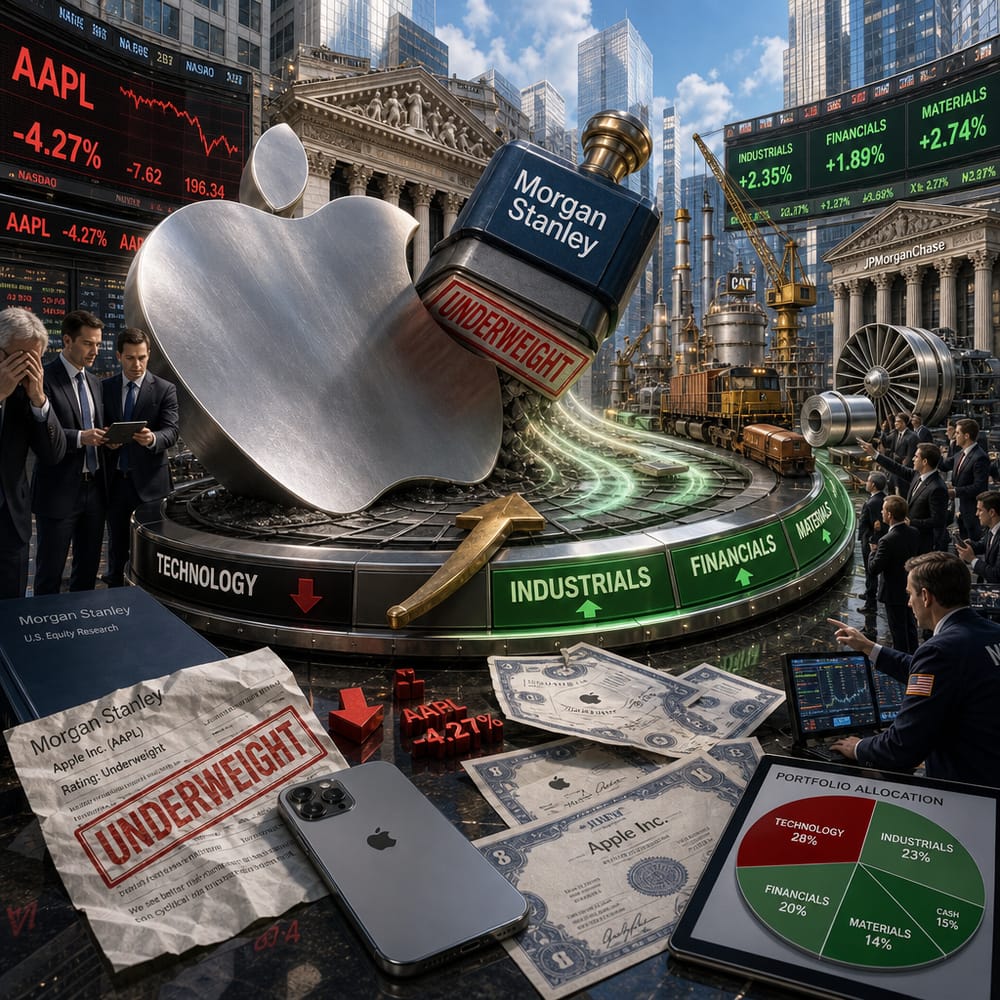
APPLE TAKES A HIT: WHAT MORGAN STANLEY’S DOWNGRADE REALLY MEANS
In a move that sent ripples through techlandia, Morgan Stanley threw a curveball by downgrading Apple (AAPL) to "Underweight." Now, if you're envisioning a scrawny Apple lifting less weight at the stock gym, you're not alone. But hang tight; this isn’t about Apple slacking off on its bench presses. It's about a seismic shift in the investment landscape, one that might make you rethink where to put your hard-earned dollars.
THE REASONS BEHIND THE DOWNGRADE
So, why is one of the most iconic tech behemoths getting a thumbs-down from Morgan Stanley? It’s not like Apple forgot how to make a mean iPhone or suddenly developed an allergy to innovation. The downgrade reflects broader market movements — specifically, a sector rotation away from tech. Investors are peeling their eyes off their beloved iPhones and looking toward cyclical stocks. Think industrial goods, financials, and materials — sectors that do well when the economy's on the upswing.
Morgan Stanley is essentially betting that the days of mega-cap tech stocks like Apple leading the market charge may be on pause, at least for now. With inflation concerns and the Federal Reserve’s monetary maneuvers keeping Wall Street on its toes, investors are sniffing around for stability and potential gains in less tech-focused pastures.
THE BROADER MARKET TREND
You're probably wondering why you should care. After all, Apple’s still rolling out new gadgets and remains a household favorite. But here’s the kicker: Apple’s downgrade is a potential harbinger of what’s to come for the tech sector at large. It suggests a recalibration of investor sentiment — a rebalancing act, if you will, as we navigate through economic uncertainties.
The markets are like a giant seesaw, and right now, the weight is shifting. We’re seeing a move toward cyclicals, stocks that tend to perform well in a growing economy. This playbook is not unfamiliar; it's a classic rotation strategy among seasoned investors aiming to ride economic cycles.
Given recent market data—like the persistently sticky inflation readings—investors are yearning for a little predictability. They want to feel the ground beneath them, rather than the dizzying heights of tech valuations. This shift could potentially bring back the focus on sectors that have been overshadowed by the tech titans’ blinding allure.
APPLE’S NEXT MOVE
Does this mean it’s time to toss your Apple shares and buy stock in a steel mill? Not quite. While the downgrade might have put a dent in Apple’s stock price, it’s far from spelling doom for Cupertino’s crown jewel. Apple’s ability to innovate — from potentially launching its first folding phone to moving AI capabilities up a notch with Siri AI — still makes it a formidable player.
This September, when Apple’s new CEO, John Ternus, takes the stage for his first product launch, investors will be watching closely. A successful event could steer the narrative back in Apple’s favor and remind us why the company is a titan of tech.
THE TAKEAWAY FOR INVESTORS
For retail investors reading the ticker tapes, this downgrade is a prompt to stay agile and informed. Investment portfolios thrive on diversity and adaptation, not steadfast loyalty to one sector. If you’re keen on tech, consider a balanced approach that incorporates different sectors, hedging against market swings.
Remember, Morgan Stanley’s downgrade isn’t a crystal ball prediction that Apple’s about to go the way of the dodo. It’s a reflection of current market dynamics and a nudge to perhaps spread your net a bit wider.
In the wild world of Wall Street, change is the only constant. So, whether you’re an Apple aficionado or just someone trying to make sense of the stock market, keep this in mind: today’s downgrade could be tomorrow’s opportunity. After all, in the realm of investing, the only thing that never changes is the potential for the unexpected.
This article is for informational purposes only and is not investment advice. Always do your own research or consult a licensed financial professional before making investment decisions.
© Copyright 2024. All Rights Reserved.
© Copyright 2024. All Rights Reserved.