

Apple (AAPL) Downgraded by Jefferies
Sunday, August 16, 2026
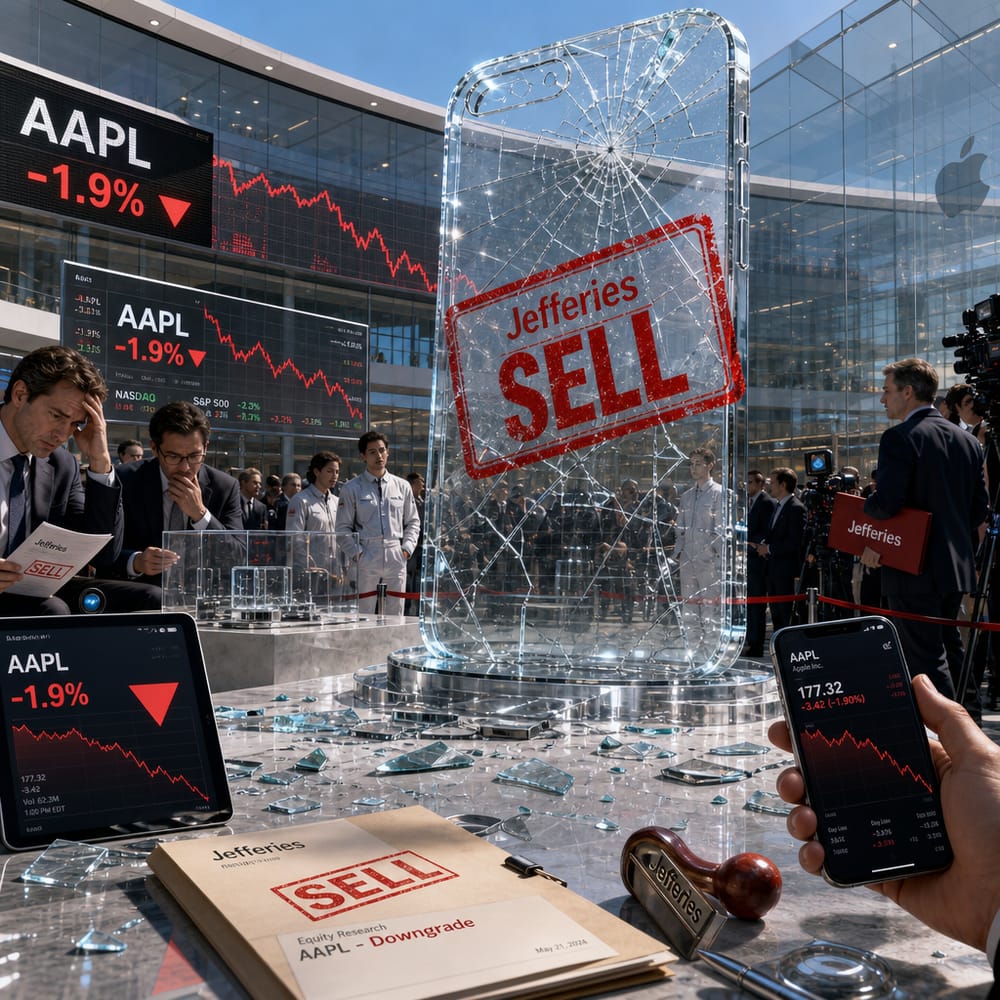
APPLE’S ALL-GLASS AMBITION: A CRACK IN THE STOCK’S ARMOR?
In the world of tech, where innovation is the lifeblood, Apple has long stood as a giant, unyielding and seemingly unflappable. But even giants can stumble, especially when their dreams are a bit too ambitious. Enter Edison Lee, the Jefferies analyst who just took a daring swipe at the tech titan, downgrading Apple to a ‘Sell.’ His reason? Delays in the long-anticipated 'all-glass' iPhone — and the ripples are being felt across Wall Street.
A 1.9% drop in Apple’s stock is no sneeze in the world of finance, folks. That’s billions in market value, evaporating faster than a Snapchat story. But why the panic over what is essentially a design delay? Well, in Apple’s universe, perception is everything.
THE GLASS HOUSE: APPLE'S DESIGN DILEMMA
The ‘all-glass’ iPhone was supposed to be Apple’s shiny new toy, the symbol of its cutting-edge prowess. Imagine an iPhone that is all glass, seamlessly melding with your surroundings, practically invisible until you need it. Sounds futuristic, right? But therein lies the problem: the future is on hold.
A delay in this product means Apple risks losing its edge in the aesthetics arms race that defines the tech industry. A delayed launch not only impacts sales but also shakes investor confidence in Apple’s ability to deliver its next big thing. And in the tech world, where consumers are fickle and competition fierce, slipping behind schedule can be a costly misstep.
GEOPOLITICS AND GLASS
Now, add a bit of geopolitical spice to the mix. Apple has a deeply entrenched supply chain that snakes through China — a country currently at the epicenter of numerous global disputes. Geopolitical tensions can be like a bull in a china shop, causing chaos in delicate supply networks. If trade tensions rise or new tariffs are imposed, the cost and complexity of getting that sleek, glassy gadget into your hands might just go through the roof.
Beyond manufacturing, geopolitical tumult can also impact consumer sentiment. A product delay paired with the backdrop of uncertain international relations can make investors jittery and consumers hesitant to pull the trigger on a purchase.
THE BIGGER PICTURE: TECH SECTOR TURBULENCE
An Apple stumble isn’t just a bruise to a trillion-dollar ego; it’s a signal that resonates across the tech sector. Apple is more than a brand; it’s a bellwether. Analysts scrutinize its every move, and when it falters, it raises questions about the sector at large. If Apple’s innovation engine is stalling, who might be next?
Moreover, the reliance on China for manufacturing isn’t exclusive to Apple. Many tech companies find themselves in similar predicaments, potentially facing the same geopolitical headaches. Any slowdown in Apple’s production could prompt a more comprehensive look at how geopolitical factors threaten tech supply chains globally.
A TRAIL OF ASPIRATIONAL GLASS
So, what does this mean for your portfolio? If you’re holding Apple, this might be a moment to reconsider your strategy. Is this a temporary blip, or does it signal deeper issues within the company’s product pipeline? For the broader technology sector, watch how other companies respond. Are they hedging their bets against similar risks, or doubling down in hopes of gaining ground where Apple falters?
As retail investors, the key is to stay informed and nimble. The tech sector isn’t just about who has the coolest gadget; it’s about who can navigate the rocky terrain of market perceptions and geopolitical challenges with the deftness of a cat on a hot tin roof.
Apple’s all-glass ambition may have hit a snag, but in the world of tech, innovation is a relentless pursuit. It’s not about if the iPhone will eventually get its glassy upgrade — it’s about when, and at what cost to the company’s market position. And as always, investing in tech remains a high-stakes game of innovation and risk, where fortunes can rise and fall at the speed of light.
This article is for informational purposes only and is not investment advice. Always do your own research or consult a licensed financial professional before making investment decisions.
© Copyright 2024. All Rights Reserved.
© Copyright 2024. All Rights Reserved.