

Anticipation Builds for JOLTS Report Amid Rising Inflation Concerns
Tuesday, September 29, 2026
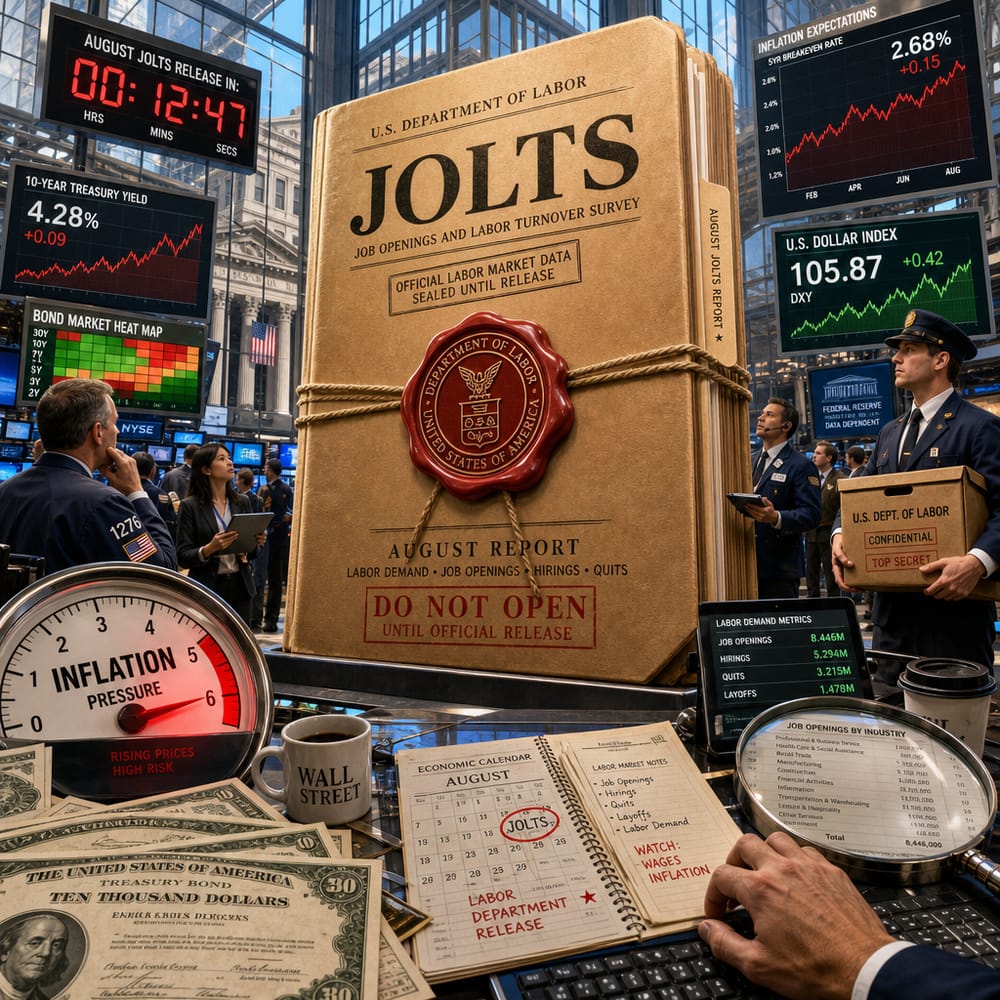
JOLTS OF EXCITEMENT: WHAT THE UPCOMING LABOR REPORT COULD MEAN FOR YOUR WALLET
Grab your popcorn, folks, because today's showstopper in the financial theater is the JOLTS report, set to drop like a bombshell! With inflation's ugly head rearing itself again, all eyes are on the Labor Department as it unveils the August Job Openings and Labor Turnover Survey. What’s so juicy about this report, you ask? Well, it's pretty much the crystal ball for understanding labor demand and its ripple effects across the economy. Let's dive in and see what's at stake.
LABOR MARKET TEA LEAVES
The JOLTS report is like the gossip column of the labor market, spilling the tea on how many job openings are out there, how many folks are quitting, and who's getting the axe. This month’s edition is particularly riveting as everyone, from Wall Street moguls to your Uncle Joe who won't stop talking about his stock picks at Thanksgiving, wants to know just how robust the labor market is amidst rising inflation concerns.
If job openings are through the roof, that suggests companies are desperate for workers and might start throwing more money at the problem. More dollars in paychecks sounds sweet, right? But hold your horses—this could also mean inflation might keep climbing, leading to a whole new set of headaches. On the flip side, a decline in job listings might suggest the economy’s cooling off, signaling tamer inflation ahead. It's a tightrope walk, folks!
FEDERAL RESERVE: RATE HIKES OR NOT?
Enter the Federal Reserve, the cool-headed referee in this economic game. They’ve been keeping an eagle eye on inflation rates like a hawk watching its prey. Why? Because their next move on interest rates hinges on these labor conditions. If the job market looks like it's at a boiling point, they might decide it’s time for another rate hike to prevent the economy from overheating.
Now, let’s not forget that rising interest rates can make borrowing costs as painful as a Monday morning, impacting everything from mortgages to car loans. But, if the job market isn't as white-hot as expected, the Fed might just ease off the brake, letting interest rates chill at current levels. That would be a sigh of relief for anyone holding onto U.S. Treasuries, given how sensitive these instruments are to interest rate fluctuations.
PLAYING THE CURRENCY GAME
The JOLTS report also has some skin in the currency game, influencing the strength of the U.S. dollar. A resilient labor market, suggesting potential rate hikes, could make the greenback the king of currencies, as investors flock to the safety of higher-yielding assets. Conversely, signs of a weakening labor market could send the dollar on a downward spiral, as investors look elsewhere for better returns.
Let's not forget how these dynamics spill over into the bond market, where traders are constantly juggling Treasury yields. As of late, those yields have been dancing like nobody's watching, hitting multiyear highs. If today’s report hints at cooler labor demand, we might see those yields ease just a tad, offering a breather to investors who've been feeling the pressure.
WHAT'S YOUR MOVE?
So, what’s a savvy investor like you to do? Keep a sharp eye on the numbers. If job openings are soaring, brace yourself for potential Fed rate hikes and consider how that'll affect your investment strategy. Diversifying your portfolio to include assets that perform well in high-inflation environments could be a prudent move.
If the labor market looks like it’s losing steam, you might want to rethink your game plan for the U.S. dollar and Treasury bonds. A weaker dollar could make international investments more appealing, while easing Treasury yields might be a cue to rebalance your fixed-income exposure.
Whether you’re an everyday investor or a financial whiz, the JOLTS report is your window into the economic zeitgeist. It's not just about jobs, folks—it's about understanding how these numbers ripple through every corner of the market, affecting everything from your grocery bill to your 401(k). So, strap in and get ready for a rollercoaster ride of data and decisions that could shape the financial landscape in the months to come!
This article is for informational purposes only and is not investment advice. Always do your own research or consult a licensed financial professional before making investment decisions.
© Copyright 2024. All Rights Reserved.
© Copyright 2024. All Rights Reserved.