

Anticipating Earnings Volatility in Mega-Cap Tech
Friday, August 21, 2026
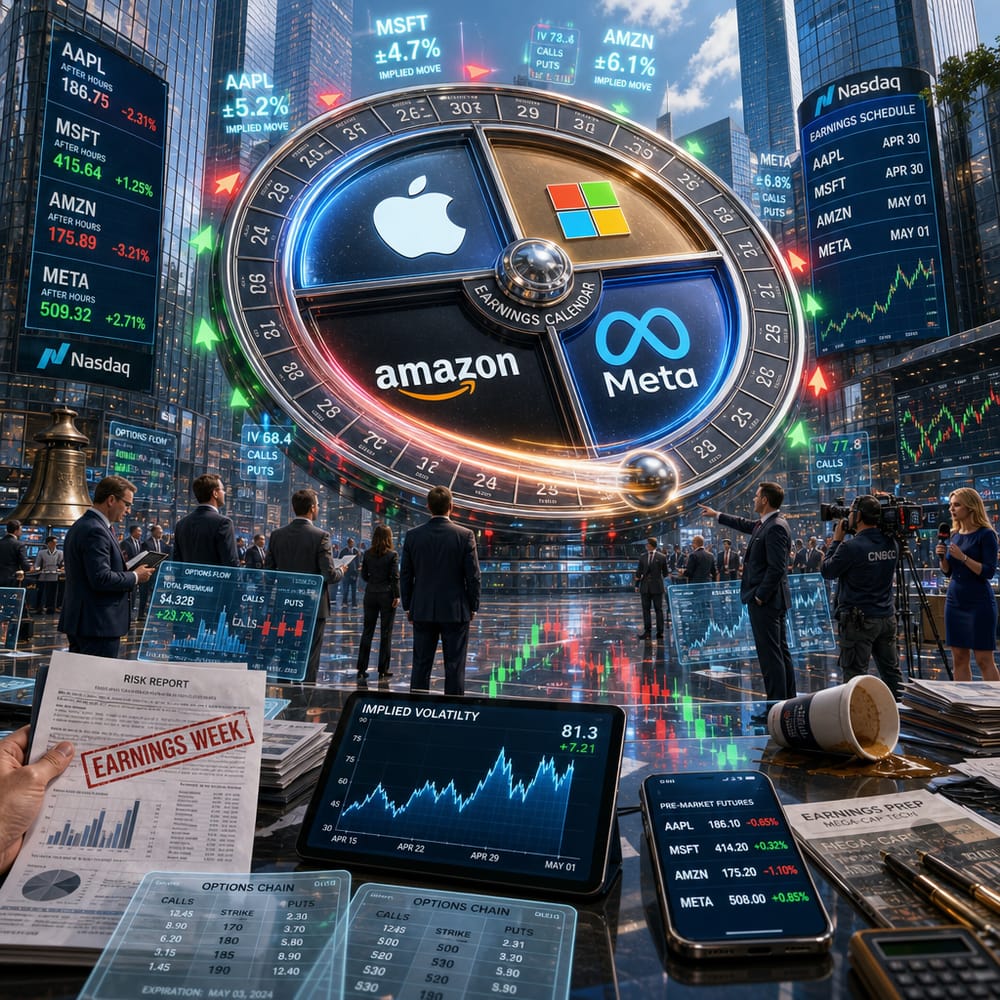
WILL MEGA-CAP TECH STOCKS TURN YOUR PORTFOLIO INTO A ROLLERCOASTER?
Let’s cut to the chase: if you've been riding the tech stock rollercoaster this earnings season, you might be feeling like you've just stepped off the Tilt-A-Whirl at a county fair. Options markets were all but singing in your ear about major volatility in the mega-cap tech space before earnings reports came out. And boy, did they not disappoint. Now, if your eyeballs are still glued to those tickers with a mix of fear and fascination, here's what you need to know about what those tremors meant — and what they might mean going forward.
THE VOLATILITY PREDICTIONS
First things first. The options market — basically, the world’s most high-stakes guessing game where investors bet on price moves — had predicted big swings for our beloved tech giants: Apple, Microsoft, Amazon, and Meta. Like clockwork, these predictions showed up in the form of dramatic stock moves post-earnings.
So, how accurate were these forecasts? Well, let’s just say those options wizards were onto something. Apple's stock didn't just wobble, it basically tried to give gravity a run for its money after missing earnings expectations by a whisker. Microsoft? It managed a smoother landing, but not without a dip that got pulse rates up. Amazon and Meta joined the party too, with post-earnings spikes that made investors recalibrate their coffee intake.
Now, why is this important for us regular retail investors? Because predicting volatility is like having a weather forecast for your portfolio. It doesn't stop the rain, but at least you're not caught without an umbrella.
WHAT DOES THIS MEAN FOR FUTURE EARNINGS CYCLES?
If you thought this earnings season was wild, brace yourself. The volatility train might not have reached its final stop. The factors driving these swings — think inflation jitters, recession fears, and the ever-pervasive "global uncertainties" — are still very much in play.
But here's the kicker: savvy investors can actually capitalize on this volatility. Instead of treating it like a monster under the bed, think of it as an opportunity to buy low and sell high. It's not easy — you'll need the eyes of a hawk and the patience of a saint. Yet, rewards await those who manage to time it right.
APPROACHING TECH STOCKS IN A VOLATILE WORLD
So, should you dump your mega-cap tech stocks and dive into something a little less heart-stopping, like bonds, or maybe a plush mutual fund? Not so fast. The trick is in balancing your tech investments with other, less volatile assets. You know, the classic "don't put all your eggs in one basket" strategy.
Diversify your portfolio. Consider pairing your tech holdings with some bonds or commodities which can act as shock absorbers when tech stocks start their dizzying dance. Real estate, ETFs, or even a cautious peek into the realm of gold and cryptocurrencies, as suggested by the likes of Ray Dalio, could provide the cushion you need.
And remember, volatility doesn't always spell doom. For the bold, it spells opportunity. If you're willing to dig into the nitty-gritty of these companies — their innovations, market positions, future plans — you might find a diamond in the rough. After all, the big tech players aren't just big; they're constantly evolving, and they’ve often got a few tricks up their sleeves.
THE BOTTOM LINE
The recent bout of earnings-induced volatility in mega-cap tech stocks was more than just market noise. It was a wake-up call, a reminder that even the market’s giants can shake things up dramatically. For future earnings seasons, brace yourself for more volatility, but don’t shy away from it. Instead, arm yourself with knowledge, diversify your portfolio, and aim to turn those market shakes into money-making opportunities.
So, keep that rollercoaster seatbelt fastened. It might be a bumpy ride, but who said investing wasn't supposed to be fun?
This article is for informational purposes only and is not investment advice. Always do your own research or consult a licensed financial professional before making investment decisions.
© Copyright 2024. All Rights Reserved.
© Copyright 2024. All Rights Reserved.