

Anthropic–Akamai Legal Setback: Pentagon Appeal Court Upholds Blacklisting
Friday, September 25, 2026
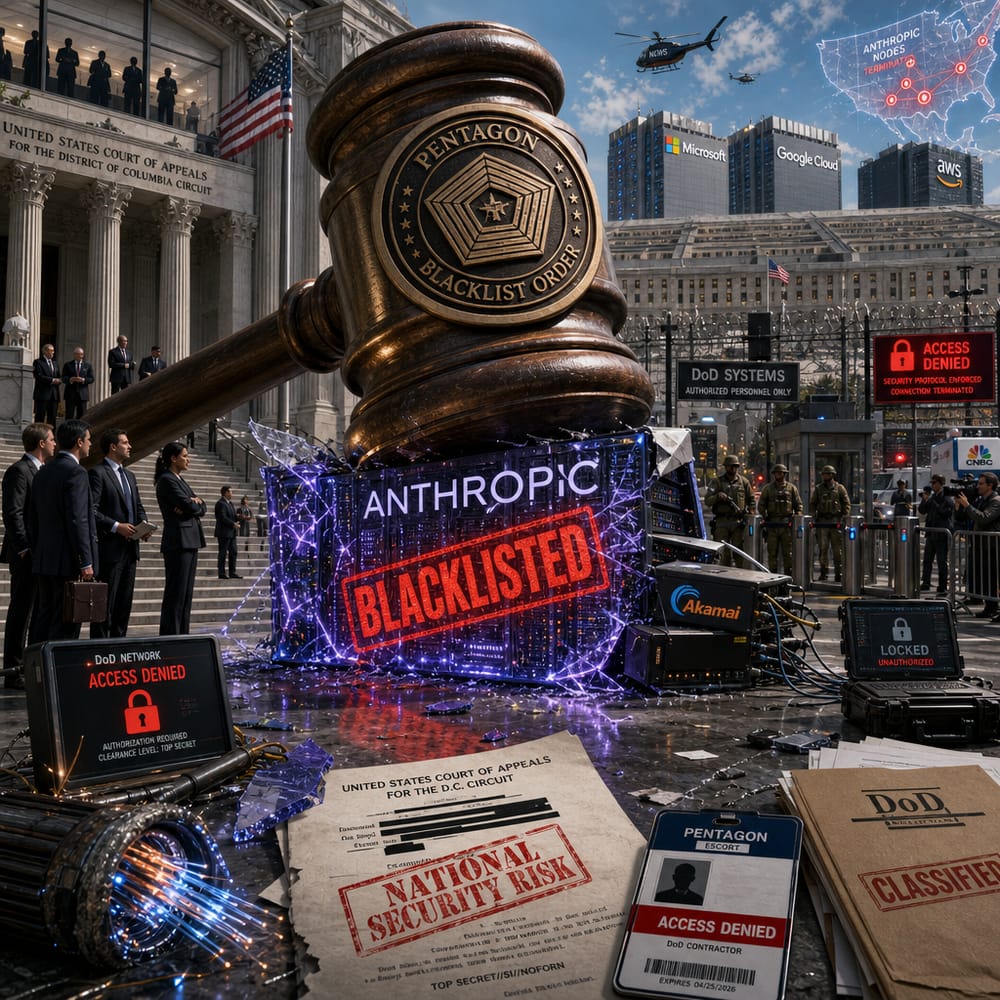
ANTHROPIC'S LEGAL SHOWDOWN: WHAT IT MEANS FOR AI MARKET AND COMPETITORS
In the high-stakes poker game of artificial intelligence, the Pentagon just called Anthropic’s bluff—and the AI disruptor folded. A federal appeals court in Washington, D.C., has upheld the Pentagon’s decision to blacklist Anthropic, casting it as a potential national security risk. This ruling doesn’t just bar its AI models from Department of Defense projects, it reshuffles the deck of the entire AI sector. So what does this mean for Anthropic and its rivals? Let’s dive into the drama.
The Pentagon’s hammer came down on Anthropic, branding it a security risk and blocking its Claude AI models from defense use. This is akin to telling a top chef they can no longer cook with their signature spice. Anthropic fought back, arguing that the ban was unfair and unlawful, but alas, the court didn't bite. Circuit Judges Gregory Katsas and Neomi Rao agreed that the Pentagon had reason to be wary of integrating Claude into its systems, leaving Anthropic to lick its wounds.
So, what's the ripple effect for Anthropic? Well, it’s a rough patch. Being blacklisted by the Pentagon is no badge of honor—it’s a scarlet letter in the world of AI. Anthropic's market position has taken a hit, undoubtedly making investors nervous. Government contracts are lucrative and prestigious; losing access to them is a blow, not just in terms of revenue but reputation as well. This could mean Anthropic might have to pivot, directing its innovation elsewhere or doubling down in sectors with fewer regulatory hurdles.
But while Anthropic nurses its wounds, its competitors are sharpening their blades. Tech giants like Microsoft, Google, and AWS are likely grinning like Cheshire cats. With Anthropic out of the running for defense contracts, they have more room to swoop in and do what they do best—dominate. Microsoft, for instance, is already tweaking its Copilot AI platform, likely hoping to scoop up any AI-hungry defense contracts that Anthropic can no longer compete for. Google and AWS are not going to miss an opportunity to strut their stuff either. With Anthropic sidelined, these tech behemoths have a chance to capture more market share, potentially leading to a flurry of new AI innovations and deployments.
This court ruling also casts a long shadow over the future of AI regulations. It’s a loud and clear message that governments are taking AI-related risks seriously and are willing to take drastic measures to mitigate them. Companies pushing the envelope in AI will likely have to navigate an increasingly complex web of regulations, balancing innovation with compliance. This could slow down some developments but might also push for more robust, secure AI systems. After all, if Skynet taught us anything, it's that we don't want rogue AI running the show.
In this ever-evolving AI landscape, investors should keep their eyes peeled. Regulatory risks are now part and parcel of the AI game. Companies that can dance around these hurdles will likely emerge stronger, while those that stumble might never regain their footing. As Anthropic licks its wounds, its competitors are gearing up for a sprint, and the AI race just got a whole lot more interesting.
In the end, the Anthropic saga underscores a vital truth: in the world of AI, you need to be as sharp as the tech you're developing. As the dust settles, Anthropic might have to reinvent itself, while Microsoft, Google, and AWS capitalize on its misfortune. Rest assured, in this tech thriller, the next chapter promises to be a page-turner. So, buckle up, investors—the AI roller coaster is just getting started.
This article is for informational purposes only and is not investment advice. Always do your own research or consult a licensed financial professional before making investment decisions.
© Copyright 2024. All Rights Reserved.
© Copyright 2024. All Rights Reserved.