

Analyst Speculation: One Hike Still Likely This Year
Monday, August 10, 2026
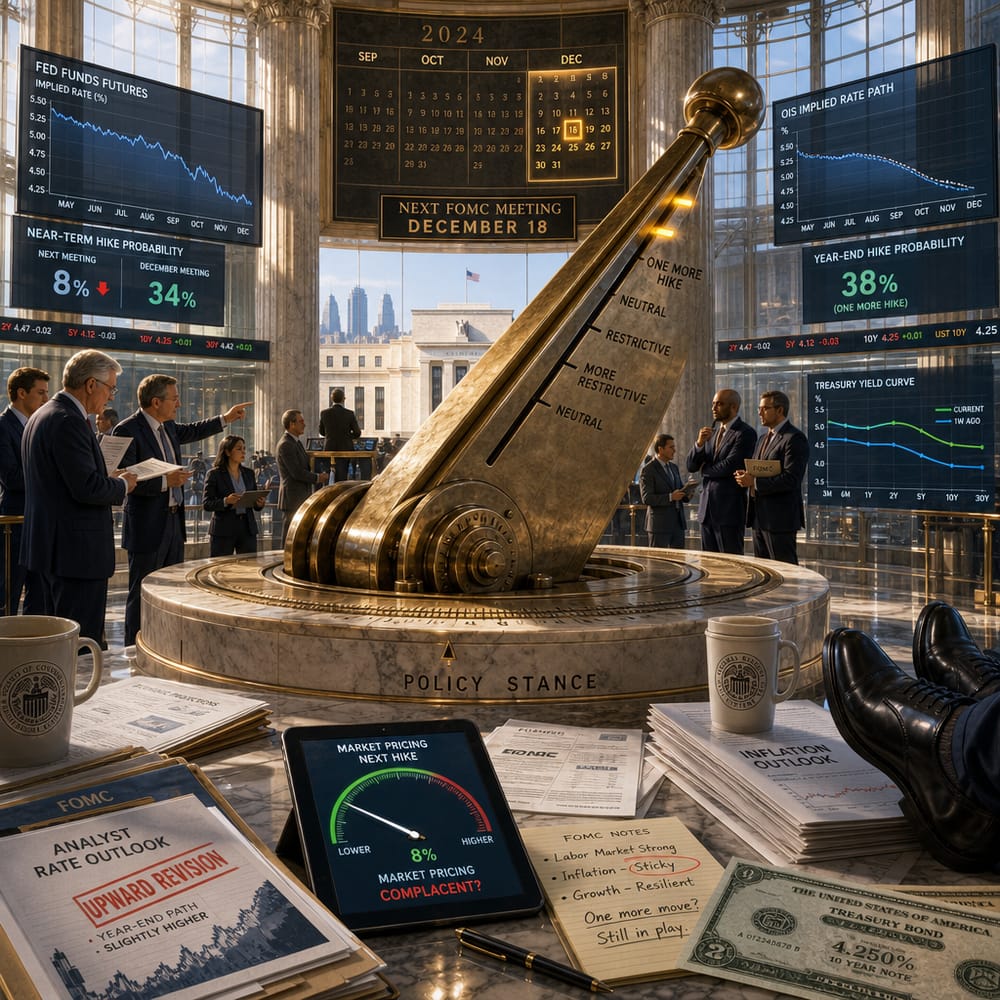
Wall Street is like a thrilling soap opera, where every episode could spell romance or ruin. And the Federal Reserve’s interest rate saga is the plot twist keeping us all on the edge of our seats. While the markets are whispering sweet nothings about a potential pause in rate hikes, some analysts are stepping in with a little more drama: they’re betting on at least one more rate hike before the year takes its final bow.
A rate hike might sound as exciting as watching paint dry, but trust me, it’s the twist that could change the entire financial narrative. Why? Because when the Fed gets trigger-happy with interest rates, it’s like throwing a pebble in a pond—the ripples reach everywhere.
WHY A HIKE IS STILL ON THE CARDS
The speculation of a rate hike isn’t just a tale spun by feverish analysts looking for some action. It’s rooted in a mix of economic signs and a sprinkling of Federal Reserve tea leaves. Inflation is having its moment, and it’s not the good kind like a hot stock pick. With prices climbing and consumers feeling the pinch at the pump and the grocery checkout, the Fed might feel the urge to step in.
The inflation data coming up plays the leading role here. If it’s hotter than expected, the Fed might don its superhero cape and raise rates to keep the economy from overheating. And while last week’s lukewarm jobs report took some wind out of the hawkish sails, the looming inflation figures might just fan the flames once again.
THE BORROWING BLUES
Now, if the Fed does decide to hike rates, it’s going to ripple through the economy faster than you can say “mortgage refinance.” Higher interest rates mean borrowing costs for everything from home loans to credit cards could climb like a cat up a tree. So, if you’ve been eyeing that shiny new car or pondering a home remodel, you might want to lock in that loan sooner rather than later.
For businesses, it’s a bit of a double whammy. Higher borrowing costs could pinch their wallets, potentially leading to less investment in growth, hiring, and all the good stuff that keeps the economic wheel turning. And if companies tighten their belts, it might mean fewer raises and bonuses for Joe and Jane Average, which could put a damper on consumer spending.
THE GREAT ECONOMIC PUZZLE
Cue the dramatic music: how will this rate hike affect the economy as a whole? On one hand, it could help tame that pesky inflation dragon, which is no small feat. On the other, it could slow down economic growth, leaving us with a Goldilocks dilemma—not too hot, not too cold.
If the economy slows too much, we risk slipping into the dreaded R-word: recession. And while that’s not a monster under the bed just yet, it’s something to keep an eye on. But if inflation keeps running wild, it could eat away at our purchasing power faster than a hungry kid at an all-you-can-eat buffet.
SO, WHAT’S NEXT?
With the markets adjusting faster than a chameleon in a kaleidoscope, you can bet that investors will be scrutinizing every Fed whisper and economic report for clues. The Fed’s next meeting is like the season finale everyone’s waiting for, and any hint of policy change could send markets on a rollercoaster ride.
In the meantime, it might be wise to keep an eye on your investment portfolio and consider how a rate hike could play into your financial strategy. Diversification could be your best friend here, spreading risk across different assets like stocks, bonds, or even a dash of gold, which has been shining lately as a hedge against uncertainty.
A rate hike is never just about numbers. It’s the story of the economy, the markets, and how we navigate the twists and turns of our financial lives. So, whether you’re a cautious saver or a daring risk-taker, keep one eye on the Fed and the other on your personal financial goals. Because in this ongoing financial soap opera, you want to be the protagonist of your own story, not just a spectator.
This article is for informational purposes only and is not investment advice. Always do your own research or consult a licensed financial professional before making investment decisions.
© Copyright 2024. All Rights Reserved.
© Copyright 2024. All Rights Reserved.