

Analyst Rating Shifts: November's Trends
Friday, November 20, 2026
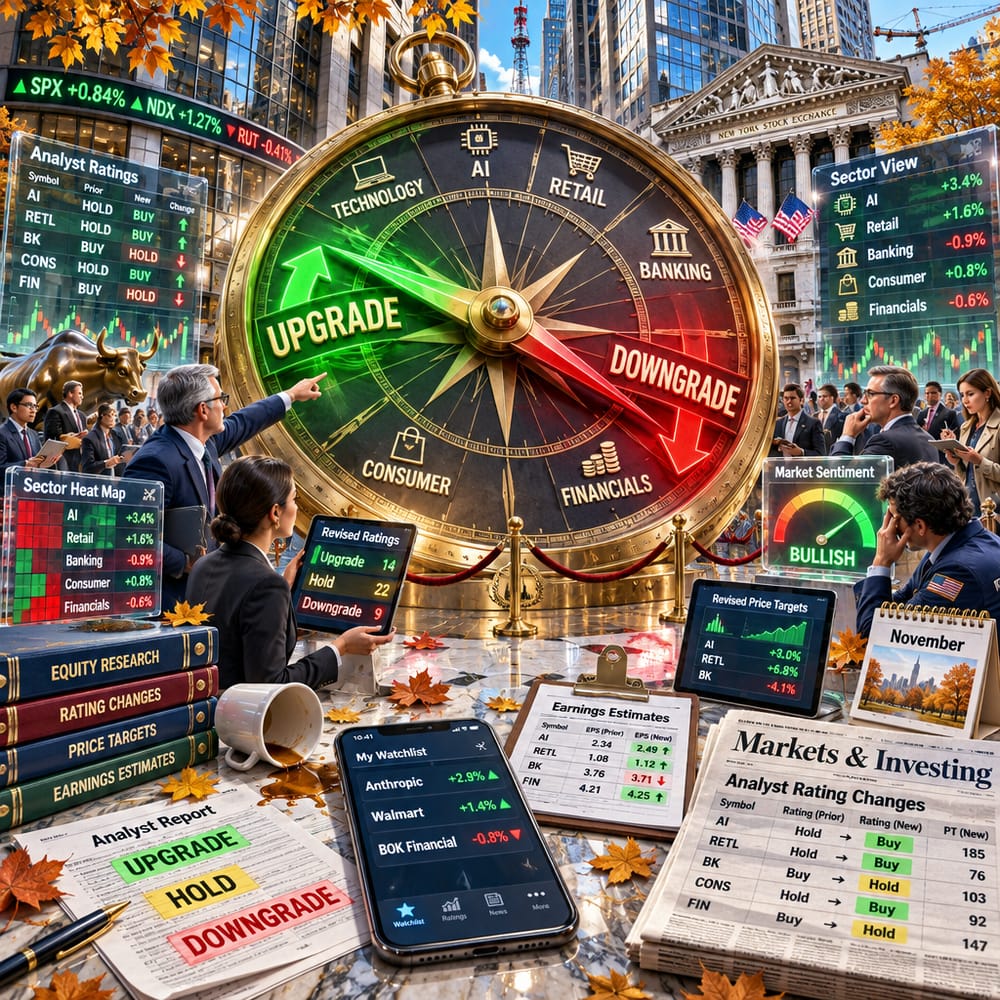
ANALYST RATING SHIFTS: NOVEMBER'S TRENDS
Buckle up, folks! We're heading into the rollercoaster world of stock analyst ratings, where opinions can swing faster than a cat on a hot tin roof. November's sentiment whispers tell us that Wall Street's crystal ball is fogging up with some significant upgrades and downgrades. You're about to find out which sectors are in the spotlight, how these ratings are shaking up stock prices, and what all this means for your portfolio.
First up, let's talk about the aftermath of the much-ballyhooed Anthropic IPO. While the AI darling might have started with a bang, it seems the market's been left with a whimper. Analysts are now putting on their poker faces, shifting their strategies from bullish to lukewarm. This move has nudged many tech stocks squarely into the downgrade territory, wiping out the Nasdaq's recent gains and sending tremors through the S&P 500 and Dow Jones. If your portfolio's dreams were pinned on AI, it might be time to reconsider your strategy. The AI sector, once the flashy star of 2026, is now under a cloud of skepticism—a stark reminder that Wall Street loves to play the game of musical chairs.
But tech isn't the only sector catching the analysts' fickle eye. Consumer staples are the new darlings as investors seek safety in the storm. Take Walmart, for example. The retail behemoth's stock has seen a spate of upgrades recently. Why? Well, in times of uncertainty, where else would you want your money but in the aisles of a big-box store where people buy what they need regardless of the market mood? With inflation fears looming and budgets tightening, Walmart’s steady, dependable cash flow is getting a hearty thumbs up from the suits in the boardrooms.
Meanwhile, the financial sector is having its own soap opera moment. BOK Financial has found itself in a mixed ratings bag. Some analysts have upgraded the Tulsa-based bank, buoyed by its strong earnings and a recent strategic pivot into wealth management services. However, others remain hesitant, signaling potential turbulence due to the broader market’s volatility and the ever-murky economic outlook. It's a classic tale of "is the glass half full or half empty?" in banking.
So, what do these analyst rating adjustments tell us about future market movements? The winds are shifting, and it seems we're entering a more cautious phase. The market euphoria of the AI boom is giving way to a more sober reality. Investors are now pivoting toward sectors that offer stability over speculative growth. Think consumer staples, utilities, and healthcare—sectors that tend to weather economic storms better than the flashy tech and high-beta stocks.
How are these shifts impacting stock prices? The tech-heavy Nasdaq is feeling the pinch, down year-to-date while sectors like consumer staples and financials are finding some footing. It’s not all doom and gloom, but it's a wake-up call for investors to reassess their exposure to high-risk, high-reward sectors.
As we look ahead, here's a spicy nugget: keep an eye on the analyst ratings as they can serve as a barometer of market sentiment. If analysts start singing a different tune, like predicting a recovery in underdog sectors or further caution in market darlings, it might be the nudge you need to adjust your portfolio. With Wall Street's opinions swinging harder than a kid in a candy store, staying informed is your best defense.
In conclusion, November's analyst ratings aren't just numbers on a spreadsheet—they're the tea leaves of Wall Street, hinting at where the market tide is heading. Whether you're a seasoned investor or just a curious newbie, understanding these shifts can help you navigate the financial landscape with a bit more confidence. So, grab your crystal ball, keep an ear to the ground, and remember: the only constant in the market is change.
This article is for informational purposes only and is not investment advice. Always do your own research or consult a licensed financial professional before making investment decisions.
© Copyright 2024. All Rights Reserved.
© Copyright 2024. All Rights Reserved.