

Analyst Rating Ripples Across Mega-Caps and Large-Caps
Sunday, November 15, 2026
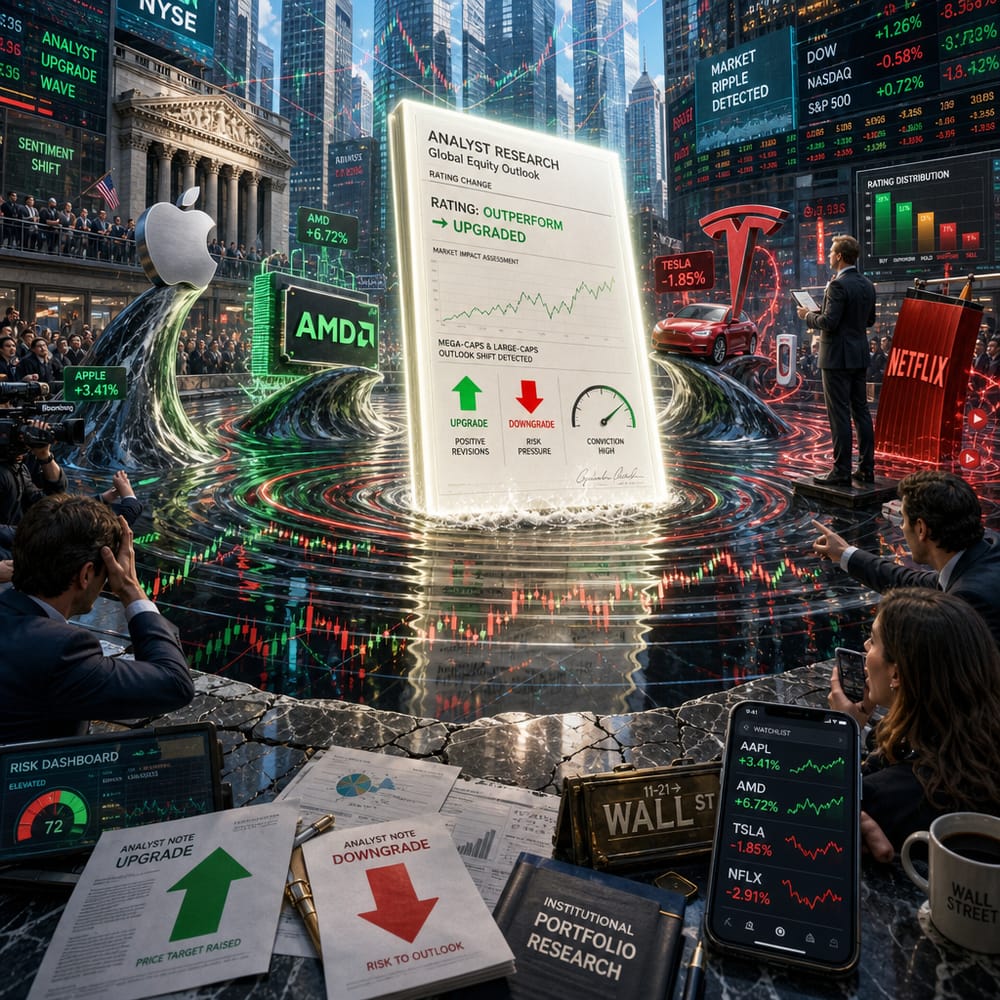
ANALYST RATING RIPPLES ACROSS MEGA-CAPS AND LARGE-CAPS
In the world of stocks, analyst ratings are like a backstage pass. One whisper from these market maestros can send shares of major companies like Apple, AMD, and Tesla into a frenzy. Recently, we've seen this play out in real-time as fresh analyst upgrades and downgrades have lit up stock charts, leaving investors scrambling to adjust their strategies.
What's the deal? Well, it's not just about numbers on a spreadsheet. These ratings reflect shifting market sentiments and provide a window into the financial soul of Wall Street. It's like market gossip, but with real money on the line.
THE GREAT APPLE EVALUATION
Take Apple, for instance. When an analyst upgrades Apple's stock, it can feel like the financial equivalent of a new iPhone launch. The company's stock price might get a nice boost, sparking excitement among investors. But why does this happen? Analysts base their ratings on various factors like future earnings potential, market trends, and competitive positioning. If they see Apple's prospects shining bright, up goes the rating.
But hold the confetti. Analysts can also rain on Apple's parade. If they downgrade the stock, it might signal concerns about slowing iPhone sales or increased competition. Investors, like a herd of gazelles sensing danger, might start selling off their shares, causing the stock price to dip.
TESLA: RIDING THE VOLATILITY WAVE
Tesla provides another thrilling case study. The electric vehicle giant is no stranger to the analyst rollercoaster. One week, it's the darling of Wall Street; the next, it's the cautionary tale. Recent upgrades have boosted Tesla’s stock, amplifying its already meteoric rise. Analysts might see potential in Tesla’s energy division or expanding market share, prompting them to flash a green light.
But Tesla's stock isn't for the faint of heart. Downgrades can quickly follow, with analysts pointing to production delays or regulatory hurdles. When that happens, investors might hit the brakes, selling shares faster than you can say "Elon Musk."
AMD AND THE CHIP GAME
And then there's AMD, strutting its stuff in the semiconductor arena. Analysts have been keeping a close eye on this chipmaker, with recent ratings reflecting its rollercoaster journey through competition and innovation. An upgrade could indicate confidence in AMD’s ability to outpace rivals like Intel, especially in the gaming and data center segments.
However, the semiconductor market is notoriously fickle. A downgrade might suggest concerns over supply chain issues or a dip in demand from key markets. Investors, always keen to stay ahead of the curve, might adjust their portfolios accordingly.
NETFLIX: STREAMING INTO THE FUTURE
Let's not forget about Netflix, the streaming titan that's been both a darling and a drama queen in the stock market. Analysts have been taking sides, with some seeing the bright future of streaming dominance while others raise eyebrows at its increasing content costs. An upgrade can signal faith in Netflix’s ability to keep churning out binge-worthy content amidst rising competition.
Conversely, a downgrade might be the harbinger of a reality check, focusing on market saturation or financial sustainability concerns. For investors, this means balancing the promise of lucrative returns against the potential for turbulent times.
WHAT'S FUELING THE FIRE?
So, what are the key factors driving these analyst ratings? Economic conditions, technological advancements, geopolitical events, and company-specific news all play a part. For instance, a global economic slowdown might lead analysts to reassess growth expectations, prompting downgrades.
Investor strategies often hinge on these ratings. An upgrade might encourage investors to hold or buy more shares, betting on future growth. Conversely, a downgrade could lead them to sell off holdings, avoiding potential losses.
THE BIGGER PICTURE
But it’s not just about individual stocks. These ratings also reveal broader market trends. For instance, a slew of upgrades in tech stocks might indicate a bullish sentiment toward innovation, while downgrades across consumer goods could suggest economic caution.
For the everyday investor, staying attuned to these analyst ratings can be both a guide and a warning. It's a dance of anticipation, reading the room, and making informed decisions based on clues that analysts lay out.
So, next time you see an analyst rating pop up in your news feed, don't just scroll past. It might just be the tip-off you need to make a savvy investment decision. Remember, in the stock market game, knowledge is power, and a little gossip never hurt anyone.
This article is for informational purposes only and is not investment advice. Always do your own research or consult a licensed financial professional before making investment decisions.
© Copyright 2024. All Rights Reserved.
© Copyright 2024. All Rights Reserved.