

Analyst Downgrades Signal Potential Short Plays in Consumer Discretionary
Tuesday, August 25, 2026
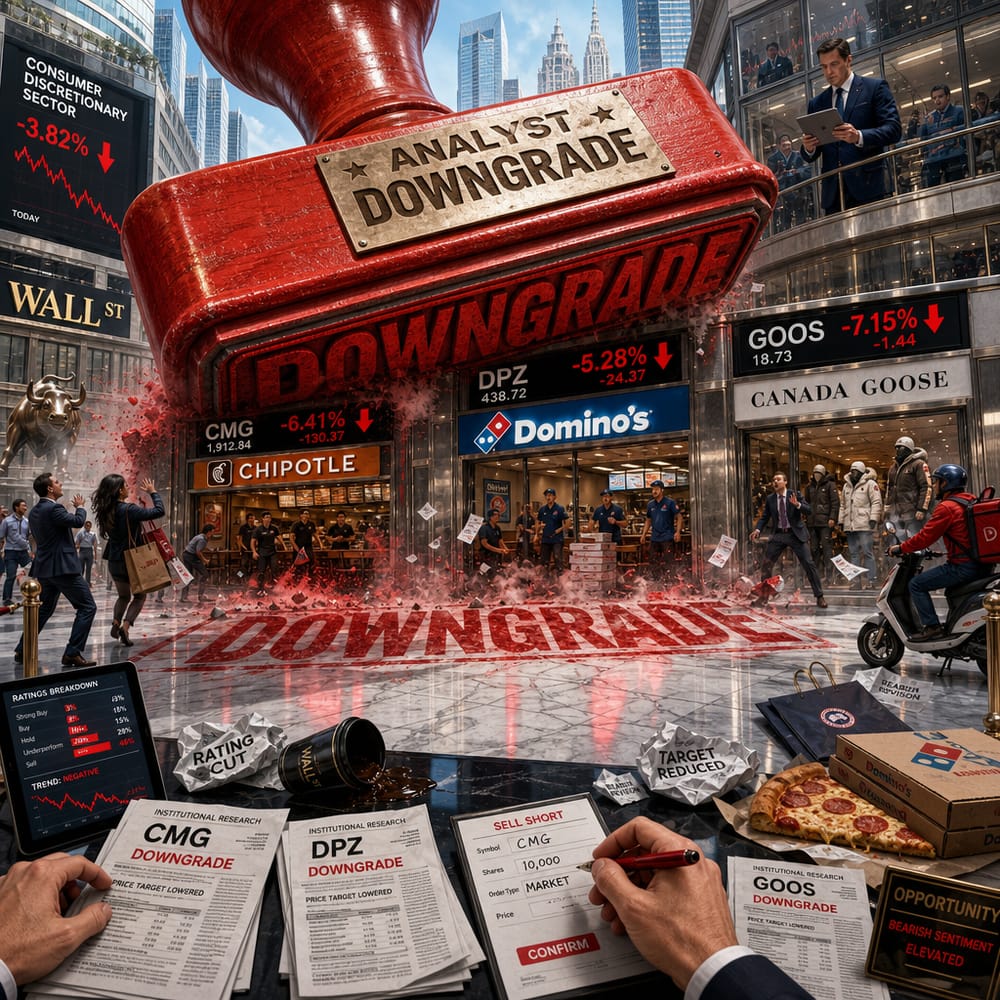
When a burrito chain, a pizza empire, and a luxury parka maker walk into the downgrade bar, you know it's time to sit up and pay attention. Chipotle Mexican Grill, Domino's Pizza, and Canada Goose have recently found themselves on the receiving end of some less-than-flattering analyst downgrades. Now, before you toss them into your "meh" pile, consider this: these downgrades could be the canary in the coal mine for bigger shifts in consumer discretionary stocks. Let's dive into the drama and see if there are short play opportunities where others might see only doom and gloom.
THE TECHNICAL TEA
First up, let's see what the charts are whispering about these stocks. For Chipotle (CMG), the once high-flying stock that fueled our guac and queso fund, the recent downgrade has seen the stock flirting dangerously with its 200-day moving average. This technical indicator is like the stock’s lifeline; dipping below it might just trigger a sell-off frenzy among traders.
Domino's Pizza (DPZ), the king of delivery, has also been feeling the heat. Post-downgrade, its stock has broken down from a key support level. Translation for those not fluent in market lingo: the stock may have just slipped on its own cheese, and sellers could be lining up to place their bets.
Canada Goose (GOOS), the purveyor of luxury outerwear, is wrapping up in more than just warm jackets. The stock’s recent technical breakdown suggests it might need more than fur-lined hoods to weather the storm. With a downgrade pulling the rug out from under its feet, GOOS may be waddling straight into bearish territory.
MACROECONOMIC MONSOONS
While these individual stock stories are compelling, we can't ignore the macroeconomic weather report that's affecting the entire consumer discretionary sector. There's a perfect storm brewing, with interest rates doing the cha-cha and inflation trying to steal the spotlight. Higher rates can dampen consumer spending on non-essential goods, like $20 burritos and fancy coats, putting additional pressure on these stocks.
Then there's the geopolitical chessboard. Canada’s retaliatory tariffs on U.S. goods could add a fresh layer of complexity (and cost) for companies like Domino's and Canada Goose, potentially squeezing their margins tighter than a cheap pizza box. Plus, with President Trump's economic maneuvers creating waves, international relations are shaky at best. All this makes for a precarious playing field for consumer discretionary stocks.
SO, WHAT’S THE PLAY?
If you're the type of investor who dreams of shorting a stock the way others dream of yachts and private jets, this might just be your moment. Analyst downgrades can be like setting off a domino effect (pun intended), leading to momentum-driven declines. Short selling is a high-risk play, but for those who can handle the heat, this might be an opportunity to capitalize on the downward trajectory these stocks may face.
On the flip side, if the thought of shorting stocks makes your palms sweat, consider this as a cautionary tale. These downgrades are not just isolated incidents; they might be the opening act of a broader market narrative. If macroeconomic factors continue on their current path, there could be more fireworks—and not the fun kind—ahead.
CONCLUSION
In the investing world, downgrades often come with drama and opportunity. Chipotle, Domino's, and Canada Goose have found themselves in the analyst hot seat, and the potential implications are worth munching on. Whether you're considering shorting these stocks or simply steering clear, keeping an eye on the technical indicators and macroeconomic shifts is crucial. As always, do your homework and remember, a well-informed investor is a formidable one. Now, back to scrolling through your feed—there’s always more market gossip around the corner!
This article is for informational purposes only and is not investment advice. Always do your own research or consult a licensed financial professional before making investment decisions.
© Copyright 2024. All Rights Reserved.
© Copyright 2024. All Rights Reserved.