

Analyst Downgrades on Nvidia and Qualcomm Point to Caution in Mega-Cap Tech
Tuesday, November 10, 2026
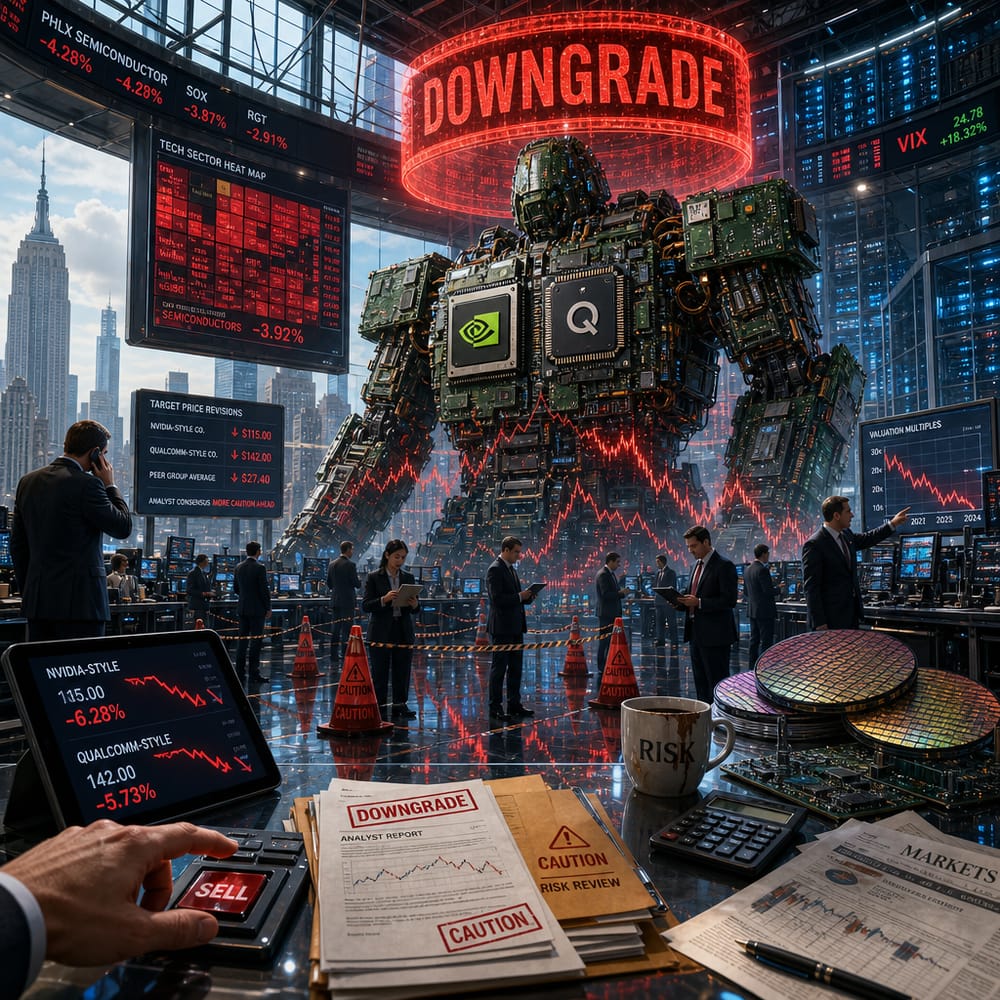
ANALYST DOWNGRADES ON NVIDIA AND QUALCOMM POINT TO CAUTION IN MEGA-CAP TECH
Hold onto your data hats, folks, because the world of tech stocks just got a fresh coat of caution. Nvidia and Qualcomm, two titans flexing their silicon muscles in the tech sector, have just been smacked with analyst downgrades, and it's not just a financial blip on the radar. This is a flashing neon sign suggesting that the high-flying world of mega-cap tech might need to check its altitude.
Picture this: Nvidia, the darling of graphics processing and AI, has been riding high on the AI boom and its glittering reputation. But just like in any good soap opera, drama has crept its way in. The company's CEO, Jensen Huang, is now embroiled in a scandal that's shaking investor confidence. Allegations of an affair with someone suspected to be a Chinese spy have put a dent in Nvidia's armor, and the stock's recent nosedive reflects the sudden turbulence.
But there's more to this than tabloid-level intrigue. The allegations have brought scrutiny to Nvidia's dealings with China, a major market that has become increasingly complex for U.S. tech firms due to ongoing geopolitical tensions. With Uncle Sam casting a wary eye, any perceived cozy ties with China are bound to make investors jittery.
Meanwhile, Qualcomm, the smartphone chip colossus, isn't faring much better. The reasons for its downgrade lean more on the financial side of things. The company has been grappling with sluggish demand in the smartphone market, and as inflation continues its uphill battle, the outlook isn't rosy. Rising consumer prices mean less disposable income, which may squeeze sales of non-essential gadgets — a category where Qualcomm's chips are in high demand.
So, why should this matter to you, dear retail investor? Well, Nvidia and Qualcomm are bellwethers in the tech sector. When they sneeze, smaller companies often catch a cold. The downgrades signal a possible headwind for the entire sector, meaning it's a good moment to reassess your tech-heavy portfolio.
The broader implications here are significant. Mega-cap tech stocks have been the shining stars driving market gains over the past decade. They’re the reliable older siblings in the stock market family, offering growth potential and relative stability — until now. These downgrades suggest a growing caution among analysts, shedding light on vulnerabilities that could extend to other tech giants. If these giants face challenges, it might also signal that the tech party is in a mild pause.
Investors should keep an eye on how these companies respond to the challenges ahead. Will Nvidia manage to navigate its geopolitical minefield and restore investor confidence? Can Qualcomm pivot and find new growth areas in the midst of smartphone market gloom? Their strategies, whether involving restructuring or innovation, will be critical not only for their own stock prices but also for setting a tone for the tech industry.
The good news is that technology is as much about adapting as it is about inventing. Companies that can turn challenges into opportunities often end up leading the pack in the long run. For now, though, the message is clear: Caution is the word of the day, and having a diversified portfolio could save you from riding the wave of any single sector's misfortune.
In conclusion, the analyst downgrades of Nvidia and Qualcomm are more than just footnotes in their respective stories; they're bellwethers of broader market sentiments. Whether you're a seasoned investor or just considering dipping your toes into the stock market waters, these developments are a reminder to keep your wits about you. As always, stay curious, stay informed, and remember, in the ever-evolving world of tech, today's caution can set the stage for tomorrow's opportunity.
This article is for informational purposes only and is not investment advice. Always do your own research or consult a licensed financial professional before making investment decisions.
© Copyright 2024. All Rights Reserved.
© Copyright 2024. All Rights Reserved.