

Analyst Downgrades: Nvidia and AMD
Sunday, November 15, 2026
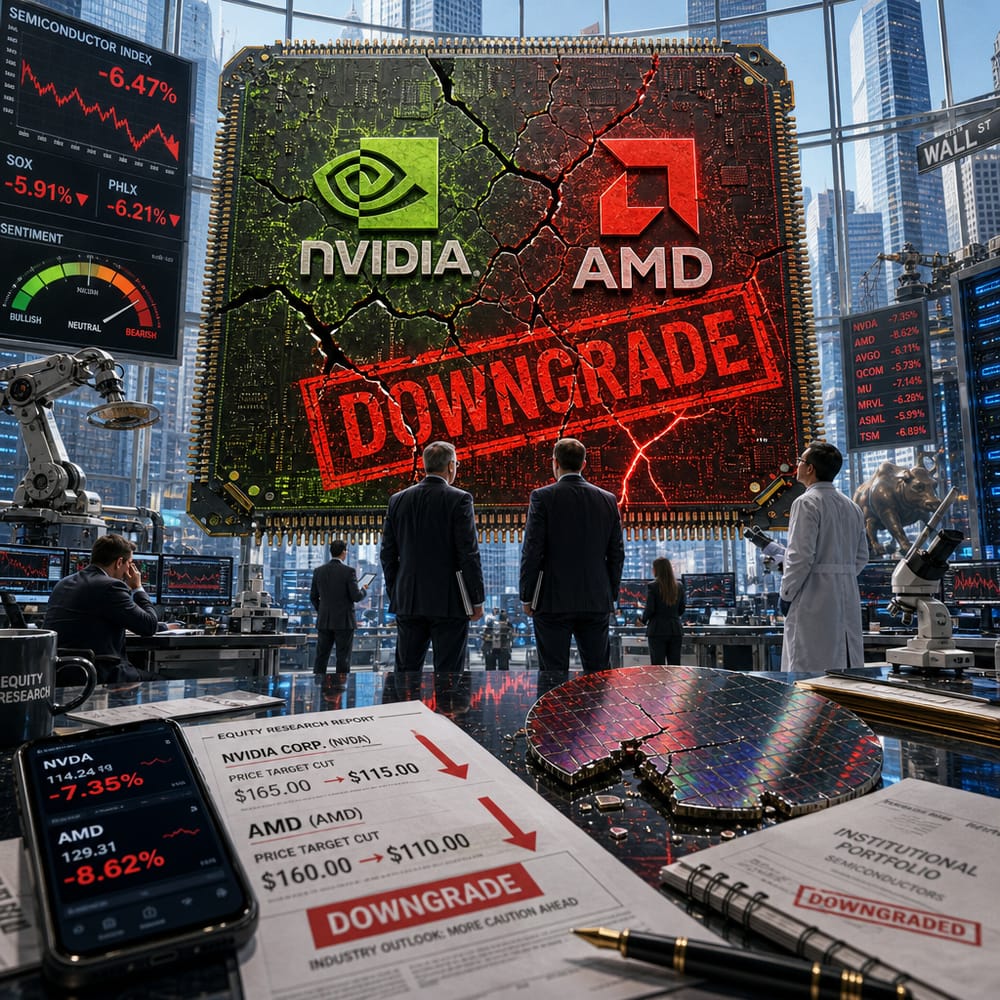
IS NVIDIA'S SHOCKWAVE THE TIP OF THE CHIPBERG?
The semiconductor world just got a jolt that not even a caffeine-fueled supercomputer could predict. NVIDIA, the chip-dragon that's been dominating the AI landscape, is stumbling, and not because of any silicon shortage. Instead, this powerhouse is grappling with the resignation of its iconic CEO, Jensen Huang, amid whispers of scandal. And it's not just NVIDIA feeling the heat—AMD's got its own set of analyst downgrades making waves. So, what's at play here, and why should you, dear retail investor, care?
NVIDIA, THE FALLEN GIANT
Let’s start with NVIDIA. Jensen Huang's exit isn't just a reshuffling of office nameplates. The man was practically the Elon Musk of semiconductors, steering NVIDIA from being just another chipmaker to becoming the backbone of AI infrastructure worldwide. Huang's leadership saw NVIDIA not only supplying the chips but also funding the dreams of AI startups and inking mega deals that made tech headlines. His sudden departure? It’s like taking a cornerstone out of a skyscraper—everything’s a bit shaky now.
The scandal itself? Allegations of illicit sales of AI chips to China. If these chips were sold under the table to goose revenue, that’s a big no-no, especially with U.S. export controls tightening like a toddler's grip on a candy bar. These accusations have left investors jittery, and the calls for a corporate shakeup only add fuel to the fire. What does this mean for NVIDIA? Possibly a shift in strategy, a change in leadership style, and certainly a re-evaluation from investors and analysts alike.
AMD'S LESS THAN STELLAR MOMENT
Now, let’s not forget AMD, NVIDIA's keen competitor and, until recently, a darling in the semiconductor space. Analysts have downgraded AMD, and though the reasons are less scandalous than NVIDIA’s, they're still cause for concern. The downgrades stem from worries about market saturation. With AI and data center demands driving chip sales to fever-pitch levels, there’s a niggling worry that the market might be cooling. Think of it as a Black Friday sale hangover—the rush and excitement are great, but did everyone already buy what they needed?
RIPPLE EFFECTS IN THE AI AND SEMICONDUCTOR SECTORS
So, what does this two-headed dragon of bad news mean for the broader market? First, we might see a slowdown in semiconductor stocks that have been riding high thanks to the AI boom. The AI sector, which heavily relies on cutting-edge chips, might face a reality check. Growing tensions with China and heightened scrutiny could spell trouble for companies that depend on exports and foreign partnerships.
But it’s not all doom and gloom. These downgrades might just be the perfect opportunity for savvy investors to look for oversold stocks. Think of it as finding a designer jacket in the clearance bin. Companies that have solid fundamentals but are caught in the crossfire could offer great value. Start looking at firms with diverse client bases and those that aren’t overly reliant on international sales.
WHO BENEFITS FROM THIS TURMOIL?
This shakeup could also pave the way for smaller players to shine. Businesses with innovative semiconductor technologies or those that specialize in niche markets might see increased interest as the bigger players grapple with their own issues. Companies involved in domestic AI applications or those with a strong emphasis on compliance might also be seen as safer bets.
Moreover, as the tech world watches NVIDIA’s every move, other tech giants might swoop in. Keep an eye on companies like Intel, who might capitalize on any market share that NVIDIA and AMD might lose. Alternatives to traditional chip designs, such as quantum computing firms, could also catch some investor attention as the industry looks to diversifying and future-proofing its technologies.
FINAL THOUGHTS
In the end, the recent spate of downgrades—be they driven by scandal or market chatter—serve as a wake-up call. They remind us that the semiconductor sector, much like the AI world it supports, is anything but static. As investors, it’s crucial to stay nimble, informed, and ready to spot the next opportunity hiding in the shadows. With change comes opportunity, and in the world of chips and AI, the next big thing is always a circuit board's length away.
This article is for informational purposes only and is not investment advice. Always do your own research or consult a licensed financial professional before making investment decisions.
© Copyright 2024. All Rights Reserved.
© Copyright 2024. All Rights Reserved.