

Analyst Downgrades Impact Consumer and Financial Stocks
Sunday, August 23, 2026
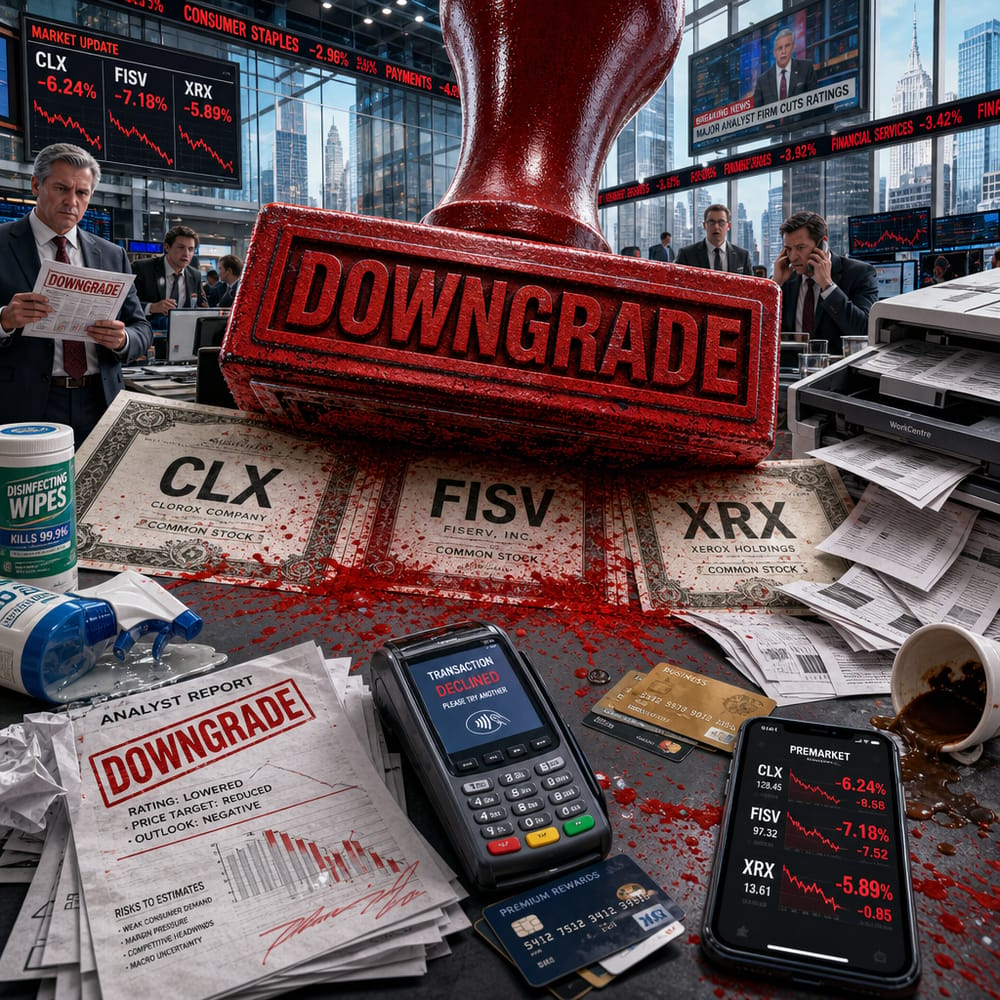
ANALYST DOWNGRADES IMPACT CONSUMER AND FINANCIAL STOCKS
If misery loves company, then Clorox, Fiserv, and Xerox might as well start a support group. In a market already skittish over a looming U.S. debt crisis and rampant inflation, analysts have just poured a fresh bucket of ice water on these stocks. They've been downgraded, and investors are feeling the chill. But what’s eating these companies, and why should you care? Buckle up, because we’re diving into the nitty-gritty of what led to these downgrades and why it could matter for your portfolio.
THE CURIOUS CASE OF CLOROX
Clorox, that reliable household brand known for keeping our surfaces squeaky clean, is facing a not-so-squeaky-clean situation. The company has been grappling with escalating costs, and it turns out, selling bleach and disinfectant wipes isn’t as lucrative as it once was during the pandemic peak. Throw in a cocktail of supply chain woes and rising raw material prices, and you’ve got a recipe for a downgrade. Analysts are concerned about the company’s ability to maintain its profit margins. When Wall Street whispers turn into downgrades, it sends a strong signal: Clorox’s struggles could be more of a mold than a mere stain.
FINANCIAL FIDGETING WITH FISERV
Fiserv, the financial services technology giant, isn’t faring much better. Though the company has its fingers in many profitable pies—from payments to fintech solutions—it's been feeling the pressure from increased competition and a jittery economic outlook. Financial technology is a double-edged sword; it's innovative but also cutthroat, with new players entering the arena like there's no tomorrow. Analysts have raised concerns about Fiserv's growth trajectory and its ability to sustain competitive advantages. The result? A downgrade that has left investors wondering whether the stock can still serve up the same returns.
XEROX'S PAPER JAM
Ah, Xerox—once a titan of the office, now facing an identity crisis. In a world that’s rapidly going digital, Xerox has struggled to convince investors of its relevance. The pandemic proved to be a double-edged sword here, too, accelerating the shift to remote work and reducing the need for traditional office equipment. Recent downgrades highlight concerns over declining revenues and a lack of strategic direction. Investors are itching for innovation, and so far, Xerox has been like a printer stuck in an endless loop: trying to find a new page to print but stuck in the past.
THE RIPPLE EFFECT ON STOCK PRICES AND SENTIMENT
Downgrades can be like a splash in the stock market pool—they create ripples that spread far and wide. For Clorox, Fiserv, and Xerox, it’s meant a swift slap to their stock prices, leaving retail investors clutching their phones and wondering if hitting the sell button is the way to go. It's not just about the immediate price action; it's about investor sentiment. Downgrades create doubt, and doubt is the nemesis of investment.
THE BIGGER PICTURE FOR CONSUMER AND FINANCIAL SECTORS
The downgrades of these three companies serve as a litmus test for broader market conditions. For consumer goods, the lesson is clear: inflation and economic uncertainty can erode even the most robust business models. Meanwhile, in the financial sector, innovation is not just a buzzword—it’s a necessity for survival. If companies like Fiserv are feeling the squeeze, it raises red flags for other financial services firms.
WHY YOU SHOULD CARE
Why should you, the savvy retail investor scrolling through this on your couch, care about a few analysts' downgrades? Because they offer a window into the health of key economic sectors. Understanding the nuances behind these downgrades can arm you with the knowledge to make informed decisions. Whether you're an investor in these companies or the sectors they represent, keeping an eye on these developments helps you anticipate market shifts.
So, the next time you're contemplating adding a bottle of Clorox to your shopping cart or considering whether Fiserv might be a fit for your portfolio, remember this: Analysts’ voices may just be opinions, but in the world of investments, they can have the power of prophecy. Stay alert, stay informed, and don't let the dust settle on your decision-making.
This article is for informational purposes only and is not investment advice. Always do your own research or consult a licensed financial professional before making investment decisions.
© Copyright 2024. All Rights Reserved.
© Copyright 2024. All Rights Reserved.