

Analyst Downgrade: Sell Baidu Amid Continued Weakness
Wednesday, August 19, 2026
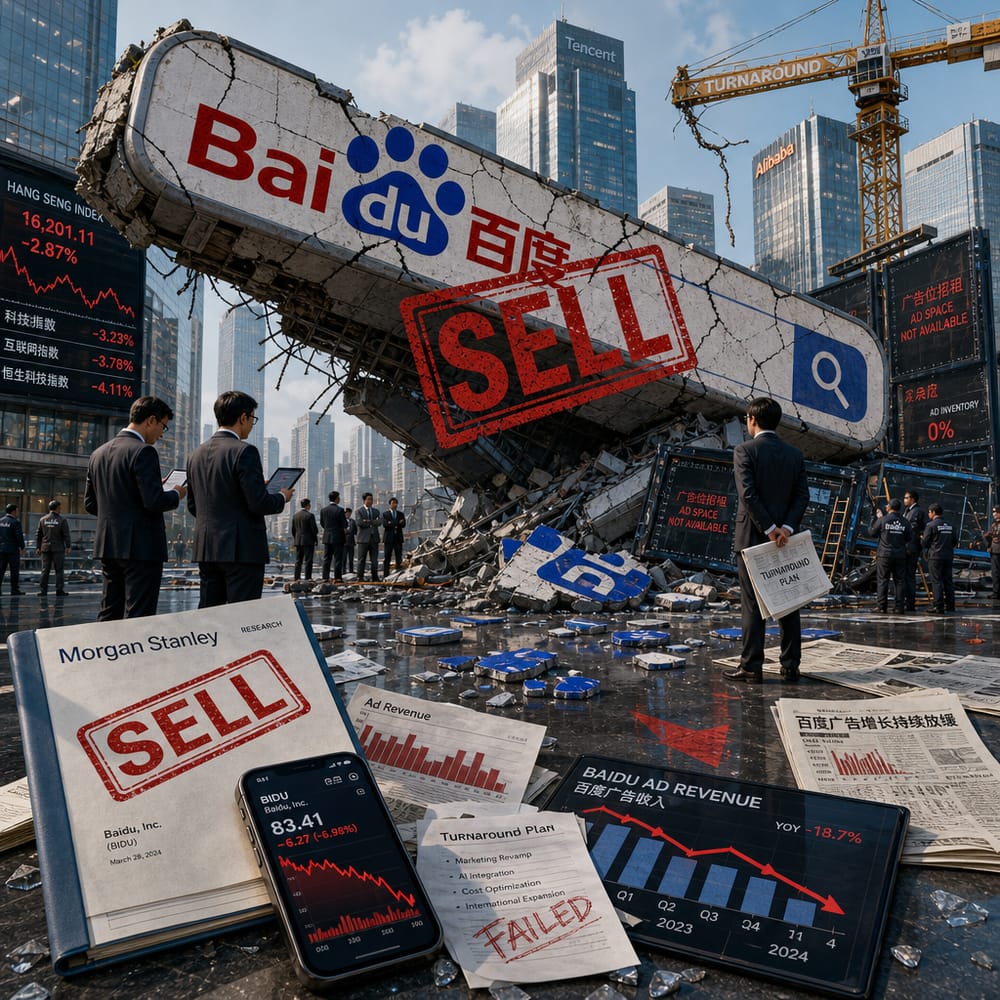
SELLING BAIDU: MORGAN STANLEY SAYS IT'S TIME TO MOVE ON
If Baidu were a sitcom character, it might be that once-funny friend who's now fumbling their punchlines. Morgan Stanley just delivered a brutal critique of the Chinese tech giant, advising investors to sell the stock. The verdict comes on the back of Baidu's continued struggles to nurse its core advertising business back to health and failed turnaround attempts that, frankly, fall flat on their face.
Morgan Stanley didn’t mince words. They've reevaluated Baidu's potential and decided it’s time to cut ties, slashing their price target to $130 from $150. Why the pessimism? Let's dig into Baidu’s financial mess.
The story of Baidu's earnings is a bit like a rollercoaster that never quite finds its way back up. Once the darling of Chinese internet stocks, Baidu has stumbled over a tough terrain marked by increased competition and regulatory hurdles that have dampened its advertising business — the very heart of its operations. In its most recent earnings report, Baidu saw a drop in net income, a trend that’s been unsettling investors for some time now. Their digital ad revenue, once a dependable cash cow, has been on a downward trajectory, and that’s not something investors like to hear.
For the uninitiated, Baidu is often compared to Google — it dominates the online search market in China. But here's the catch: unlike Google, Baidu has been singing the blues when it comes to advertising. The company's efforts to turn things around have been more fizzle than sizzle — a mix of missed opportunities and stiffer competition from Chinese rivals like Alibaba and Tencent, who are eating away at their market share with innovative ad strategies.
So, what’s the broader impact of Morgan Stanley’s downgrade? When a heavyweight like Morgan Stanley gives a thumbs down, ripples are felt far and wide. Investor confidence in Baidu could wane, and this skepticism might spill over, nudging other investors to rethink their positions in the broader Chinese internet sector.
But what about Baidu's peers? While Baidu stumbles, other players in the Chinese tech landscape are sprinting ahead. Take Alibaba, for instance, which has managed to diversify its business beyond just ads into cloud computing and digital entertainment, keeping their earnings buoyant even when one segment faces headwinds. Tencent, with its fingers in several pies — from gaming to fintech — provides a diversified revenue stream that's attractive to investors.
The competition has a clear edge by spreading their bets across multiple industries, while Baidu has been slow to pivot, sticking mostly to what it knows best. So, while Baidu is busy dusting itself off after another fall, its peers are racing ahead, making the road to a turnaround even more challenging.
Investors, especially those with a penchant for risks, might want to eye these alternatives. Alibaba and Tencent, despite facing their fair share of regulatory storms, have shown resilience by adapting quickly to market demands and diversifying their revenue streams — a lifeline Baidu has yet to fully embrace.
So, what's next for Baidu? Well, it’s clear they need to regroup and reconsider their strategy. Diving deeper into AI and cloud services could be their saving grace, but they’ll need to do it fast. The tech world doesn’t wait for stragglers.
In the meantime, if you’re holding Baidu stock, it might be time to take a page out of Morgan Stanley's book — reevaluate your investment, because waiting for a turnaround that may never come is a gamble not everyone is willing to take.
Bottom line: Baidu's tale is a cautionary one in the fast-paced world of tech — adapt or risk becoming yesterday's news. For now, Baidu's spotlight is dimming, and unless a miracle turnaround occurs, the advice is clear: it might be time to say goodbye.
This article is for informational purposes only and is not investment advice. Always do your own research or consult a licensed financial professional before making investment decisions.
© Copyright 2024. All Rights Reserved.
© Copyright 2024. All Rights Reserved.