

Analyst Concerns Over Unsustainable Bond Intervention
Friday, August 21, 2026
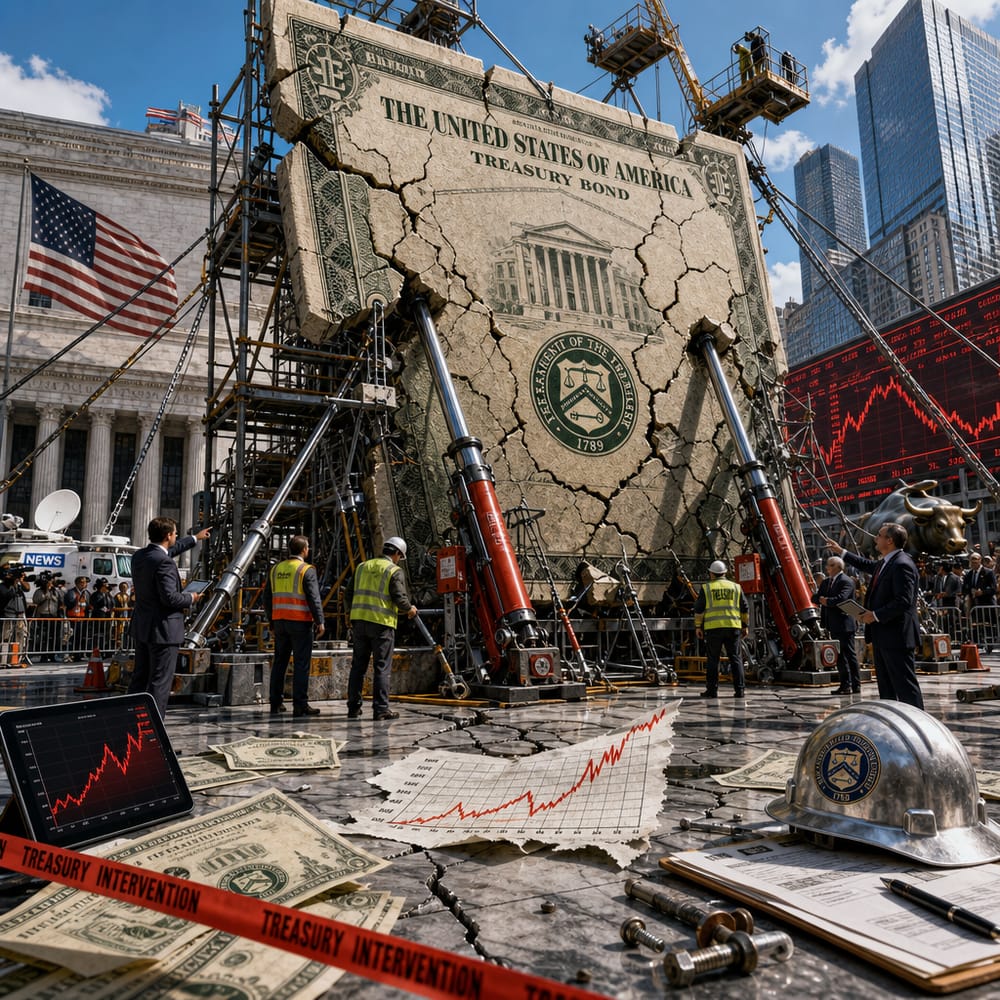
TREASURY'S TROUBLES: CAN THE BOND MARKET KEEP WHISTLING PAST THE GRAVEYARD?
Imagine you're a doctor, and your patient is a chain-smoking, donut-loving, couch potato. Every check-up, they insist, “Just give me a pill, Doc!” That’s kind of what the U.S. Treasury is up to with its bond market interventions, and some analysts are cracking their knuckles, prepping to deliver some tough love about the unsustainability of this approach.
The Treasury’s tactic of buying back its bonds—essentially pulling a Clark Kent in the bond market to stave off disaster—has drawn comparisons to putting a fresh coat of paint on a crumbling wall. It looks good in the short term, but might just be hiding structural nightmares. As the Treasury flexes its muscles to prop up bond prices and rein in soaring yields, concerns are mounting about what happens when the party ends and the hangover starts.
ENDLESS BUYBACKS: BOON OR BANE?
Let’s dig into the nitty-gritty. The Treasury’s latest maneuver, led by Secretary Scott Bessent, involves spiking its bond buybacks as a way to combat rising long-term yields—a fancy way of saying they’re trying to keep borrowing costs from going through the roof. But here’s the kicker: this short-term market pacifier doesn’t solve the underlying issues. It's like downing a dozen energy drinks to stay awake for an all-nighter—a solution that burns out fast and leaves you jittery in the morning.
You see, these buybacks are masking deeper vulnerabilities. Analysts warn that if Uncle Sam keeps playing this game, it might skate dangerously close to a debt crisis. The legendary investor Ray Dalio waved a caution flag, suggesting that we might soon find ourselves at an economic cliff’s edge. If we keep going down this road, the debts could pile up until they’re unmanageable without a financial train wreck.
LONG-TERM IMPACT: TROUBLE BREWING?
In essence, the Treasury’s approach raises a simple but ominous question: What happens when the capacity to keep buying runs out? Just like a credit card, there’s a limit before things get ugly. And given the government's "limited capacity" to keep buying back, as Dalio puts it, the sustainability of such interventions is like playing financial Jenga—one wrong move and the whole tower falls.
Critics argue that this constant intervention might be shielding us from true market signals, leaving the economy vulnerable to sudden shocks when reality sets in. Imagine the bond market as a patient showing no fever because they've been popping Tylenol non-stop—the symptoms might be hidden, but they’re definitely not cured.
ALTERNATIVES ON THE HORIZON
So, is there a more sustainable way to stabilize the bond market without leaning on this increasingly wobbly crutch? Well, the answer might lie in a combination of fiscal responsibility and market trust. The government could look at reducing its debt levels—easier said than done, especially when printing more money feels like a panacea for every economic woe. Alternatively, encouraging more private sector participation in the bond market could spread the load and stabilize the wobbly picture.
Moreover, embracing innovation could play a part. As cryptocurrency gains credibility—hello, Bitcoin’s recent rally—some analysts are suggesting it as a hedge against the instability of traditional markets. A diversified financial strategy might just be the ticket to a more resilient economic framework.
BOTTOM LINE
In the end, the bond market interventions might be a necessary evil right now, but relying on them indefinitely could be a financial time bomb. As the saying goes, you can’t keep kicking the can down the road without eventually running out of road. Understanding these risks is crucial for any retail investor trying to navigate the turbulent waters of market realities.
So, next time you’re sipping coffee and scrolling through the latest market headlines, remember this: sometimes the scariest stories aren’t the ones that scream but the ones that whisper, "Everything’s fine," as the ground erodes underfoot. Keep an eye on those Treasury plays; they might just be the canary in the coal mine for the next big market shake-up.
This article is for informational purposes only and is not investment advice. Always do your own research or consult a licensed financial professional before making investment decisions.
© Copyright 2024. All Rights Reserved.
© Copyright 2024. All Rights Reserved.