

AMD Upgraded Amidst Nvidia Downgrades
Friday, November 13, 2026
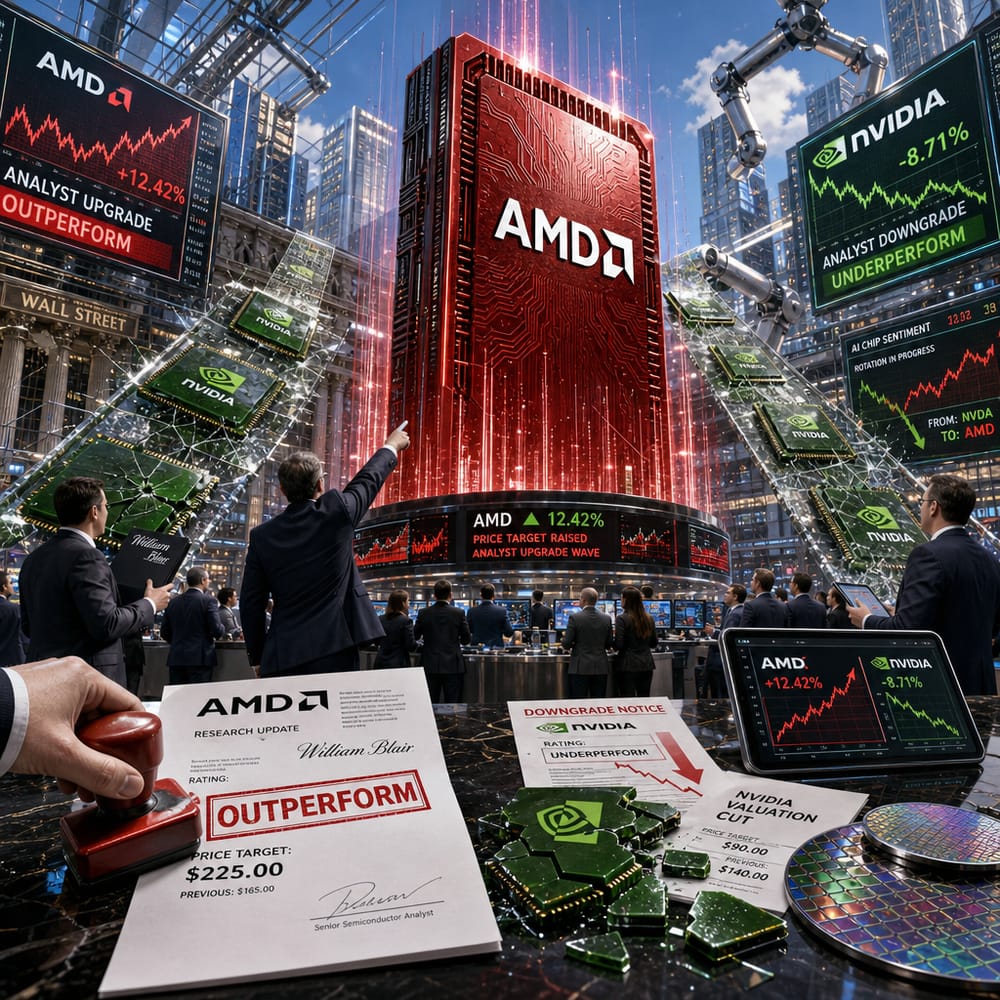
AMD and Nvidia: They're the Tom and Jerry of the semiconductor world, constantly in a high-stakes chase for market dominance. But in this episode, the script seems flipped, with AMD getting a shiny new badge and Nvidia finding itself a tad under the weather. So, what’s cooking in Silicon Valley, and why should we care? Let’s dive headfirst into this semiconductor soap opera.
William Blair, a name that echoes in the halls of finance like the voice of a movie trailer narrator, just upgraded AMD to an "Outperform." This essentially means they think AMD is about to strut down the Wall Street runway with some serious swagger. But why the sudden burst of confidence in AMD? Is it the new chips they’ve been cooking up? Are they about to launch a line of AI-driven toasters? Okay, probably not the toasters, but AMD has been on a roll with its advanced processors and graphics units, finding its sweet spot in data centers and gaming rigs alike.
AMD has been playing the long game, investing heavily in research and innovation. Their focus on high-performance computing and strategic acquisitions, like Xilinx, has poised them nicely to ride the current AI and cloud computing wave. They’re not just riding it, though—they’re surfing it with a GoPro on their head. The tech world is buzzing about their upcoming products, which could gobble up more of the market shared by their fierce competitors.
On the flip side, Nvidia, the other star of our tale, is dealing with a mixed bag of news that no CEO wants to see. Multiple downgrades from firms suggest that analysts are clutching their pearls at the recent shake-ups within the Nvidia empire. CEO Jensen Huang’s abrupt resignation is like a jolt of espresso in the company’s morning brew, unexpected and a bit too strong. The shockwaves are still being felt as Nvidia grapples with leadership changes amidst a backdrop of geopolitical tensions and supply chain hurdles.
Huang's departure isn’t just about a change at the top; it’s a seismic shift that could lead to further scrutiny on Nvidia’s dealings, especially in international markets. If you think trade tensions with China are just diplomatic background noise, think again. They’re the high-tension wires running through the semiconductor business, and Nvidia's dealings with Chinese companies have been under the microscope.
The downgrades from analysts reflect these risks, along with the uncertainty over who will steer the Nvidia ship through these choppy waters. The semiconductor titan is facing a potential slowdown, and the market is reacting like a cat in a room full of rocking chairs. Nvidia’s once unassailable lead in the AI and machine learning segments suddenly looks a bit more assailable.
So what does all this analyst handwringing mean for the competitive landscape? Well, it’s like a tectonic plate shift in the semiconductor sector. AMD’s upgrade suggests it’s gaining traction and could potentially nibble away at Nvidia’s market share. Meanwhile, Nvidia has to find a way to steady its course, perhaps with some strategic plays or a bold new vision from its incoming leadership.
For retail investors, this drama isn’t just popcorn material. Analyst ratings can influence stock prices and, by extension, your portfolio’s bottom line. This duel between AMD and Nvidia is more than just a corporate slugfest; it’s a microcosm of the broader tech industry’s future.
The semiconductor business is crucial—it’s the unsung hero powering everything from your phone to self-driving cars. A shift in power dynamics here could ripple through the tech world, influencing which gadgets we use and how AI develops over the next decade.
In short, while AMD and Nvidia duke it out, keep an eye on your investment dashboard. The semiconductor battle is heating up, and it’s anyone’s guess who will come out on top. Just remember, in the stock market, as in life, it's not always about who punches hardest; sometimes it’s about who stands firm when the dust settles.
This article is for informational purposes only and is not investment advice. Always do your own research or consult a licensed financial professional before making investment decisions.
© Copyright 2024. All Rights Reserved.
© Copyright 2024. All Rights Reserved.