

AMD's $5B Debt Offering Fuels AI Expansion
Sunday, August 23, 2026
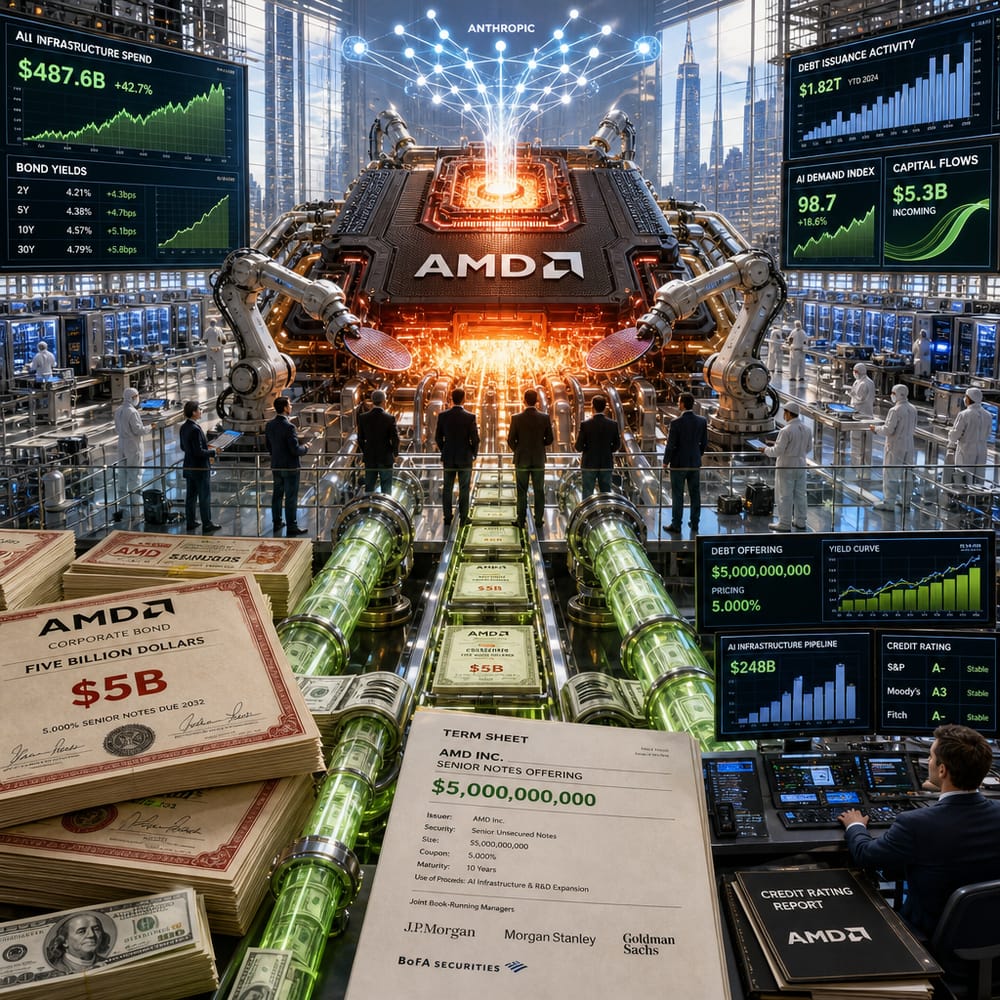
AMD RIDES THE DEBT WAVE FOR AI DOMINANCE: WILL IT PAY OFF?
In the bustling, ever-evolving world of tech, where innovation often feels like a relentless race, AMD has decided to strap on a turbocharger. Cue their latest maneuver: a potential $5 billion debt offering that's got investors buzzing. But before anyone reaches for the confetti, let's dig into why this matters and whether this high-stakes bet could really pay off for the chip-making titan.
THE AI ARMS RACE
Let's start with the 'why'. In the tech world, AI is less of a buzzword and more of a battle cry right now. Chip manufacturers like AMD are vying for supremacy in a sector that's as lucrative as it is competitive. Every company wants to be the one supplying the brains behind the AI revolution.
AMD's move to raise between $4 billion and $5 billion is their latest play to fuel this ambition. The crown jewel of their spending spree? A significant investment in Anthropic, an AI research darling that's been making waves. It seems AMD is pulling out all the stops to ensure they don’t get left in the dust by competitors like Nvidia, who have already set a blistering pace in the AI chip arena.
RISKY BUSINESS
So, what's the catch? Borrowing billions doesn't come cheap, and it certainly isn't risk-free. By taking on that kind of debt, AMD is betting big on its future cash flow - the financial equivalent of putting your money where your mouth is. If their AI ventures don't pan out as expected, they could find themselves in a financial pickle, trying to juggle repayments with underwhelming returns.
For investors, a debt offering can be a double-edged sword. On one hand, it’s a sign that AMD is serious about growth and willing to invest heavily in future technologies. On the other, it introduces risk: debt must be repaid, with interest, and if the bottom line doesn't improve, stockholders could feel the pinch.
NVIDIA VS. AMD: THE AI STRATEGY SHOWDOWN
To understand AMD's current move, let's put it in perspective by comparing it to Nvidia's approach. Nvidia has been the poster child of AI advancements, and instead of leaning on debt, they've been leveraging strong cash flows and strategic partnerships to fund their AI expansions.
Nvidia’s strategy has largely been about organic growth and strategic acquisitions, taking advantage of their already strong market position. AMD’s debt-fueled plan reveals a different kind of urgency - a need to accelerate growth and catch up quickly.
THE LONG GAME
But what does all this mean in the long term for AMD and its quest for AI dominance? If AMD plays its cards right, the payoff could be huge. The company's focus on AI partnerships and technology development could cement its place in a rapidly growing industry. AI chips are not just about powering futuristic tech; they’re about being the backbone of everything from smart assistants to autonomous vehicles.
However, AMD must tread carefully. The tech industry is a notoriously volatile beast, with consumer demands and innovations shifting the landscape at breakneck speed. AMD’s debt could become a stumbling block if the anticipated growth in the AI sector doesn’t materialize as quickly as hoped.
BOTTOM LINE
So, what should retail investors make of all this? If AMD's gamble pays off, they could see significant returns. But it’s a high-stakes game with plenty of room for missteps. Investors should keep a close eye on AMD's quarterly reports and market moves, ready to pivot if the company starts veering off course.
In the end, AMD’s daring debt offering is a bold statement of intent, screaming to the world that they’re all-in on AI. Whether this move turns out to be a masterstroke or a misstep will unfold in the coming years, but one thing's for sure – it’s going to be quite the show. Keep your popcorn and portfolios ready.
This article is for informational purposes only and is not investment advice. Always do your own research or consult a licensed financial professional before making investment decisions.
© Copyright 2024. All Rights Reserved.
© Copyright 2024. All Rights Reserved.