

AMD Q2 Beats, Data Center Revenue Doubles, Stock Slips in After-Hours
Tuesday, August 04, 2026
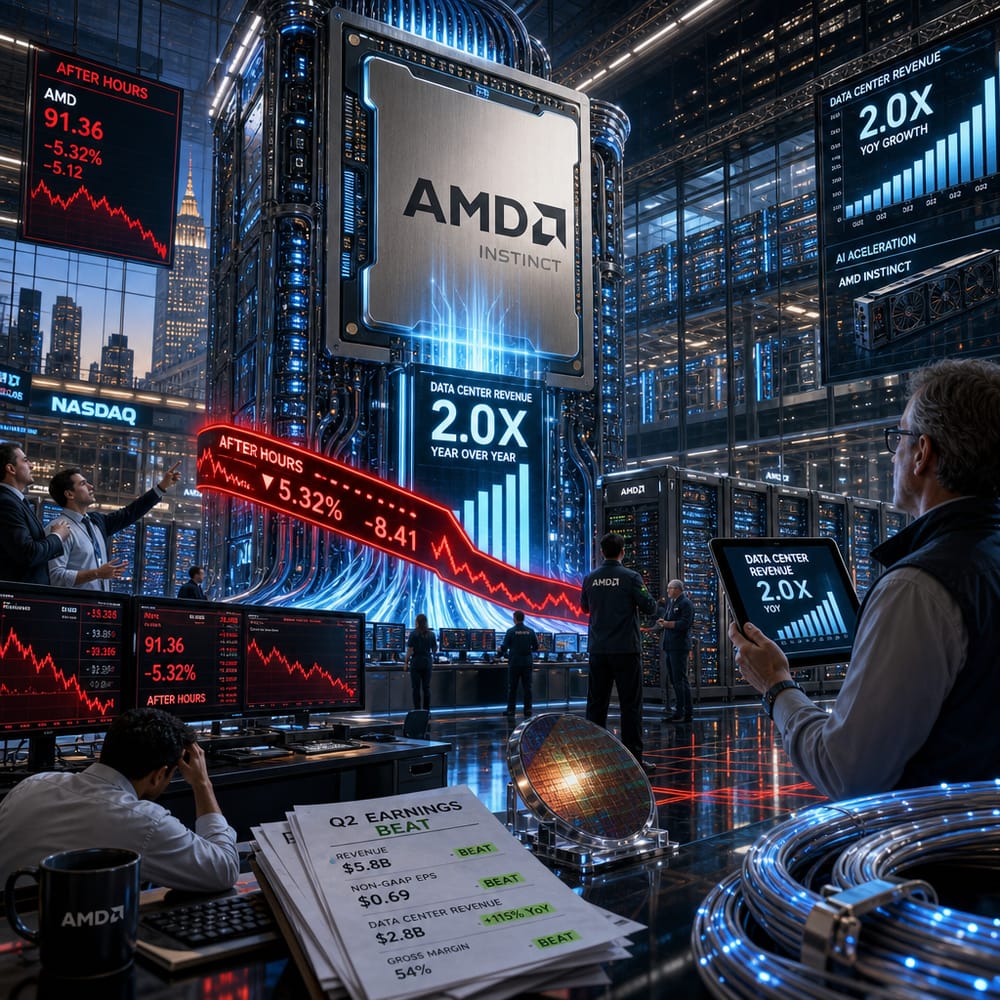
AMD's Q2 Surprise: Big Numbers, Bigger Questions
If you're like most people, you've got a love-hate relationship with your smartphone. You can't put it down, but you wish it would stop buzzing every five seconds. Well, here's something worth your buzz: AMD just reported its Q2 earnings, and boy, is there a lot to unpack. Strap in, because this isn't your typical earnings snoozefest.
First, the headline that caught everyone's attention: AMD's revenue climbed 50% year over year. Yes, you read that right—50%! For a company that's already huge, that's like running a marathon at a sprint pace. How did they do it? A big chunk of that growth came from their data center unit, which saw its sales double to a staggering $6.7 billion. If data centers are the engines of modern tech, AMD is the fuel that keeps them roaring.
But wait, there's more. AMD also delivered earnings per share (EPS) that beat Wall Street's already optimistic estimates. Investors had been expecting impressive numbers, but even the most bullish analysts on Wall Street had to do a double-take. So why did AMD stock slip in after-hours trading? That's the million-dollar question—or, given the market volatility, the billion-dollar one.
Despite the stellar performance, whispers of doubt are echoing through Wall Street. The consensus seems to boil down to a few worries: sustainability, margins, and the broader chip sector's dynamism. With data center growth showing such a meteoric rise, can AMD really keep it up? It’s like being at the top of a roller coaster—thrilling, but there's always that inevitable drop.
AMD's margin story is also worth noting. The company didn't downgrade its guidance or wave any red flags about rising costs, but the market is ever the skeptic. As AMD ramps up production and battles for market share with heavyweights like Nvidia, some margins are bound to get pinched. Wall Street is asking: Can AMD protect its profits in this heated race?
And then there's the bigger picture. The semiconductor industry is notorious for its cycles. One moment, you're sitting on a silicon throne; the next, you're in the doldrums. With so many factors at play—supply chain hiccups, geopolitical tensions, and evolving tech trends—it's not just about beating earnings. It's about outsmarting a finicky market.
Let's not forget the broader market context. While AMD was doing its earnings dance, the stock market was having its own party. The S&P 500 surged to record highs earlier in the week, led by a medley of catalysts—from potential geopolitical resolutions to improved corporate earnings. But amid such euphoria, some, like famed investor Michael Burry, warn of overinflated bubbles ready to burst. It’s like the stock market is in a high-stakes poker game, and everyone’s trying to figure out who’s bluffing.
Now, here's where it gets interesting. While AMD's numbers dazzled, the stock's after-hours dip suggests investors are a hard crowd to please. Perhaps they're wondering if AMD's data center gains are a one-hit wonder or the start of a chart-topping album. Maybe they're concerned that AMD's success story might be peaking, and the next chapter might not be as captivating.
Whether you're holding AMD stock or just watching from the sidelines, there's no denying the intrigue. Sure, the numbers were impressive, but the market is a forward-looking beast. Investors want reassurance that AMD's current success isn't just a fleeting moment in the sun.
As the smoke clears from this earnings report, one thing is certain: AMD has everyone's attention. With a mix of triumphs and uncertainties, this saga is far from over. So, keep your phones charged and your notifications on, because in the world of stocks, the plot twists are as unpredictable as they are exciting.
This article is for informational purposes only and is not investment advice. Always do your own research or consult a licensed financial professional before making investment decisions.
© Copyright 2024. All Rights Reserved.
© Copyright 2024. All Rights Reserved.