

AMD Joins the Trillion-Dollar Club
Saturday, September 26, 2026
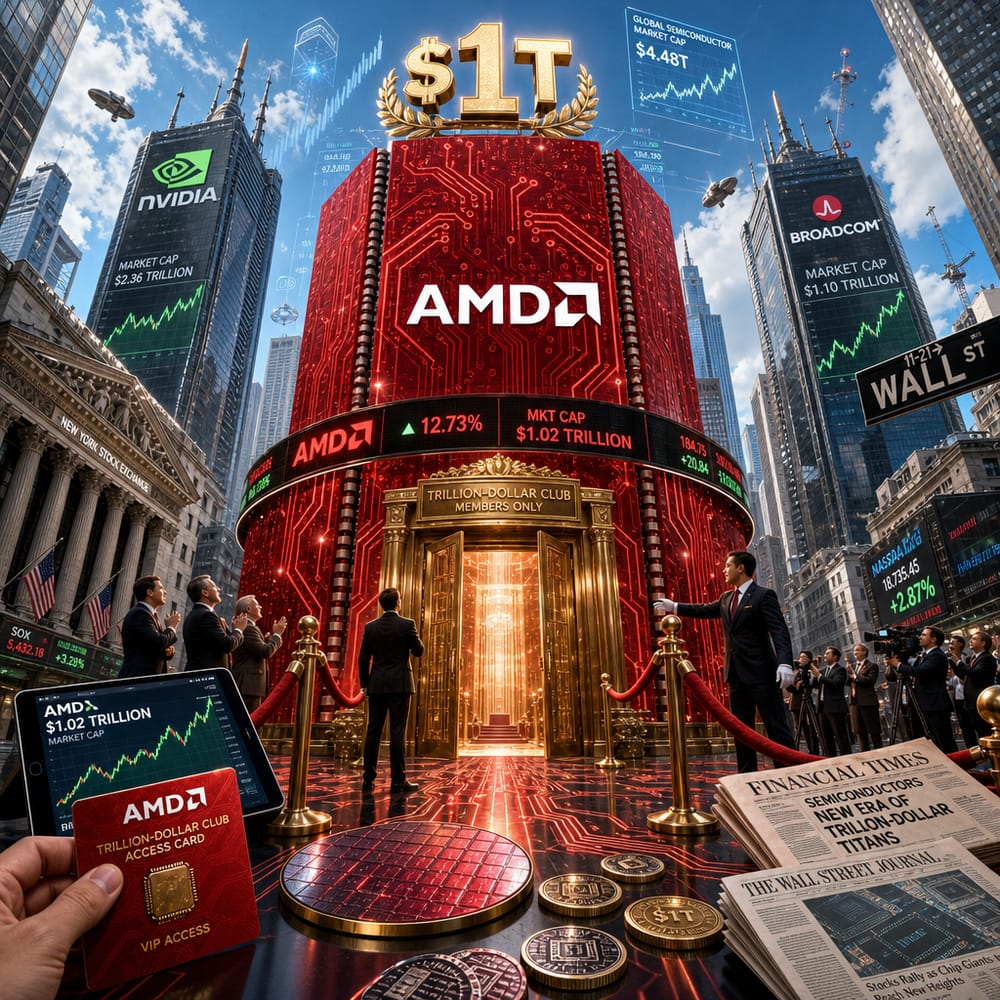
AMD just swaggered into the trillion-dollar club, and it’s making waves in the semiconductor ocean. Imagine high-fiving Nvidia and Broadcom while clutching a golden ticket that says "Welcome to the Elite." That’s AMD right now, strutting tall with a market cap that just hit the magical trillion-dollar mark. It’s a big deal, not just for AMD shareholders popping champagne, but for tech investors watching the semiconductor scene with bated breath.
So, how exactly did AMD achieve this mind-boggling milestone? Picture a perfect storm of innovation, strategic moves, and a bit of pandemic pixie dust. AMD has been capitalizing on the surging demand for chips, driven by everything from gaming consoles to data centers. Their Ryzen and EPYC processors are flexing serious muscle, stealing market share from rivals and securing big contracts. Let’s not forget their foray into AI and high-performance computing, which is driving further investment hype.
Now, what does AMD's ascension mean for the semiconductor industry and the tech indices? First off, expect a reshuffle in the playground. Tech indices, like the S&P 500 and the Nasdaq, might have to rethink their weighting to accommodate AMD’s newfound gravitas. A trillion-dollar valuation doesn’t just come with bragging rights; it changes how indices are structured, influencing funds that track these benchmarks.
But what about semiconductor ETFs (Exchange Traded Funds) that bundle chip-related stocks together like a nerdy charcuterie board? As AMD flexes its trillion-dollar muscles, these ETFs might see significant shifts. The weight of AMD could increase, potentially edging out other stocks. This could drive ETF investors to pay more attention to AMD’s performance, creating a ripple effect across the tech sector.
And let’s not forget the ripple effects for other big players like Nvidia and Broadcom. When one chipmaker levels up, it can influence investor sentiment across the board. The semiconductor scene is as much about perception as it is about silicon wafers. If AMD holds its ground in the trillion-dollar club, it could spur increased investment across the sector, lifting all boats in the process.
While AMD basks in its market cap glory, we should ponder the long-term implications. Will AMD’s lofty valuation translate into sustainable growth? Can it maintain its momentum in an industry notorious for rapid innovation and cutthroat competition? Investors and analysts will be watching closely, dissecting every earnings report and strategic move.
In the broader picture, AMD’s triumph is a testament to the explosive growth and essential nature of semiconductors in our digital world. From AI advancements to the Internet of Things (IoT) and beyond, semiconductors are the backbone of technological evolution. As AMD and its peers push the boundaries, they’re not just boosting their valuations; they’re shaping the future of technology as we know it.
So here’s to AMD, the latest member of the trillion-dollar club. Its rise isn’t just a milestone; it’s a beacon signaling the incredible potential of the semiconductor industry. Whether you're an investor, a tech enthusiast, or just someone who appreciates a good underdog story, AMD's journey is one to watch. Because in the high-stakes world of semiconductors, today’s trillion-dollar milestone could very well be tomorrow’s springboard into the next era of innovation.
This article is for informational purposes only and is not investment advice. Always do your own research or consult a licensed financial professional before making investment decisions.
© Copyright 2024. All Rights Reserved.
© Copyright 2024. All Rights Reserved.