

AMD Analyst Divergence: Volatility Opportunity
Sunday, August 30, 2026
TITLE: AMD Analyst Divergence: Volatility Opportunity
If you're anything like me, your morning starts with a solid cup of coffee and a glance at your stock portfolio, hoping today's the day your investments will skyrocket. But what if I told you the real action this week isn't about what stocks to buy, but about riding the wild roller coaster of volatility? Enter AMD, the tech heavyweight that’s got analysts bickering like reality TV stars.
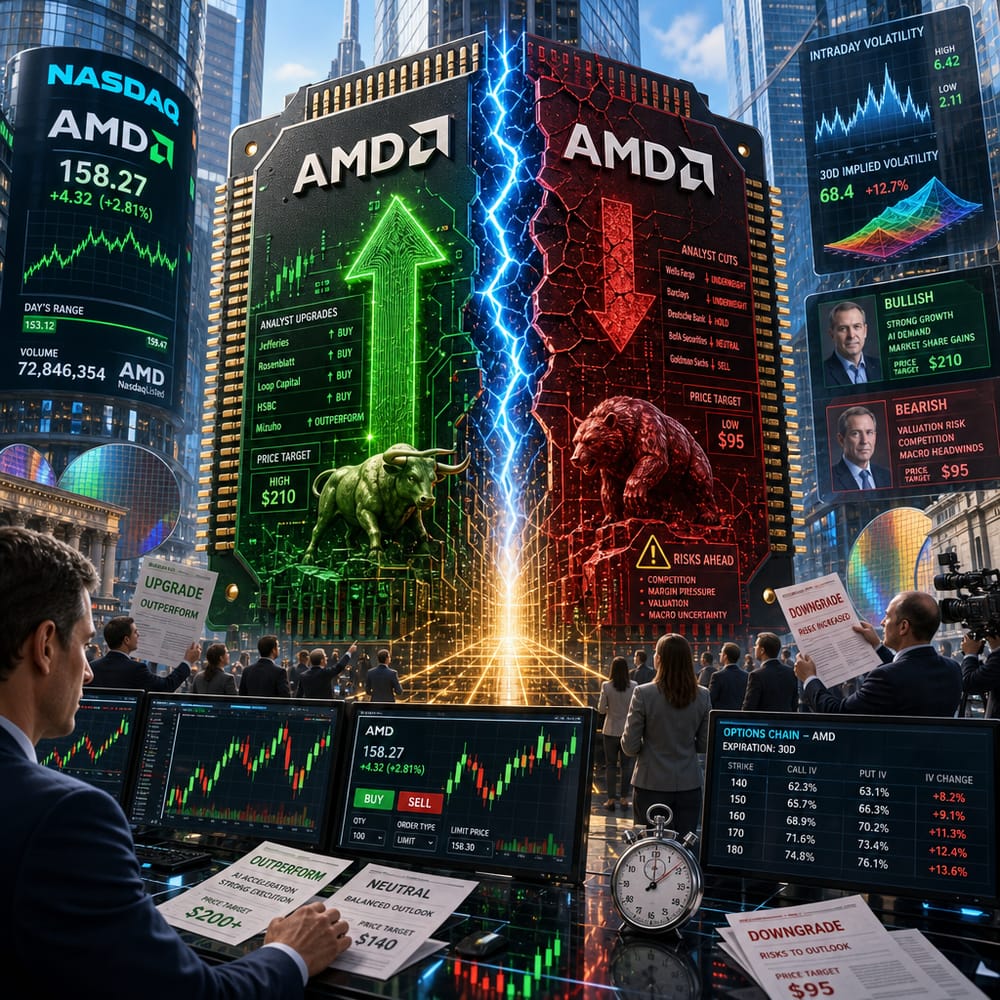
Picture this: Analysts are divided on AMD like a bag of Doritos split between Cool Ranch and Nacho Cheese fans. Some say it’s time to buy, touting AMD's innovation in the chip industry as the golden ticket to future riches. Others advise caution, highlighting potential market saturation and steep competition, particularly from Nvidia, the rival with a reputation for stealing the spotlight.
WHY THE DRAMA?
Let's break it down. AMD is a key player in the semiconductor market, a sector as hot as your local diner’s sizzling bacon. With computing power demands rocketing, AMD’s chips are the bread and butter for everything from your laptop to space-age AI applications. But that doesn’t mean it’s all plain sailing. The sector is notoriously volatile, and AMD is right in the eye of the storm.
A couple of analysts are bullish, citing advancements in AMD’s product line that could potentially edge out competition and capture greater market share. They’re banking on innovation to drive earnings upwards. On the flip side, the bears are concerned. They see warnings in the competitive landscape, particularly with Nvidia flexing its muscles in the AI sector and Intel making a comeback. And with global economic headwinds, some are jittery about future demand.
WHAT'S A STOCK GOTTA DO WITH IT?
So, what does this mean for AMD’s stock price? Well, expect things to get wavy. Divergent views typically breed volatility as traders react to every tidbit of news and analyst update, attempting to outguess the market. For AMD, this means its stock price could fluctuate more wildly than a cat on catnip.
Short-term traders, this is your moment. Volatility isn't just a drunken dance of stock prices; it's an opportunity. For those who thrive on quick decisions and fast-paced action, AMD represents a chance to capitalize on these swings. But remember, the more frantic the market, the higher the risk.
STRATEGIES TO CONSIDER
If you’re thinking, “How do I make the most out of this rollercoaster?” here are a couple of strategies to chew on:
1. Swing Trading: It’s like surfing. You’re riding the wave of short-term price movements. If you’ve got a keen eye for technical analysis, this could be your jam. Look for patterns and trends in AMD's stock price to decide when to get in and out.
2. Options Trading: If you’re feeling adventurous and have some experience under your belt, options might be worth a look. They allow you to bet on the movement of AMD without actually buying the stock. Just remember, options can be as risky as betting on your friend's karaoke skills.
3. Hedging: If all this volatility makes you as nervous as a cat in a room full of rocking chairs, consider hedging your bets. You can protect against losses through strategies like buying puts (a kind of insurance policy for your stock).
THE BOTTOM LINE
For the everyday investor, AMD’s analyst divergence is less about doom or boom and more about opportunity. Whether you’re looking to swoop in for a quick profit or safeguard your investments against turbulence, understanding the game here is crucial. Keep your coffee hot and your strategy sharp because with AMD in the spotlight, the stock market theater is open, and you’ve got front-row seats.
In the high-stakes world of stocks, being informed is your best bet. So stay curious, stay informed, and don’t be afraid to play the game. After all, the market’s just a giant chessboard, and every move counts.
This article is for informational purposes only and is not investment advice. Always do your own research or consult a licensed financial professional before making investment decisions.
© Copyright 2024. All Rights Reserved.
© Copyright 2024. All Rights Reserved.