

Amazon's Influence on Market Volatility Amid Rising Yields
Friday, September 25, 2026
AMAZON'S INFLUENCE ON MARKET VOLATILITY AMID RISING YIELDS
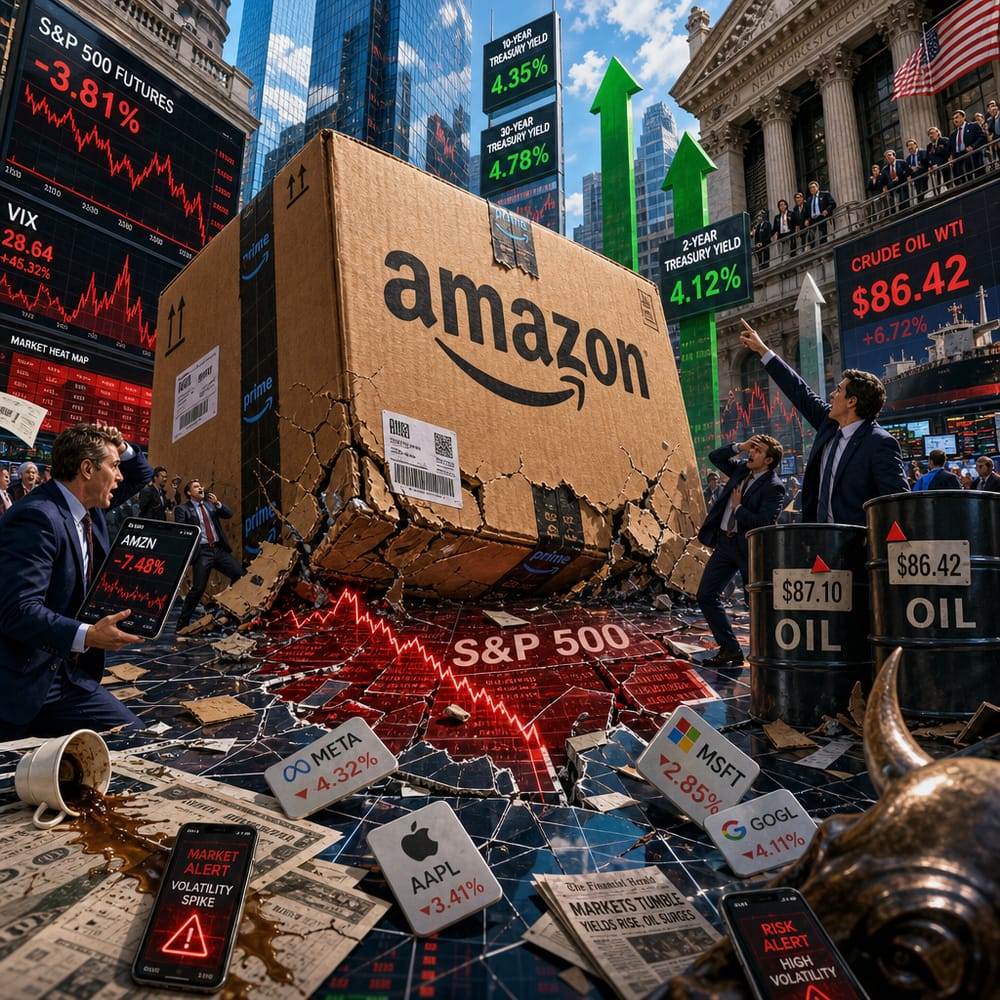
If you’ve been watching Amazon’s stock like a hawk, you're not alone. The giant retailer's recent roller-coaster performance has had investors clutching their portfolios a little tighter, as its ups and downs send ripples through the broader market. While Amazon is used to being a market mover, this time it’s caught in a storm of soaring Treasury yields and climbing oil prices, both of which are giving Wall Street the jitters. So, how exactly is Amazon swaying the market seas, and what’s an investor to do?
Let’s start with the basics. Treasury yields, those interest rates on U.S. government debt, have been climbing faster than a cat in a room full of rocking chairs. The 10-year yield just hit its highest level since 2007. That’s a big deal. Why? Because when these yields rise, they spell trouble for companies that rely on borrowing, like many of those mega-cap stocks we all know and love—Amazon included. Simply put, higher yields mean more expensive loans, and that can put a crimp in growth plans.
Amazon, with its sprawling operations and constant need for capital, feels the squeeze when borrowing costs rise. But it’s not just the company itself sweating—Amazon's stock is a major component of the S&P 500, the index that’s basically the speedometer of the American economy. When Amazon shares take a dive, it can drag the whole market down with it, like a heavyweight champion pulling the ring ropes down. And that’s exactly what we’re seeing; as Amazon stock stumbles, so does the S&P 500, putting a damper on investor spirits.
But wait, there’s more. Add to this financial soup a hearty serving of high oil prices. Crude’s been on a tear recently, thanks in part to geopolitical tensions like the Iran war, pushing energy costs higher across the board. For Amazon, which runs fleets of planes, trucks, and ships to deliver your must-have items, this is like a bad dream involving fuel receipts. Higher oil prices jack up Amazon's operating costs, squeezing margins that are already feeling the pinch from those pesky rising yields.
So, what does all this mean for your average Joe or Jane investor scrolling their phone for market updates? Here’s the scoop: Amazon’s recent stock movements aren’t just about Amazon. They’re a window into how broader economic forces are playing out in the market. Rising yields and oil prices are macroeconomic headwinds that investors need to keep an eye on because they don’t just affect one company—they ripple through sectors, knock around indices, and can generally wreak havoc on those quarterly statements.
Investors are reacting to this turbulence with a mix of caution and opportunism. Some are offloading Amazon shares, hedging their bets as they seek safer harbors in less volatile assets like bonds or cash. Others, those with a taste for risk, might be eyeing Amazon’s dips as a potential buying opportunity, hoping to snag shares at a discount. After all, Amazon isn’t going anywhere; its sheer size and market dominance mean it’s likely to weather the storm in the long run.
But here’s where it gets tricky. Predicting the future movements of Amazon stock is like trying to read tea leaves in a hurricane. With the Federal Reserve mulling over another rate hike and economic uncertainty swirling around like fall leaves, the market could swing either way. The best advice? Stay informed and keep your investment strategy flexible.
If you’re an investor, this is your call to action: don’t just watch Amazon; pay attention to the signals the market is sending about the broader economic picture. Rising Treasury yields and the implications of energy costs are issues that go beyond any single company's performance. They’re the kind of macroeconomic factors that will affect not just Amazon, but every corner of the market.
In short, while Amazon might be feeling the pressure from these economic forces, it’s also an indicator of the broader trends that will shape investor decisions in the coming months. So, whether you’re a bull, a bear, or somewhere in between, keep your eyes peeled and your strategies nimble. The market’s a wild ride, but with the right knowledge, you can navigate it like a pro.
This article is for informational purposes only and is not investment advice. Always do your own research or consult a licensed financial professional before making investment decisions.
© Copyright 2024. All Rights Reserved.
© Copyright 2024. All Rights Reserved.