

Amazon's Drone Delivery Expansion: A Logistics Game-Changer
Thursday, August 20, 2026
AMAZON'S DRONE DELIVERY EXPANSION: A LOGISTICS GAME-CHANGER
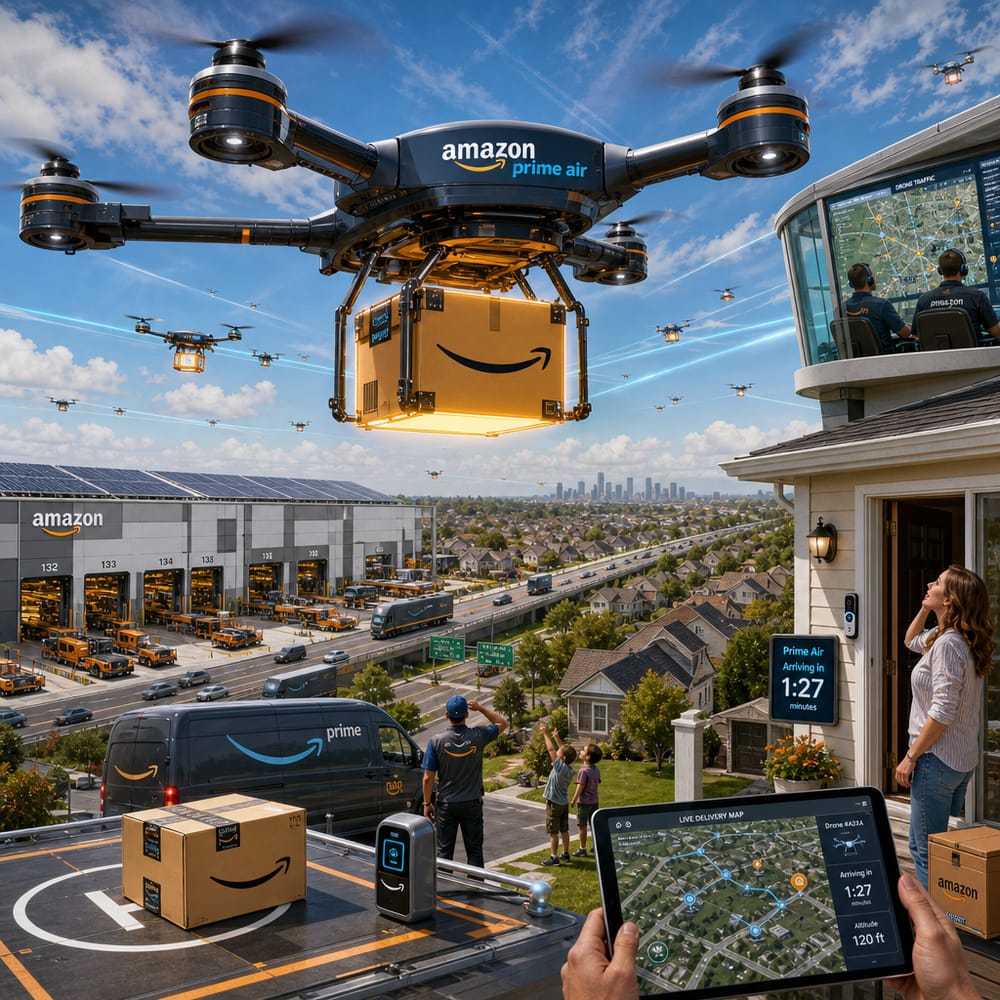
Imagine a sky filled not with birds or planes, but with packages. That's right, packages. Amazon is planning to turn the future into a page right out of a sci-fi novel by expanding its Prime Air drone delivery service to cover 30 million folks by the end of 2026. We might as well start calling them the postmen of the stratosphere. But before we start celebrating the end of waiting for the delivery guy, let's take a closer look at what this sky-high ambition really means for Amazon, the logistics sector, and, importantly, your stock portfolio.
A TALL ORDER IN LOGISTICS
First things first, let's talk about what it takes to get a drone fleet zipping around like a swarm of well-behaved bees. The logistics of expanding drone delivery are daunting. Drones are great at dodging skyscrapers but navigating the regulatory, technical, and operational landscapes? Not so much. Think of it as trying to organize an orchestra where each musician is in a different city.
Amazon needs to ensure these drones can operate efficiently over vast areas, including rural and urban locations. It's not just about batteries and rotors; it's about building a whole new logistics network that can handle gigabytes of data about package dimensions, weather conditions, and air traffic. Throw in varying geographic terrains, and it's clear that this isn't just child's play.
THE MARKET SHARE SHAKE-UP
Amazon's foray into airborne deliveries could redefine its retail game. With drones potentially cutting delivery times from days to minutes, the company could strengthen its hold in the retail sector. Imagine ordering a new pair of headphones and getting them delivered faster than you can finish your morning coffee. This kind of convenience could pull customers away from competitors faster than a drone on turbo mode.
The expansion into drone delivery might also allow Amazon to tap into areas that traditional delivery struggles to reach efficiently, opening new doors in untapped markets. Retail is all about who can deliver faster and cheaper, and if Amazon plays its drone cards right, it could soar past its competitors and grab an even larger piece of the retail pie.
REGULATORY HURDLES: A KITE IN A HURRICANE
Now, about those pesky regulations. The skies may be spacious, but they're far from free. For drones to become a common sight, Amazon will need to navigate a labyrinth of regulatory hurdles. The Federal Aviation Administration (FAA) doesn't just hand out drone licenses like candy on Halloween. They require rigorous safety checks, and passing those is as tough as getting a speeding ticket rescinded.
Moreover, each country has its own set of rules. This means that Amazon's dream of drone domination isn't just an engineering problem; it's a diplomatic one. The company will need to engage with regulators worldwide, adapting its strategies to align with local laws. In some places, this may be as simple as filing paperwork. In others, it could mean extensive lobbying and possibly even changing the rules of the local airspace game.
IMPACT ON THE BROADER LOGISTICS SECTOR
The ripple effects of this ambitious expansion could wash over the entire logistics sector. Traditional delivery services may find themselves in a bind, forced to improve efficiencies and lower costs to compete. Companies like FedEx and UPS might need to rethink their strategies if they want to keep up with Amazon's air force.
Of course, it's not just about delivering faster. It's about innovation. The logistics industry could see a surge of new technologies and approaches as companies scramble to keep pace with Amazon. This innovation could benefit consumers in the long run, leading to more efficient and environmentally friendly delivery methods.
THE STOCK MARKET ANGLE
Let's talk stocks. Amazon's big drone push isn't just a logistical power move; it's a potential stock shaker. Investors have their eyes peeled on how this expansion could boost Amazon's stock value. If the company can successfully integrate drones into its delivery network, it could mean higher margins and possibly a positive impact on its stock price.
Moreover, as Amazon integrates drones, it may influence the stock performance of its logistics-related suppliers and partners. Companies that provide drone technology, battery solutions, or even air traffic software could see a boost as investors anticipate Amazon-driven demand increase.
THE SKY’S THE LIMIT
So, what’s the takeaway here? Amazon’s soaring plans for drone delivery are about much more than convenience. They could reshape the logistics landscape, redefine retail dynamics, and ultimately, change the stock market narrative. As this sky-high saga unfolds, investors and competitors alike will be watching closely to see if Amazon can truly bring its aerial ambitions down to earth. If they succeed, the sky's not just the limit—it's the beginning of a whole new playing field.
This article is for informational purposes only and is not investment advice. Always do your own research or consult a licensed financial professional before making investment decisions.
© Copyright 2024. All Rights Reserved.
© Copyright 2024. All Rights Reserved.