

Amazon’s CapEx Strategy Under Scrutiny
Thursday, July 30, 2026
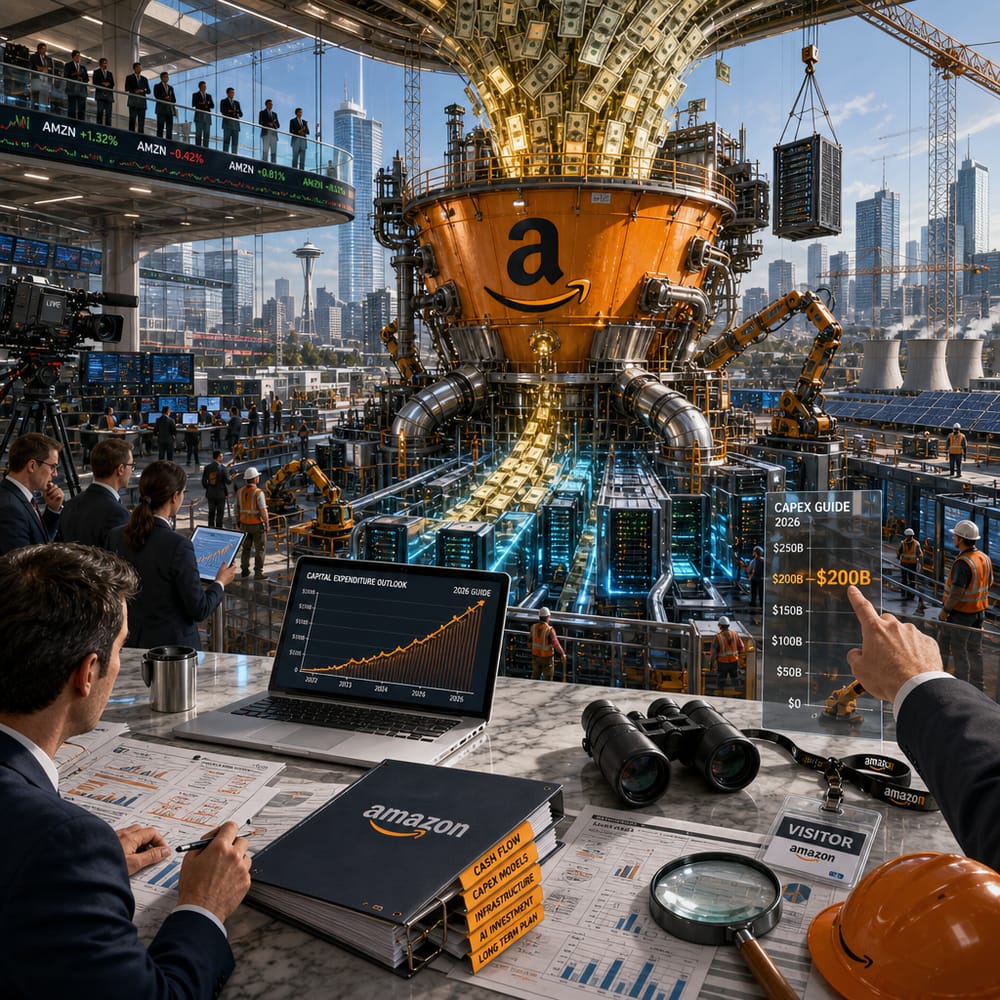
AMAZON'S EXPANSIVE SPENDING PLAN: A BLESSING OR A CURSE FOR INVESTORS?
Amazon is planning a spending spree that could make a shopaholic blush. The e-commerce giant has hinted at dropping a cool $200 billion on capital expenditures by 2026. Hold onto your Prime memberships, folks, because that’s a lot of next-day deliveries. But what does this mean for Amazon's stock and its investors?
Let’s break it down: Capital expenditure, or CapEx, is basically a fancy term for the money a company spends on major projects like new warehouses, cutting-edge technology, or that shiny fleet of delivery drones. For Amazon, it’s about investing in the future to stay ahead of the curve. Or at least, that’s the pitch.
But with a purse as big as Bez—sorry, Jassy's (Jeff who?)—the company’s hefty spending plan is causing a stir in the market. Analysts are peering through their magnifying glasses, noses pressed against earnings reports, trying to figure out if this is the golden ticket or a pumpkin in disguise.
WHAT'S EXPECTED IN THE EARNINGS REPORT?
Amazon's upcoming earnings report is the hot ticket on Wall Street. Everyone is waiting with bated breath to see if the Bezos-built behemoth can justify its extravagant spending. Analysts are anticipating impressive sales figures, as is tradition, but the real focus will be on the cost side of the equation.
Investors want to know if Amazon is getting bang for its megabucks. If the earnings show that Amazon can turn that $200 billion CapEx into a revenue-generating machine, the stock might continue its upward journey. However, if it looks like Amazon is throwing cash into a digital abyss, investors might start looking for greener pastures.
THE COMPETITIVE LANDSCAPE
Let’s talk rivals. How does Amazon's spending stack up against the competition? Microsoft, for example, has been splashing out in the name of AI and cloud computing, shaking hands with customers left and right with services like Azure. Recent earnings showed Microsoft pouring billions into data centers, which may sound eerily similar to Amazon’s plans, except Microsoft’s already reaping some early rewards.
Amazon's CapEx strategy is less about the glitzy AI party and more about reinforcing its core retail business. It’s like comparing a steak dinner to a gourmet salad—both investing in their strengths, but with different flavors. Meanwhile, Walmart and other retail giants are also stepping up their game, investing in technology and logistics to stay competitive, proving it's a cutthroat world out there.
THE BIG PICTURE: IMPACT ON AMAZON STOCK
So what does this mammoth spending mean for Amazon’s stock? Potentially, a lot. An expansive CapEx plan could mean massive growth potential, but it also invites risk. If Amazon’s ventures pay off and they can outpace rivals in delivery speed, scale, and tech prowess, the stock could soar.
However, if the projects don’t deliver as expected, it could weigh heavily on investor sentiment. Just ask Meta, which recently tanked after soft projections. Remember, in the stock market, confidence is key, and a stumbling giant can trigger panic.
ANALYSTS' VERDICT
Analysts are walking a tightrope. On one hand, Amazon has an impressive track record of turning big investments into bigger profits. On the other, there's a nagging fear that it might overextend, turning its cash flow into a trickle.
At the end of the day, the $200 billion question is whether Amazon can maintain its status as a tech titan while innovating across multiple fronts. If history is any guide, Amazon has rarely done anything by halves—so if you're betting on Bezos’ brainchild, brace yourself for either a wild ride to the top or a tumble along the way.
For now, Amazon's CapEx strategy remains under the microscope, and rightly so. It’s a bold move that could redefine the company's future and the market's perception of tech investments. As the earnings report looms, one thing’s for sure: whether you’re an investor or just a curious onlooker, Amazon’s financial antics are a spectacle worthy of popcorn.
This article is for informational purposes only and is not investment advice. Always do your own research or consult a licensed financial professional before making investment decisions.
© Copyright 2024. All Rights Reserved.
© Copyright 2024. All Rights Reserved.