

Alexandria Real Estate Equities (ARE) Downgrade: A Shift in REIT Strategy
Sunday, September 27, 2026
ALEXANDRIA REAL ESTATE EQUITIES (ARE) DOWNGRADE: A SHIFT IN REIT STRATEGY
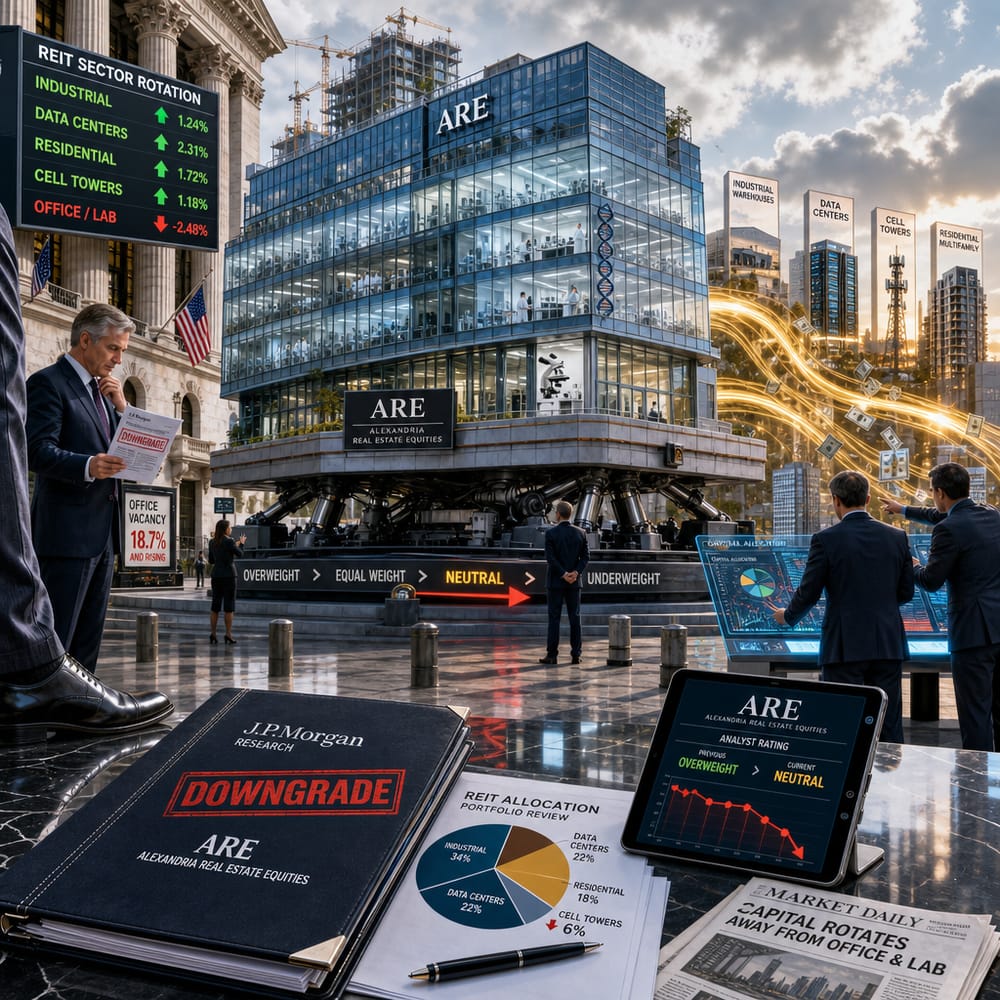
Hold onto your smart devices, fellow investors, because JPMorgan just dropped a bombshell that’s got the REIT world buzzing. Alexandria Real Estate Equities, the glittering gem of life sciences and office real estate, has been downgraded faster than a falling elevator, sparking questions about what’s next for this cornerstone of the market.
So, what’s behind this downgrade? Is Alexandria’s lab space losing its luster, or is the broader market giving office spaces the cold shoulder?
LET'S TALK ABOUT THE WHY
JPMorgan’s decision isn’t just about Alexandria; it’s a narrative of a broader market shift. The downgrade reflects growing concerns over the commercial real estate sector's prospects, particularly in office and lab spaces. These areas, once the darlings of the real estate bubbles, are now facing the harsh scrutiny of a post-pandemic world where remote work has become a permanent fixture, and lab funding faces its own challenges.
With interest rates climbing like they’ve strapped on jetpacks, investors are increasingly jittery about the real estate market's future. The high rates make borrowing more expensive, a reality that stings particularly hard for companies relying on heavy financing, like Alexandria. These changes in the fiscal landscape are causing a shift in REIT strategies, as investors hunt for yield in safer, more predictable bets.
THE SHIFTING REIT LANDSCAPE
The REIT sector is undergoing a tectonic shift, dear reader. Investors are fleeing the once-coveted office and lab spaces faster than a New Yorker during a long weekend. Instead, they’re cozying up to more recession-proof sectors. Think industrial warehouses (thank you, e-commerce boom!) and residential REITs, where the rent is always due and the tenants prefer locking in leases than risking the perils of homeownership.
This reallocation within the REIT sector is not just about playing it safe; it's about being savvy in a market that is anything but predictable. Investors are increasingly aware of the risks that come with office and lab spaces, thanks to the changing work dynamics and uncertain government funding for research. The smart money is hedging its bets on the sectors least likely to rock the boat amidst the current economic storm.
WHAT SHOULD INVESTORS DO?
Now, what about retail investors like you? The ones who aren’t just flipping through TikTok but actually want to make informed decisions on where to park their hard-earned cash?
First, consider the nature of your current REIT holdings. Are they aligned with sectors facing the headwinds of a shifting economy, like office and lab spaces? If so, it might be time to rethink your strategy. Diversification is the golden goose here. Look at REITs in sectors with stable demand and less exposure to economic vagaries. Industrial, residential, and even some healthcare REITs might offer more stable returns in these uncertain times.
Second, keep an eye on market trends and rate hikes. The Federal Reserve's actions can influence the cost of capital for real estate companies significantly. High rates might cool off the sector, but they can also present buying opportunities if you’re ready to swoop in when valuations dip.
Lastly, remember that economic winds are always changing. Adaptability is key. Just because office and lab spaces are out of favor now doesn't mean they won't bounce back. Keep your ears to the ground and stay informed. The key to thriving in the REIT market, or any market really, isn’t just about picking winners, but about being swift on your feet and adjusting your strategy to meet the market where it’s headed, not where it's been.
So there you have it, dear investor: a shifting REIT landscape, a downgraded Alexandria, and a clear indication that the times, they are a-changin’. Keep your portfolio flexible, your eyes open, and remember – in the world of investing, knowledge is your best asset.
This article is for informational purposes only and is not investment advice. Always do your own research or consult a licensed financial professional before making investment decisions.
© Copyright 2024. All Rights Reserved.
© Copyright 2024. All Rights Reserved.