

Akamai Downgrade by HSBC Sharpens Sell-Off in AI-Adjacent Large Caps
Saturday, September 26, 2026
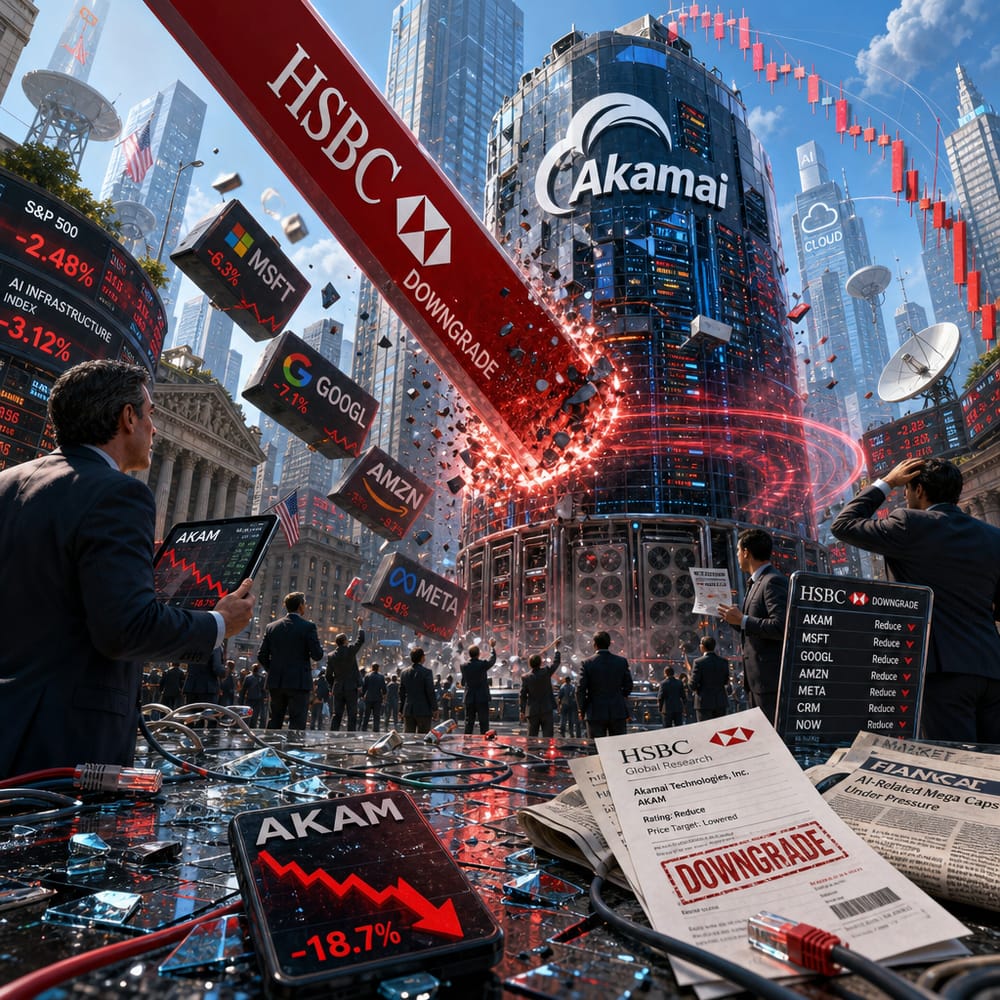
Down on Wall Street, when a heavyweight sneezes, everyone catches a cold. And when HSBC turned its nose up at Akamai Technologies, the ripple was palpable. The financial giant downgraded Akamai, and what followed was a stock price tumble so swift it left investors clutching their smartphones and nervously glancing at their watchlists.
HSBC's downgrade of Akamai is more than just a hiccup for the company; it’s a symptom of a broader anxiety infecting the AI and cloud infrastructure sectors. Akamai, a stalwart in content delivery networks and cybersecurity, has become a bellwether for AI-adjacent large caps, and this downgrade has sent shockwaves reverberating through the market.
Ever since the AI gold rush began, mega-cap tech stocks have been basking in the glow of investor optimism, with Akamai riding that wave like a seasoned pro surfer. But it seems that tide is ebbing, and Akamai’s recent nosedive is proof. The downgrade from HSBC, citing concerns about slowing growth and increasing competition, pushed Akamai’s stock down significantly, leaving investors wondering if this is just the beginning.
The broader implications for AI and cloud infrastructure stocks are as vast as they are worrisome. The honeymoon phase for AI stocks might be drawing to a close, as investors shift from frothy euphoria to a more sober assessment of fundamentals. Companies that have been riding high on AI hype could find themselves scrutinized under a more unforgiving lens. If Akamai’s drop is a wake-up call, then the message is clear: It’s time to differentiate between genuine long-term potential and speculative exuberance.
But let’s talk about the elephant in the room: Are other companies in the sector facing a similar fate? The short answer is yes. While Akamai has taken the brunt of the immediate fallout, the ripples are being felt by its peers. Companies like Cloudflare and Fastly, which share Akamai’s neighborhood in the content delivery and cloud infrastructure space, are experiencing a subtle yet noticeable shiver down their spines. Investors, once giddy over the prospects of these AI-adjacent companies, might start questioning if the grass is indeed greener.
This downgrade has a ripple effect that extends beyond just stock prices. It renews the pressure on mega-cap stocks as analysts and investors recalibrate their expectations for growth. Investors now face the quandary of whether to hold on tight for a potential rebound or cut their losses and run for safer, greener pastures.
The broader market is also in a state of flux. Interest rates climbing, inflation fears simmering—it's a cocktail of uncertainty that has left investors with more questions than answers. If AI is the future, then the road to that future might be rockier than expected, with a few speed bumps along the way.
Despite the recent downturn, not all is doom and gloom. Akamai, with its robust portfolio and strategic initiatives in cybersecurity and cloud services, still holds long-term promise. But in this climate, companies will need to do more than just promise—they’ll need to deliver. As pressures mount, both from within the sector and from broader economic forces, only the nimble and adaptable will thrive.
Investors are now left to ponder the age-old question: Is this dip a buying opportunity, or a sign of darker days ahead? With a hawk-eyed HSBC watching over, and other analysts likely to follow suit, the answer might not be clear cut. What is certain is that the recent Akamai saga serves as a reminder that in the fast-moving world of stocks, fortunes can change with the stroke of a pen—a very influential pen.
As the dust settles on Akamai’s downgrade, the real story is about more than just one company’s stumble. It’s a chapter in the larger narrative of AI and its place in the market. For those with the stomach for it, the sector still holds promise. But for now, investors might just want to keep their seatbelts fastened and their eyes peeled for the next twist in this volatile market ride.
This article is for informational purposes only and is not investment advice. Always do your own research or consult a licensed financial professional before making investment decisions.
© Copyright 2024. All Rights Reserved.
© Copyright 2024. All Rights Reserved.