

AI Boom Sparks a Memory Shortage and Soaring Chip Prices
Thursday, November 20, 2025
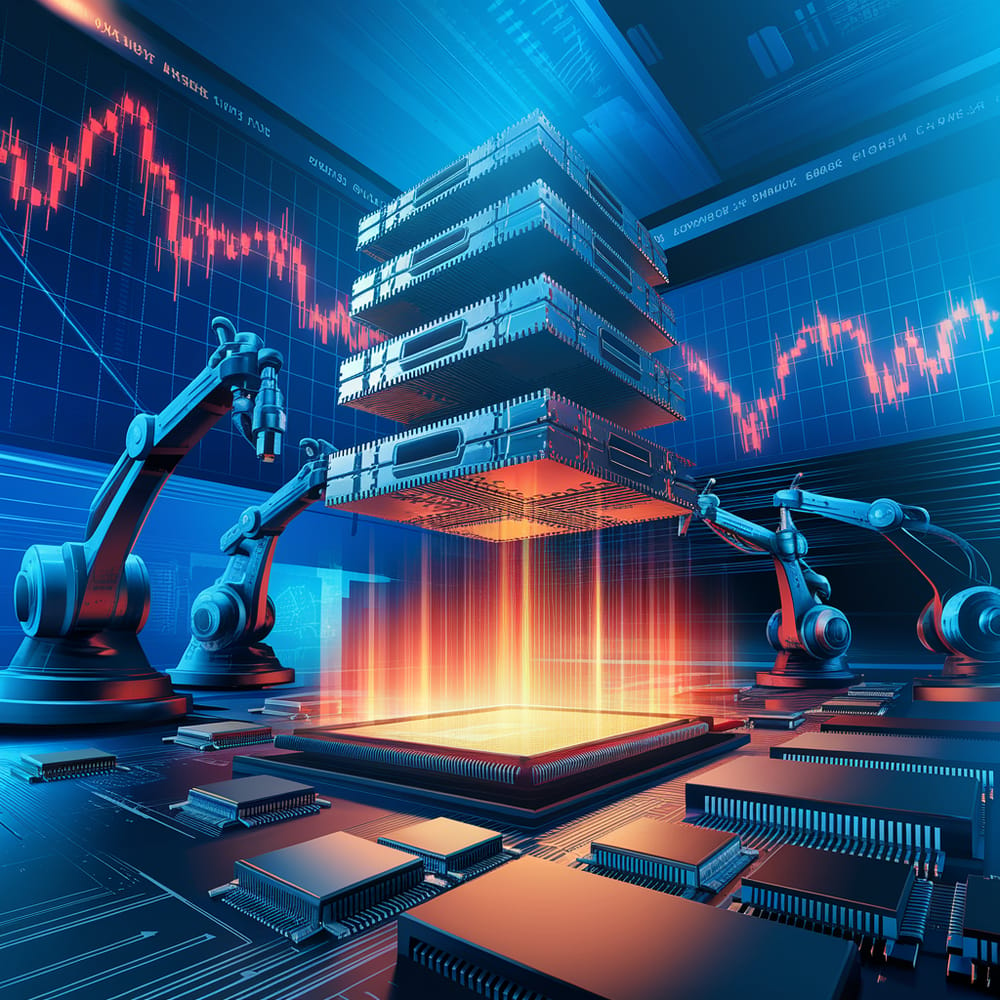
AI’s Appetite Is Breaking the Memory Market
First it was GPUs. Then electricity. Now AI’s runaway growth is colliding with another critical resource: memory.
With tech giants pouring hundreds of billions into new AI data centers, demand for DRAM — the basic building block of memory — is exploding. The result? A tightening supply crunch that’s driving prices sharply higher across the industry.
Memory chips that once cost around $100 are now soaring past $250, and analysts warn the spike is only beginning.
Data Centers Are Gobbling HBM Faster Than It Can Be Made
Consumer PCs, tablets, phones, game consoles, medical devices — they all rely on DRAM. But AI supercomputers require far more powerful high-bandwidth memory (HBM), the premium-grade chips used to feed GPUs like Nvidia’s.
Because HBM is so much more profitable, manufacturers are shifting production toward it and away from traditional DRAM, starving the rest of the market.
That imbalance is now ricocheting through everyday products. Budget laptop makers, for example, have little buffer to swallow higher memory costs, meaning consumers could soon see steeper prices.
Only a Handful of Firms Control the Supply
The world’s DRAM supply rests on the shoulders of just three companies: Samsung, SK Hynix, and Micron. With demand for AI hardware surging, their factories simply can’t keep up.
Some manufacturers have already raised memory prices as much as 60% — a sign of how strained the ecosystem has become.
Analysts say the problem isn’t isolated to PCs. Anything with embedded computing — cars, medical scanners, industrial machines, game consoles — will feel the squeeze.
Consumers Could Be Hit Next
Device makers have only a few options:
- Swap in cheaper components elsewhere
- Push suppliers to cut costs
- Or pass the pain straight to consumers
For lower-cost products, there’s little wiggle room. Margins are too thin. If memory keeps rising, sticker prices will rise with it.
A Classic Boom-Bust Cycle — but With a Twist
Industry veterans note that memory has always been cyclical. Huge demand triggers factory expansions; oversupply sends prices crashing.
But this time, there’s no clear end in sight. The global race to build AI infrastructure means demand could remain sky-high for years. Data centers are springing up everywhere, and every one of them requires massive pools of memory.
In short: this crunch won’t magically resolve itself.
Bottom Line
AI isn’t just reshaping software — it’s overwhelming the hardware supply chain. As HBM production soaks up manufacturing capacity, anything that relies on traditional DRAM risks shortages and higher prices.
Unless memory manufacturing scales dramatically, the AI boom may keep squeezing the industry — and eventually, consumers’ wallets.
© Copyright 2024. All Rights Reserved.
© Copyright 2024. All Rights Reserved.