

AI Wealth Effect Drives Mega-Cap Tech Gains
Saturday, October 03, 2026
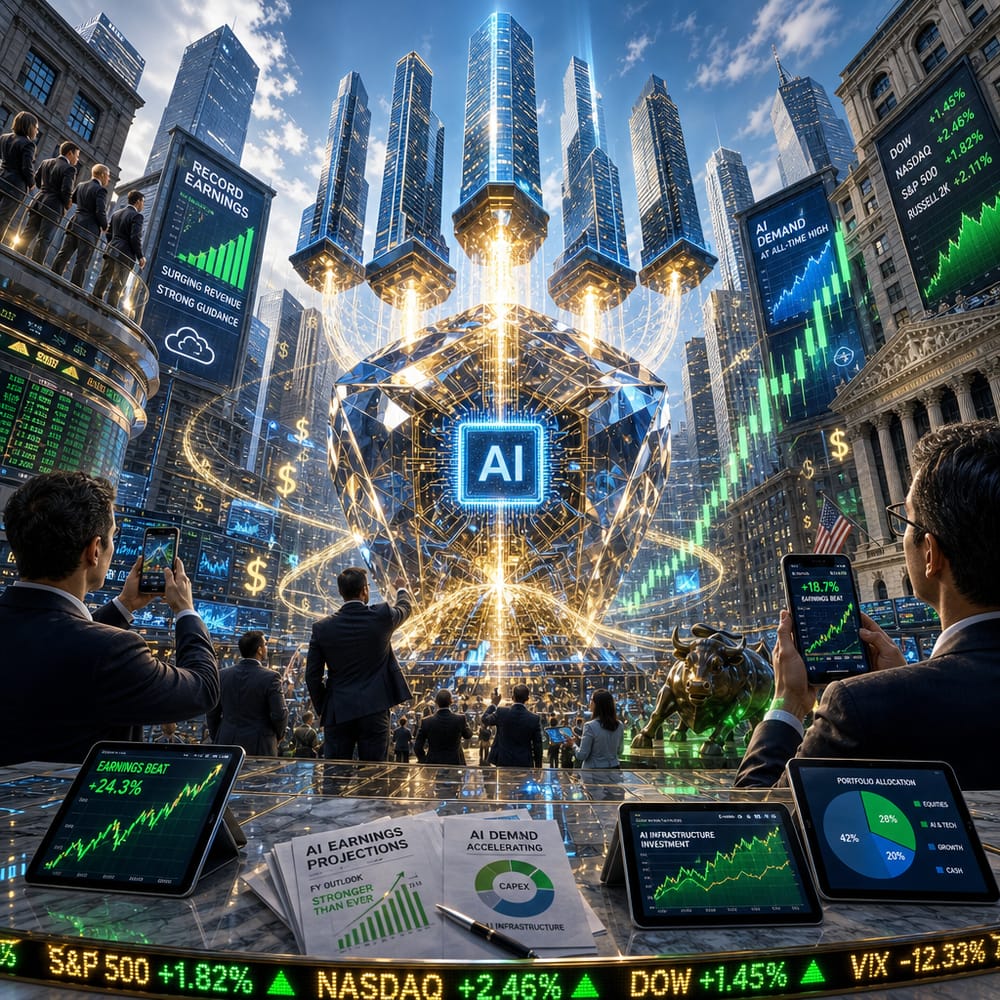
AI WEALTH EFFECT DRIVES MEGA-CAP TECH GAINS
If you thought the stock market was a jungle, think again. It’s more like a sci-fi movie where artificial intelligence (AI) is the star, and mega-cap tech stocks are the superheroes with capes that can seemingly defy gravity. Right now, investors can't get enough of them, all thanks to the so-called "AI wealth effect." But before you start thinking of AI as your golden ticket to market riches, let's break down what this phenomenon means for the market—and your portfolio.
Imagine you're at a party where everyone is whispering about a new guest: AI. Mega-cap tech companies like Apple, Microsoft, and Alphabet have invited AI into their homes, and investors are swooning. These tech behemoths are leading the charge in AI development, and Wall Street is betting big on their success. The result? Their stock prices are soaring through the roof faster than you can say "ChatGPT."
So, what's the big deal? Well, the AI wealth effect has the power to reshape the market landscape. Picture a tidal wave of excitement lifting these tech titans higher, while leaving behind many smaller fish in the sea. This could mean a more concentrated market where a handful of companies wield an outsized influence. Great for the heavyweights, not so much for the little guys trying to keep up.
But let's not get ahead of ourselves. The question on everyone's minds is: How sustainable is this mega-cap tech rally? The short answer is: it’s a mixed bag. Sure, AI brings massive potential, from creating new revenue streams to optimizing operations. But the hype balloon can only inflate so much before it bursts.
The AI boom is like a double-edged sword. Yes, it can turbocharge growth and make our lives more efficient, but relying too heavily on a handful of companies poses risks. If any of these tech giants stumble, it could send shockwaves through the market. Diversification, that age-old wisdom, might become more crucial than ever.
As the AI parade marches on, it’s also worth noting the growing whispers of dissent. In the U.S. and beyond, data centers—the unsung heroes powering AI—are facing backlash. Concerns about their environmental impact and energy consumption are turning into political debates, especially in regions where electricity prices are sky-high. These tensions could slow down AI's expansion, potentially dampening investor enthusiasm.
On the flip side, the AI buzz isn't all smoke and mirrors. The long-term implications are vast. AI could usher in a new era of productivity, much like the internet did decades ago. This could mean more innovation, more economic growth, and yes, more investor opportunities. But remember, every silver lining has its cloud. As AI weaves its way into the market fabric, it could also exacerbate existing inequalities, concentrating wealth and power in fewer hands.
So, where does that leave us? For investors, it’s about striking a balance. Keep an eye on those mega-cap stocks, but don't forget to sprinkle some diversification into your portfolio. Consider industries that might benefit from AI's rise, such as cybersecurity, semiconductors, and even healthcare. Just like in a game of chess, you need to think several moves ahead.
In a world increasingly powered by AI, the market’s dynamics are shifting. The temptation to jump on the mega-cap tech bandwagon is strong, but savvy investors will look beyond the immediate gains. AI's potential is enormous, but so are the challenges it brings. As the old saying goes, "Don't put all your eggs in one basket"—especially when that basket is still figuring out what it wants to be when it grows up.
So, whether you're a stock market newbie or a seasoned pro, keep your eyes peeled and your portfolio diversified. The AI wealth effect might just be the start of a new chapter in market history—one that promises plenty of twists, turns, and opportunities for those who are ready to seize them.
This article is for informational purposes only and is not investment advice. Always do your own research or consult a licensed financial professional before making investment decisions.
© Copyright 2024. All Rights Reserved.
© Copyright 2024. All Rights Reserved.