

AI & Tech-Led Midterm Sell-Off Sparks Broad Market Drop
Saturday, November 07, 2026
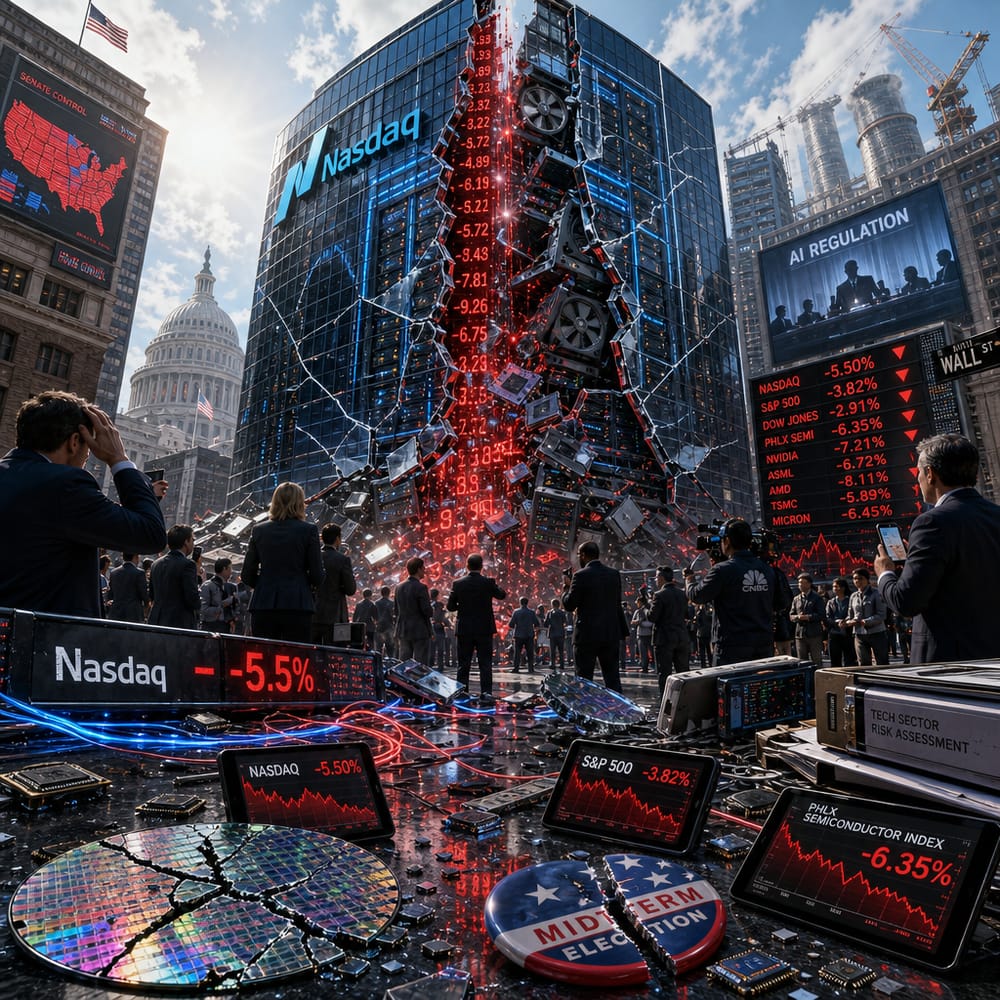
THE GREAT AI TECH CRASH: WHY THE MARKET FREAKED OUT
If you’ve ever wanted to see what panic looks like, just picture Wall Street traders on November 5, 2026. Like a crowd in a horror movie, they were rushing for the exits. The Nasdaq plunged 5.5%, dragging the Dow and the S&P 500 along for the ride. All because investors collectively decided they’d had enough of tech stocks — at least for one day.
So, what the heck happened?
To begin with, blame politics. A blue wave swept the Democrats into power, claiming both chambers of Congress. That means they're free to unleash a flurry of new regulations. And guess what’s top of their list? That’s right: the tech sector. In their crosshairs are AI and the booming data center industry — the very lifelines of the tech economy.
It all comes down to control. As AI becomes more integrated into every facet of life — from your shopping habits to your Spotify playlist — politicians are getting twitchy about privacy and monopolies. And who can blame them? Nobody likes a world where a robot overlord could potentially outsmart us. But while the politicos debate ethics and privacy concerns, investors are left worrying if their shares in the next electric sheep dream might crash and burn.
Now, if you think this sounds familiar, you're not wrong. Tech stocks have been the stars of Wall Street, dazzling us with their sky-high valuations. Companies have been racing to build bigger and better data centers to feed our insatiable appetite for all things digital. But with talks of regulation, investors have been forced to reevaluate the risk: What if the regulatory hammer falls and crushes their golden goose?
The PHLX Semiconductor Index, which tracks the crucial chips powering these data centers, took a hard hit, losing its shine amidst the chaos. Semiconductors are to AI what fuel is to an engine — without them, nothing runs. But fears of restrictions on AI development could slow down chip demand, sending shockwaves through the industry.
And then there's the Federal Reserve, lurking in the shadows. With the market in a tailspin and inflation seemingly on a leash, folks are starting to wonder if the Fed might cut interest rates sooner than expected. But wait — don't pop that champagne just yet. Any change in Fed policy could have a domino effect. If the Fed swoops in with a rate cut to calm nerves, it risks spurring another round of asset bubbles. We've all seen that movie before, and spoilers: it doesn’t end well.
So, where does that leave us? Basically, in a whirlwind of uncertainty. Investors are unnerved by the thought of increased regulations and changing monetary policies. While the tech industry grapples with dramatic sell-offs and reevaluations, the rest of us are left questioning the future of our portfolios. It’s like being forced to suddenly play a high-stakes game of chess with hands tied behind our backs.
The big takeaway here? Diversification, folks. It’s not just a buzzword investment advisors throw around to sound smart. The recent tech-driven selloff is a blunt reminder that being too reliant on one sector — even one as seemingly bulletproof as tech — can lead to catastrophe. Spreading out investments across different sectors and asset classes can help cushion the blow when one sector takes a nosedive.
Sure, it’s tempting to bet big on AI, dreaming of the next big thing that could revolutionize the world. But as this week has shown, even the most promising advancements come with risks. The trick is balancing that hope with a dose of reality, and maybe a side of skepticism.
Whether you’re a seasoned investor or just someone trying to make sense of the mess, this is a wake-up call. Keep your eyes wide open, your portfolio balanced, and remember — even in the age of AI, nothing beats good old-fashioned common sense.
This article is for informational purposes only and is not investment advice. Always do your own research or consult a licensed financial professional before making investment decisions.
© Copyright 2024. All Rights Reserved.
© Copyright 2024. All Rights Reserved.