

AI Stocks Bear the Brunt: S&P 500 Suffers Worst Day Since July as Investor Sentiment Tanks
Wednesday, October 14, 2026
AI Stocks Bear the Brunt: S&P 500 Suffers Worst Day Since July as Investor Sentiment Tanks
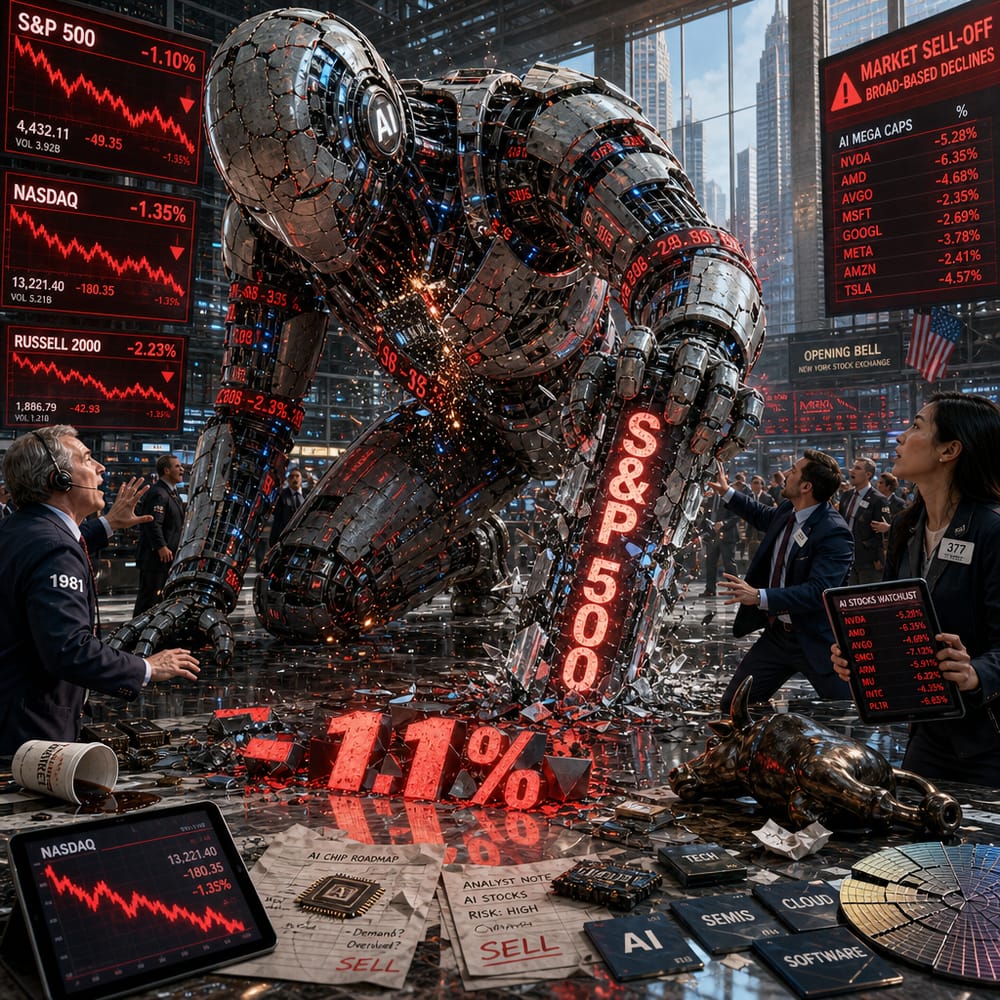
When the artificial intelligence high-flyers catch a cold, the entire stock market sneezes. On October 14, the S&P 500 shivered its way to a 1.1% decline — the worst hit since July, with AI and tech stocks taking the brunt of the sell-off. Investors didn’t just reach for tissues; they headed for the exits in droves.
What triggered this sudden bout of market malaise? Well, it seems the tech darlings, particularly those tethered to the AI sector, aren't as invincible as we thought. When computers are smarter than ever, why do investors suddenly feel so dumb for betting on them? Blame it on rising borrowing costs. As the specter of higher interest rates looms large, tech valuations, which are essentially built on the promise of future growth, start looking as shaky as a Jenga tower in the middle of a hurricane.
Inflation reared its ugly head again, clocking in hotter than a midsummer Phoenix afternoon, and sent tremors through the market with the prospect of rate hikes from the Federal Reserve. Higher rates are like kryptonite for tech stocks. They make borrowing more expensive, which can slow expansion—and for growth-heavy sectors like tech and AI, that's akin to throwing sand in the gears.
Moreover, AI-focused companies are feeling the heat from a mix of bad press and legal woes. OpenAI, one of the bright spots turned cautionary tales, is caught up in a legal tangle with eight U.S. states over safety concerns with its ChatGPT. Not exactly a confidence booster for investors who were banking on AI to be the savior of their portfolios.
But it's not just legal dramas pulling the curtains back on the AI stage. The CoreWeave fiasco, with bonds hitting a gut-wrenching 15% yield, has traders scrambling like it's the last call at a stock market bar. Once heralded as a hero of the neocloud, CoreWeave is now looking more like a cautionary tale as it desperately seeks new financing avenues, including insurance companies.
So, what does this all mean for future tech investments? If you were hoping for a simple answer, buckle up. Rising rates are likely to force investors to rethink the rosy valuation models they’ve been using. Those “growth at any cost” days might be behind us, at least for now. It's a wake-up call for everyone who thought AI firms were an automatic ticket to wealth.
Not to mention, as traditional sectors like energy and finance suddenly look more attractive amidst these rate hikes, will tech and AI remain the apples of investors’ eyes? They might need more than just innovation to win back market confidence.
The Nasdaq and Russell 2000 didn't fare any better, both registering significant losses as the mood on Wall Street turned as sour as week-old milk. The indexes, loaded with tech and small-cap stocks, respectively, found themselves caught in the downdraft as well.
For retail investors scrolling through their portfolios, this could be a moment to reassess strategies. Diversification seems more prudent now than ever. While the allure of AI stocks might still be strong, relying solely on future promises in a world where interest rates are climbing faster than a cat up a tree might not be the wisest course of action.
As we turn the page towards the year's end, the AI and tech sectors' ability to bounce back will largely depend on how they navigate the twin challenges of rising rates and mounting skepticism. For now, the S&P 500’s tumble serves as a stark reminder that even the most groundbreaking technologies aren't immune to the whims of market sentiment.
In the meantime, it might be wise to keep one eye on those inflation reports and the other on the Fed's next moves. Because if there's one thing the market hates more than uncertainty, it's certainty that costs more than expected. As for AI? The future may be bright, but don't forget to pack your sunglasses—and a healthy dose of skepticism.
This article is for informational purposes only and is not investment advice. Always do your own research or consult a licensed financial professional before making investment decisions.
© Copyright 2024. All Rights Reserved.
© Copyright 2024. All Rights Reserved.