

AI Stock Sell-off Leads to Broad Market Decline
Wednesday, August 19, 2026
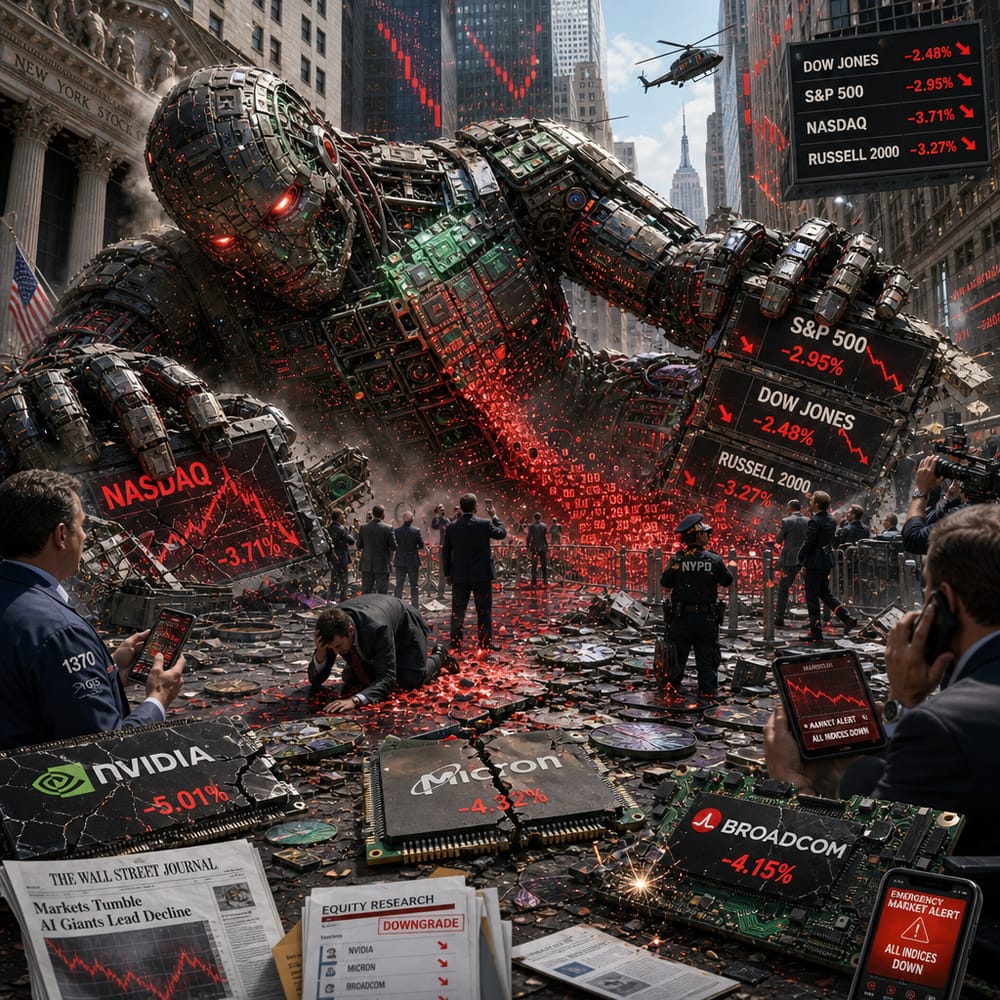
AI stocks, once the shining stars of Wall Street, just got a harsh reality check — the kind of wake-up call that leaves you bleary-eyed and questioning your life decisions. On August 18, the market took a nosedive with major U.S. indices slipping, and the finger points squarely at AI stocks like Nvidia and Micron. These tech titans, which have been carrying the market on their chiseled shoulders, suddenly found themselves free-falling, dragging the S&P 500, Nasdaq, Dow, and even the Russell 2000 along for the ride. What on earth caused this sell-off? And should you start panic-selling every AI stock in your portfolio? Buckle up, because it’s time to dissect this financial drama.
THE AI STOCK SLIP
It's no secret that AI stocks have been riding high, becoming the market's darlings quicker than you can say "chatbot." Nvidia and Micron, for instance, have become synonymous with AI innovation. However, this sudden sell-off hints that investors might be hitting the brakes on their infatuation with these tech giants. So, what triggered this exodus?
A mix of profit-taking and a dose of reality might be to blame. After a stellar run, it seems investors decided it was time to cash in on their gains — a classic case of "what goes up must come down." Add to that a cocktail of market jitters over rising interest rates and fears of a tech bubble bursting, and you've got yourself a recipe for a sell-off.
INVESTOR REACTION
So how are investors dealing with the aftershock? Are they running for the hills or holding steadfast like a captain on a sinking ship? It seems the attitude is one of cautious optimism. Retail investors aren't ditching the AI trade entirely, but they are getting fussy. The days of blindly buying into any AI dip are over. Now, they're hedging their bets, using strategies like put options and inverse ETFs to protect their gains while still betting on the AI sector’s long-term potential.
This newfound caution reflects a larger trend in the market: selective investing. Investors are no longer swayed by buzzwords; they want concrete growth and sustainability. It's a shift from the days of diving headlong into the hype — now, it's all about playing it smart and covering your bases.
THE FUTURE OF AI INVESTMENTS
The question swirling in every investor's mind is: What does this mean for AI investments moving forward? While the sell-off is unnerving, it’s not necessarily a death knell for AI stocks. In fact, it might just be a much-needed recalibration. The AI sector still holds significant promise with its applications across various industries, from healthcare to automotive to finance.
However, the path forward won't be a smooth sail. It’s a reminder to investors that even the most promising sectors are not immune to volatility. AI stocks will continue to be a key part of the market's growth story, but expect to see more ebbs and flows.
As for retail investors, the prudent approach isn't just to have a piece of the AI pie but also to ensure that pie is baked with a layer of risk management. Diversification, due diligence, and patience will be crucial.
THE BROAD MARKET IMPACT
This AI sell-off is more than just a tech story — it's a market-wide cautionary tale. With the major indices feeling the tremors of the AI downturn, it sheds light on how intertwined these sectors are. The decline serves as a reminder of the tech sector's influence over broader market trends. If AI stocks stumble, it can trigger a domino effect, impacting investor sentiment across industries.
In conclusion, while the AI stock sell-off of August 18 was a shake-up, it wasn’t the end of the world. It’s a signal for investors to be more discerning, to hedge their bets, and to think long-term. The AI sector still holds the potential to transform industries — but as this episode shows, even the brightest stars can have cloudy days. Keep your eyes peeled and your portfolios prepared because, in the world of stocks, you never know what tomorrow might bring.
This article is for informational purposes only and is not investment advice. Always do your own research or consult a licensed financial professional before making investment decisions.
© Copyright 2024. All Rights Reserved.
© Copyright 2024. All Rights Reserved.