

AI Sell-Off and Rising Yields Undermine Index Momentum
Thursday, October 15, 2026
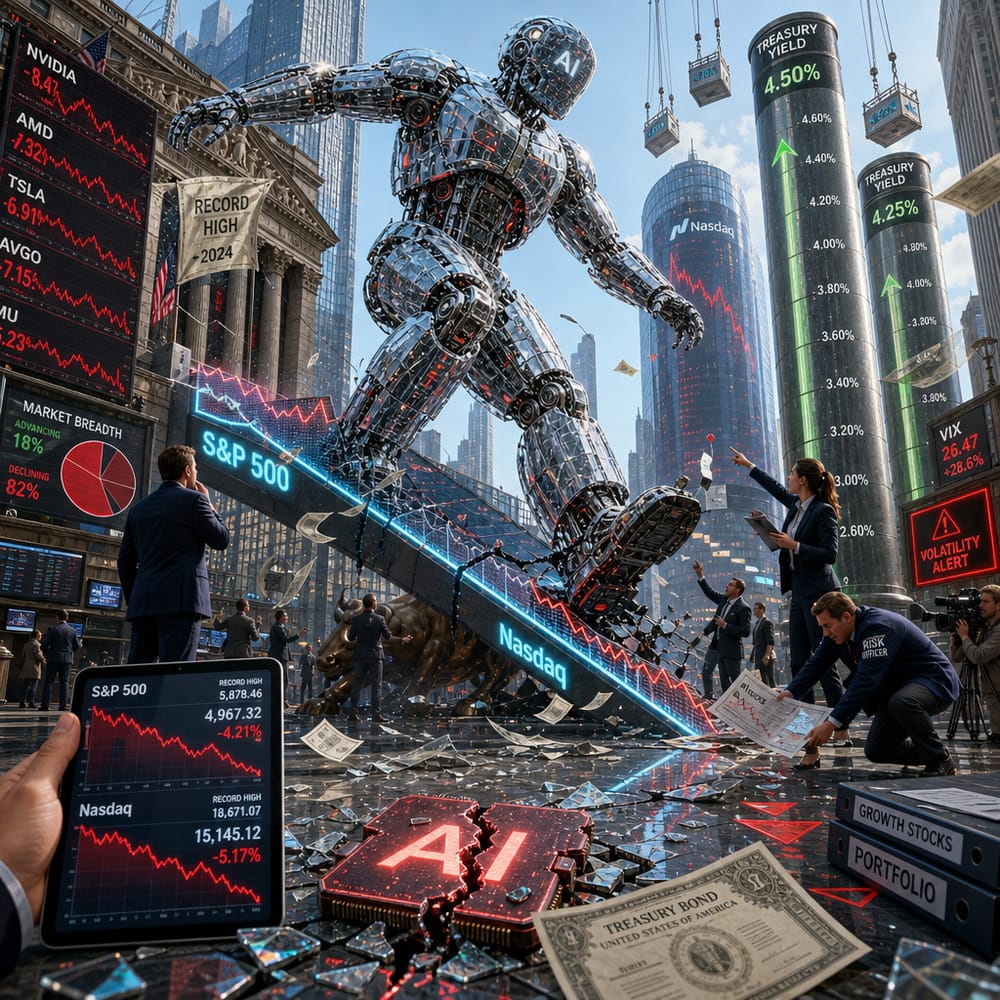
MARKETS SLIP FROM PEAK AS AI SHAKEOUT MEETS RISING YIELDS
It's like watching a thrilling TV series—just as you think the plot's moving towards a happy ending, a shocking twist leaves you on the edge of your seat. This is precisely what's unfolding in the stock market, where concerns about sky-high valuations in AI stocks and climbing Treasury yields are turning what was once a blockbuster hit into a nail-biting thriller.
The S&P 500 and Nasdaq have been cruising at all-time highs, riding the AI wave like a surfer on a perfect day. But lately, they've hit some rocky waters. The sell-off in AI stocks is sending jitters across the market like a caffeine overdose at 2 a.m. Investors are starting to wonder if tech-driven gains were too good to be true, especially with borrowing costs rising like a souffle in a hot oven. Let's dive into the latest twists and turns shaking the markets.
AI STOCKS: THE SHINY OBJECT LOSING SHINE
Remember when AI stocks were the golden children of Wall Street? The shiny new toys promising to revolutionize everything from dishwashing to driving? Fast forward to today, and some of that luster is wearing off. Companies like CoreWeave are taking hits, with shares dropping like a stone in the premarket. Investors are getting jittery about these companies borrowing heavily to fund their ambitious AI dreams. CoreWeave's bond yields have surged, signaling higher risks and sending investors running for the hills.
Big names like Anthropic haven't been spared either. Despite their revenue reaching $16.8 billion in the last quarter, traders are fretting that growth isn't fast enough to justify the dizzying heights AI stocks have climbed. It's a classic case of expectations not meeting reality, and Wall Street hates being let down.
THE YIELD CONUNDRUM
While AI stocks are having their moment of reckoning, Treasury yields are staging a show of their own. Rising yields mean investors can earn better returns on government bonds, which are as close to a sure thing as you can get. This has led to a few nervous glances over shoulders as tech investors start wondering if it's time to bail.
Why do rising yields matter? Well, higher yields mean more expensive borrowing for companies. This isn't great news for cash-hungry AI firms that need buckets of money to fuel their aspirational projects. It's like running a marathon with lead shoes—possible, but a lot more difficult.
SEEKING SHELTER IN OTHER SECTORS
So, where's an investor to hide when the tech-heavy storm clouds gather? Enter those good old reliable sectors that seem to hold steady when the going gets tough. While the S&P 500 and Nasdaq stumble, the Dow Jones is having a calmer day in the sun.
Retail giant Walmart, for instance, is getting some love from Deutsche Bank, which upgraded it to a 'buy' as inflation drives more customers through its doors. It's not glamorous, but sometimes solid is exactly what you need when the seas get choppy.
Automakers might also catch a break with the new fuel economy standards. The recent relaxation could lead to some favorable winds for the industry, putting extra dollars in the pockets of companies like General Motors and Stellantis. Who thought larger-than-life pickup trucks could be a refuge from turbulent tech waters?
THE FINAL TAKEAWAY
As AI stock darlings face their first real test and yields rise, only time will tell if this is a minor hiccup or the start of something more significant. For now, investors have their eyes wide open, balancing the allure of tech's promise against the safety of more traditional sectors. If there's one thing to remember, it's that the stock market is an ever-unfolding drama, and like any great series, just when you think you've got it figured out, it surprises you yet again.
So, keep your popcorn ready and your portfolio flexible. The show, as they say, must go on.
This article is for informational purposes only and is not investment advice. Always do your own research or consult a licensed financial professional before making investment decisions.
© Copyright 2024. All Rights Reserved.
© Copyright 2024. All Rights Reserved.