

AI Sell-off and KOSPI Crash Impact Market Sentiment
Thursday, July 30, 2026
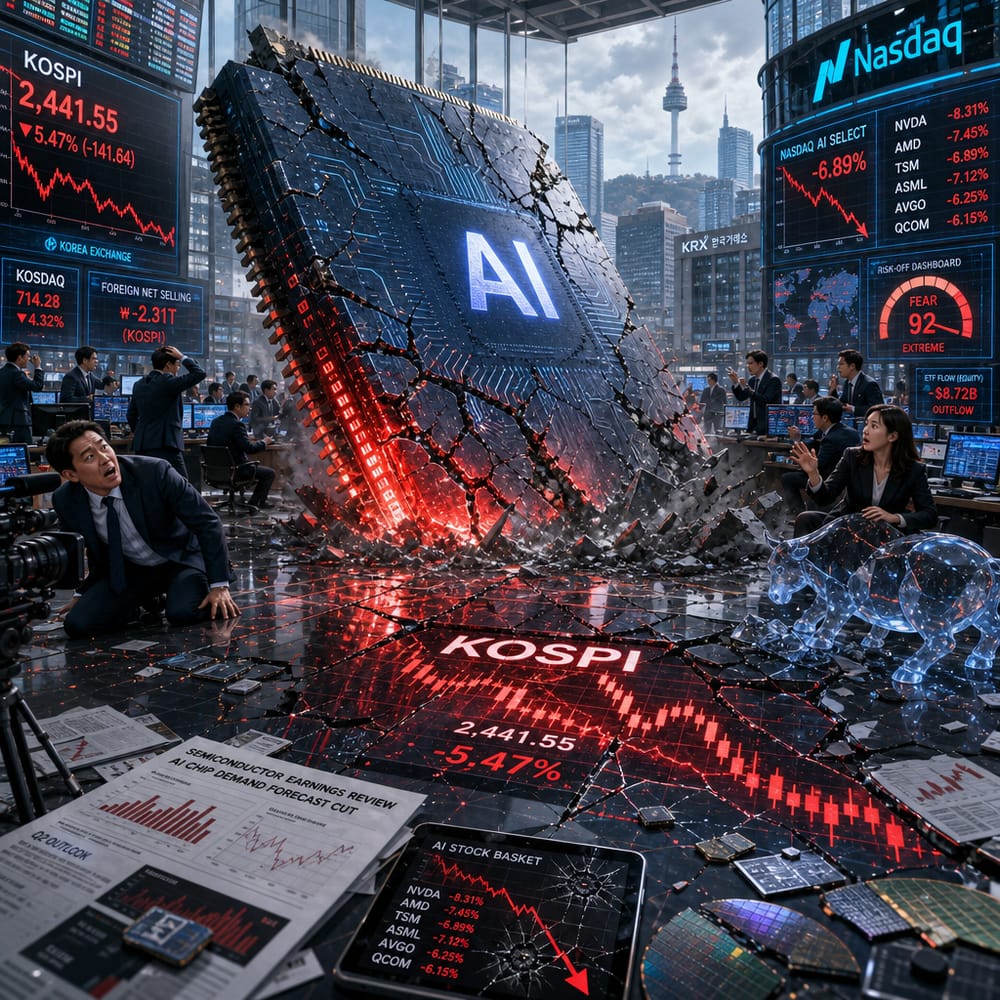
AI stocks are on a seesaw, and it feels like everyone’s holding their breath. One day you’re up, and the next, you’re feeling like you’ve accidentally clicked the wrong button on your trading app. What’s causing this dizzying ride? While Wall Street’s brightest minds might be scratching their heads, this time, it’s not just about some obscure financial metric. Let’s look deeper.
First up, the AI stock sell-off has folks talking. One of the big names to take a hit was Meta, falling like a rock, nearly 9% down. On the flip side, Microsoft was the teacher’s pet, jumping 8%. It's a tale of two tech titans and shows that not all AI investment strategies are created equal. Meta’s free cash flow looking like a deflated balloon didn't help, and their less than sunny revenue forecast got investors nervous.
But why the sell-off in AI stocks? The answer’s a mixed bag. Part of it comes down to the earnings report card. If a company underperforms or, heaven forbid, misjudges future growth, investors get skittish. That’s the case here with Meta. Microsoft, meanwhile, is cashing in on its AI investments, showing that their strategy is paying off and keeping Wall Street on their side.
Here's the rub: the AI craze isn’t just about the shiny new toys. It’s about who’s making money from them. Companies investing in AI are like chefs in a bake-off. If you put in the effort and get the recipe right, you win. But stumble, and, well, there's a price to pay.
International markets have their part to play in this drama, too. Over in South Korea, the KOSPI index took a nosedive, echoing the troubles in AI stocks. South Korea may seem a world away, but market sentiment knows no borders. When major economies wobble, the ripples are felt everywhere. It’s like a global game of dominoes. If a piece falls in Seoul, you can bet folks in Silicon Valley are watching.
So what’s the deal with KOSPI’s crash? Global economic issues, trade tensions, and geopolitical rumbles have teamed up to create the perfect storm. It doesn’t take much for investors to get jittery these days. Add to that the U.S. Federal Reserve's recent indecision on interest rates, and you’ve got a recipe for volatility.
For U.S. investors, keeping an eye on international markets is more important than ever. These days, global markets are intertwined like never before. A hiccup across the Pacific can quickly turn into a headache for U.S. markets.
And with tensions simmering in the Middle East and China grumbling over trade bans, it feels like the world’s playing a high-stakes game of Risk. Oil prices are creeping up with every threat, and traders are on edge, wondering how these geopolitical chess moves will affect their portfolios.
But before you hit the panic button, remember: markets are notoriously unpredictable. They swing from despair to euphoria in the blink of an eye. The key is to keep your cool and stick to your strategy. Diversification, as the old adage goes, is your best friend. Spread your bets and don’t keep all your eggs in the AI basket, no matter how tempting it looks.
In the meantime, grab some popcorn. The world of finance is putting on quite a show, blending technology, politics, and economics into a must-watch drama. Whether it’s AI stocks making headlines or international market jitters, there’s never a dull moment. As always, stay informed, stay nimble, and maybe, enjoy a little market madness along the way. Who knew investing could be this thrilling?
This article is for informational purposes only and is not investment advice. Always do your own research or consult a licensed financial professional before making investment decisions.
© Copyright 2024. All Rights Reserved.
© Copyright 2024. All Rights Reserved.