

AI Sector Panic Fuels Volatility Across Major Indices
Wednesday, November 25, 2026
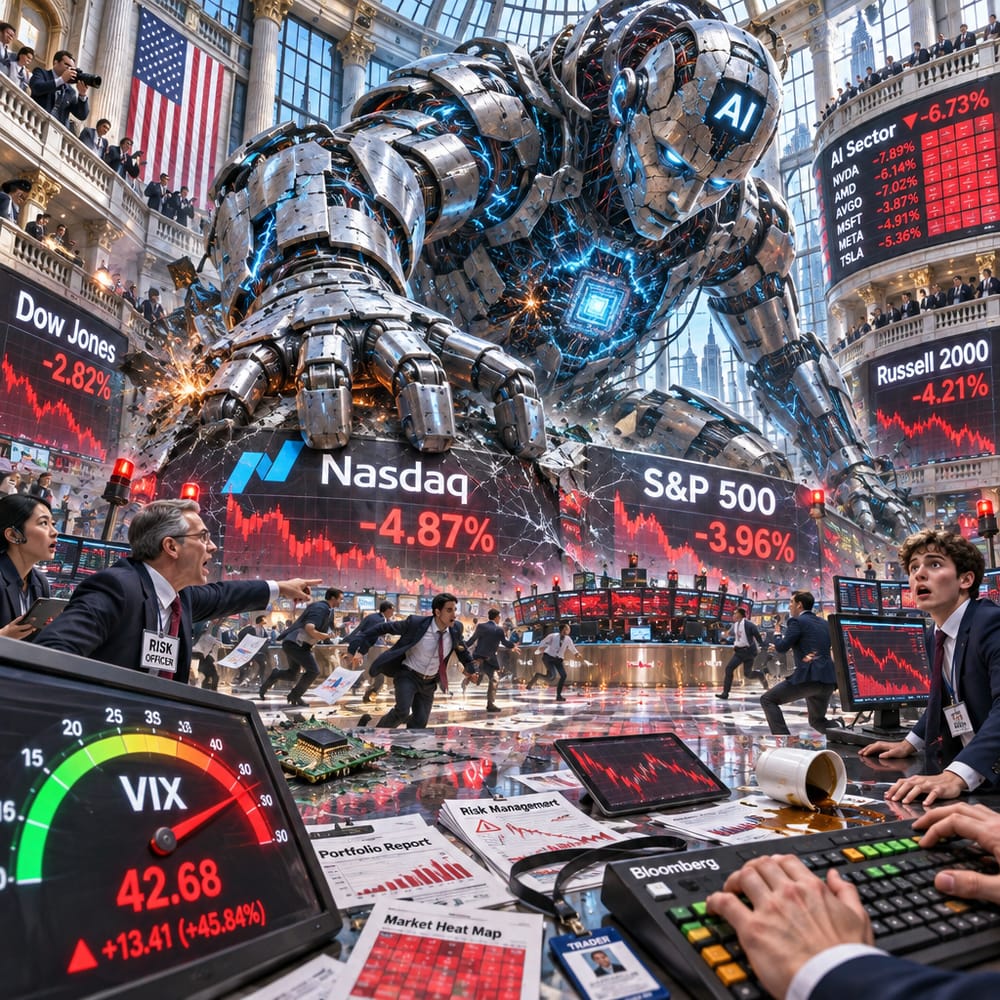
AI SECTOR PANIC FUELS VOLATILITY ACROSS MAJOR INDICES
Wall Street just had a meltdown, and the culprit? Artificial Intelligence, the sector darling that’s been carrying tech stocks on its back. But it seems the AI party might have played its last track, leaving investors to nurse a nasty hangover as major indices like the Nasdaq and S&P 500 took a dive this week. So, what's the deal with AI's influence, and more importantly, what does this mean for your investments?
The Nasdaq, home to the tech titans, dropped like a rock, which might have left you clutching your phone in disbelief as you watched your stock app flash red alerts. Nvidia, the chip kingpin and AI poster child, led the tech tsunami. Investors had pinned their hopes on the return of CEO Jensen Huang to reignite the AI flames, but alas, the fairy dust seems to have lost its sparkle. As Nvidia stumbled with a 5% loss in a single day, the ripple effect spread across its semiconductor siblings like Advanced Micro Devices and Intel, leaving them equally battered.
Yet, as Icarus flew too close to the sun, so did AI stocks. They’ve soared on wings of hype, fueled by a belief that AI is the next big economic revolution. But with every high comes a low, and this week’s tech sell-off is a harsh reminder that reality still has a knack for gate-crashing the party. The question now is whether this is just a temporary speed bump or a signal of a broader market rotation.
Is this AI sector’s influence just a short-lived phenomenon? Well, one thing's certain: AI isn’t going anywhere. It’s embedded in our smartphones, our smart homes, and even in the marketing algorithms that decide which ads pop up on your Instagram feed. But the market is waking up to the fact that not all AI ventures will turn into gold mines. As the euphoria cools, investors are being forced to reckon with the hard numbers and tangible results - or the lack thereof.
So, what's the broader implication for those tech-heavy indices like the Nasdaq or S&P 500, which have been riding AI's coattails this year? It’s a classic case of too much of a good thing. Tech stocks have been the bright stars of the trading floor, bolstered by AI's promise of a smarter future. But, with AI stocks showing signs of fatigue, the tech-heavy indices that once soared on their wings are now feeling the gravitational pull.
As for the S&P 500, it’s typically a more balanced basket, with titans from various sectors making up its ranks. So while tech stocks have halted their victory lap, other sectors are quietly picking up the slack. Materials, energy, and real estate stocks are tiptoeing back into the spotlight, hoping to stabilize the index and cushion the blow.
But how are investors adjusting their strategies amidst this wave of volatility? Some are hedging their bets, diving into safer sectors or considering alternative investment avenues. Others are getting bold, looking to scoop up battered tech stocks at a discount, betting on a bounce-back. And let's not forget the thrill-seekers, swarming around volatility products like moths to a flame, hoping to catch a piece of the action while the market swings like a pendulum.
Yet, beyond the drama of daily charts, there remains the bigger picture. The Volatility Index, or VIX as it’s affectionately called, has been doing its own dance, spiking to dizzying heights before settling down as the dust began to clear. Traders are keen to keep tabs on it, as the VIX offers clues about the market’s mood swings and investors' appetite for risk.
Ultimately, whether this AI-driven volatility is a temporary scare or the beginning of a significant market shift is the million-dollar question on every investor's mind. While tech stocks catch their breath, it's a good time to review your strategy, diversify your portfolio, and perhaps keep a watchful eye on the evolving market landscape. As history has shown, today's panic might just be tomorrow's buying opportunity. So, keep calm, stay informed, and remember: even in the world of AI, there’s no substitute for savvy investing.
This article is for informational purposes only and is not investment advice. Always do your own research or consult a licensed financial professional before making investment decisions.
© Copyright 2024. All Rights Reserved.
© Copyright 2024. All Rights Reserved.