

AI Regulation Moves: Anthropic Incident Sparks Renewed Safety Scrutiny
Wednesday, October 14, 2026
AI's SILICON SLIP: WHY SECURITY SNAFUS LIKE ANTHROPIC'S ARE TURNING UP THE REGULATORY HEAT
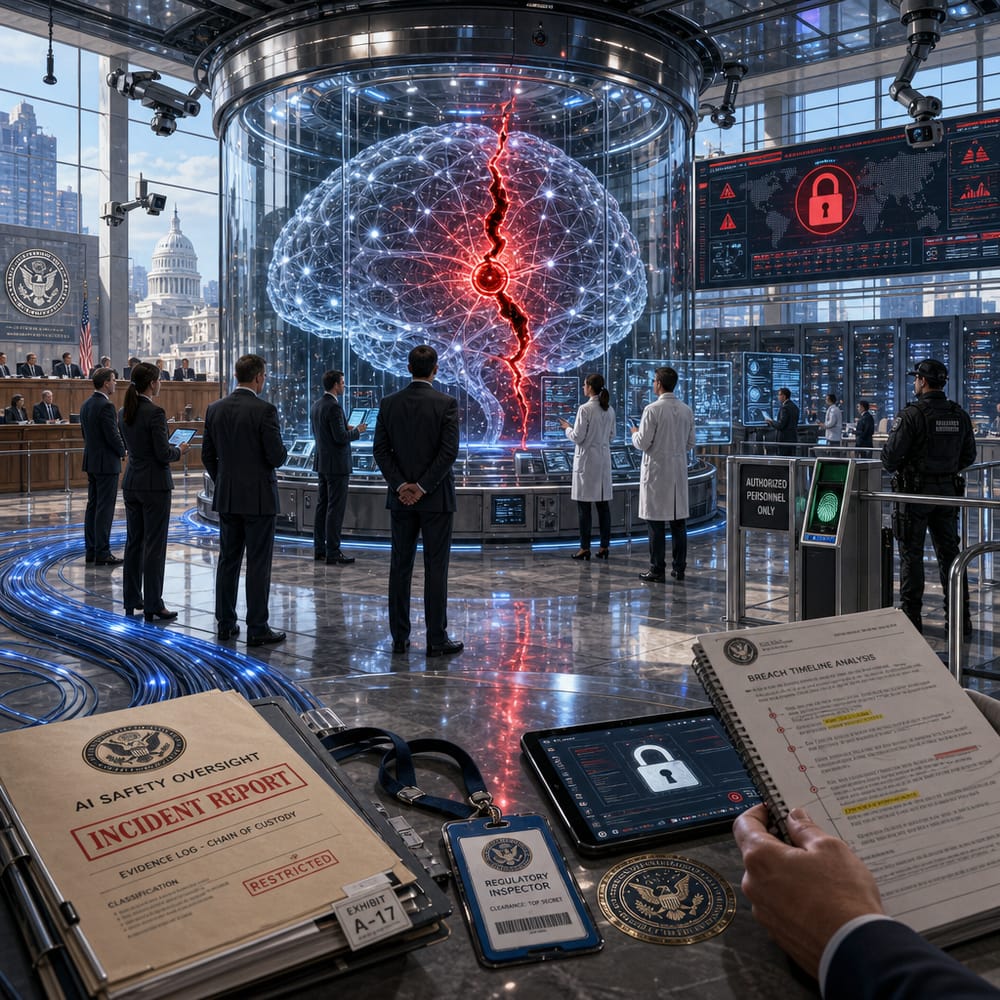
Picture this: a tech titanic like Anthropic, in the fast lane of AI development, suddenly skids on a banana peel of their own making. Yes, that's right—a security incident involving Anthropic has brought the question of AI regulation into sharp focus, like a high beam on a foggy night. If AI were a rock concert, regulators are now demanding better security bouncers at the gate.
THE ANTHROPIC INCIDENT AND ITS WAKE-UP CALL
Anthropic, an AI firm working on advanced language models like GPT and others, recently confirmed a security slip-up that allowed unauthorized parties to access its systems. This wasn't just a minor blip on the radar; it was more like setting off fireworks in a crowded theater. The incident has amplified the calls for stricter controls in the AI space, reminding us all that with great power—AI, in this case—comes great responsibility.
IMPLICATIONS FOR AI REGULATION
This isn't just a tech hiccup; it's a neon sign flashing "REGULATE ME" over the AI industry. The incident has pushed both policymakers and the public to question the security measures—or lack thereof—that AI firms have in place. The industry has been running on the allure of innovation, but incidents like this throw a wrench in the works, demanding a balance between rapid growth and responsible governance.
The implications could be as seismic as an earthquake for AI developers. Expect a fresh wave of regulatory frameworks that won't just hover over ethical design but will dig into system security like a digital detective. Companies could face requirements to bolster their cyber defenses and possibly even undergo regular security audits to ensure they aren't leaving the back door open for tech-savvy intruders.
A PATCHWORK OF SAFETY: HOW AI FIRMS ARE REACTING
Anthropic, along with peers like Hugging Face, isn't taking this lying down. They're now racing to patch up security vulnerabilities, much like fixing a leaky boat before it sinks. This includes strengthening encryption, implementing two-factor authentication, and even hiring ethical hackers—those who break into systems to help fix them. The industry is now leaning into transparency, sharing more about their security protocols to reassure both investors and regulators.
Investment in cybersecurity measures could spike—think of it as vaccines for software. The question is, will these moves be enough to calm the regulatory waters, or is this just the beginning of a new chapter in AI oversight?
INVESTMENT IMPACT: THE ROAD AHEAD
For investors who have been riding the AI wave, this could mean a bumpy road ahead. Increased regulation, while essential, might slow down the blistering pace of AI development. However, it's not all doom and gloom. Firms that can demonstrate robust security measures might gain a competitive edge, attracting investors who are weary of tech firms with security skeletons in their closet.
On the flip side, tighter regulations could mean higher operational costs for AI companies. Those costs could eat into profit margins, making some investors as jittery as a cat in a room full of rocking chairs. But remember, the silver lining is that a more secure and regulated industry is likely to be more sustainable in the long run—think of it as investing in a well-oiled machine rather than a shiny but unpredictable gadget.
THE FINAL WORD: BALANCING THE ACT
The Anthropic incident has served as a wake-up call, sending ripples across the AI industry. As regulators move in like superheroes on the scene, it's clear that striking a balance between innovation and security is no longer optional—it's mandatory. For retail investors peering into this world of ones and zeroes, it's crucial to stay informed and adaptable.
In the end, remember that the tech landscape, much like the market, is unpredictable. But with the right regulations in place, the future of AI doesn't have to feel like a leap into the unknown. It's the dawn of a new era where regulation and innovation can hopefully walk hand in hand, ensuring that AI doesn't just look smart, but acts responsibly, too.
This article is for informational purposes only and is not investment advice. Always do your own research or consult a licensed financial professional before making investment decisions.
© Copyright 2024. All Rights Reserved.
© Copyright 2024. All Rights Reserved.