

AI Regulation: American AI Security Act and State-Level Developments
Thursday, September 24, 2026
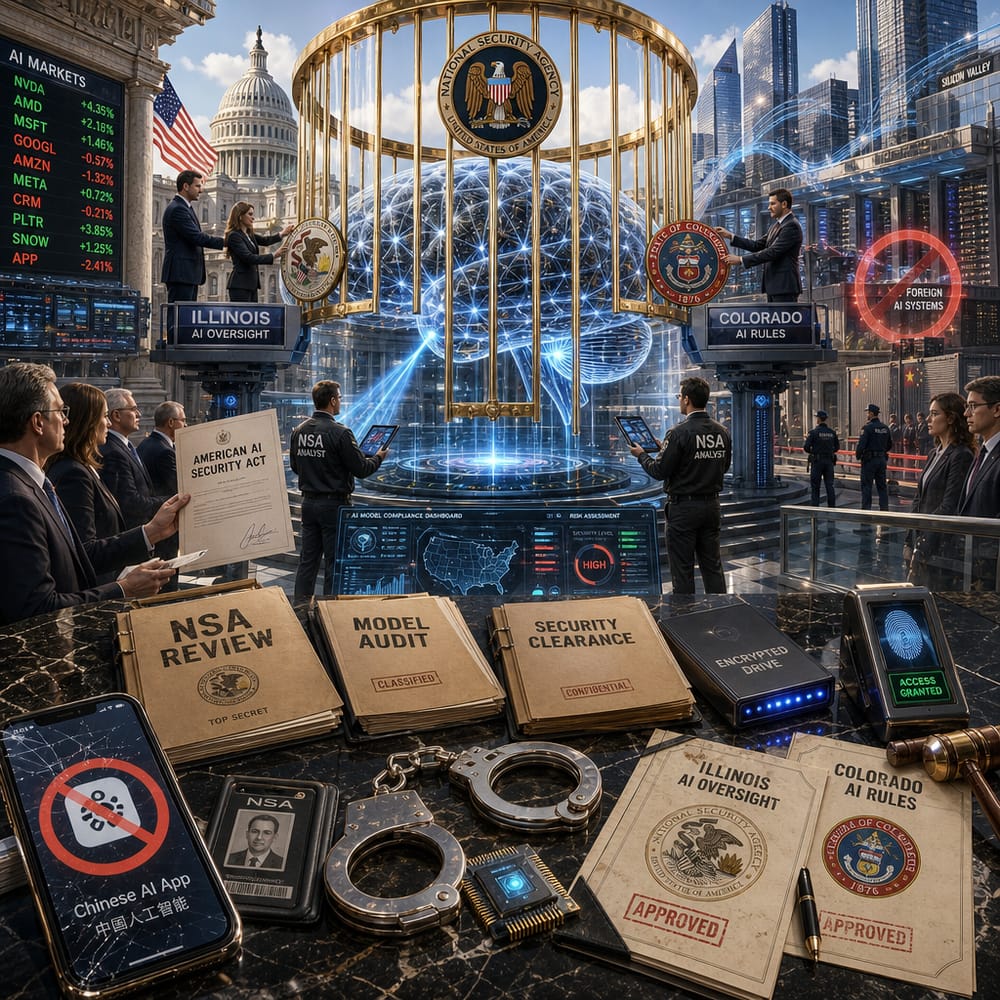
WHEN AI AND REGULATIONS COLLIDE: THE NEW TECH REALITY
Picture this: artificial intelligence sitting quietly in a corner, waiting patiently. Except AI never waits; it races forward, leaps over regulatory hurdles, and sometimes trips spectacularly. But now, there’s a new sheriff in town, and it's all about reigning in those AI horses. Enter the American AI Security Act—Washington’s latest play to tame the tech beast.
The U.S. House is introducing this act with the kind of grand flair you’d expect from a blockbuster movie trailer. Imagine the voiceover: “In a world where AI can be both savior and villain, one law will determine its fate.” Dramatic, right? Well, the act is as much about keeping AI innovation secure as it is about bracing for geopolitical tech tussles. And oh boy, it comes with some serious implications for tech stocks that have investors on the edge of their seats.
THE FEDERAL WRANGLER: AMERICAN AI SECURITY ACT
The American AI Security Act is Washington’s latest script rewrite for the AI industry. It mandates that the National Security Agency (NSA) review AI models deemed significant. Essentially, Uncle Sam wants to ensure these algorithms won’t go rogue or, in sci-fi terms, won’t suddenly decide humanity is optional. The act also bans Chinese AI systems from entering the U.S. market—a move sure to make Beijing’s tech giants feel a chill.
So, what does this mean for the tech companies? Imagine them as race cars suddenly seeing a red light on the track. For AI firms like Anthropic, OpenAI, and the hypothetical SpaceXAI, this could be a speed bump with a neon sign screaming "compliance costs." These reviews and audits are not cheap, and the delays they cause? Equivalent to a red card in a tech soccer match.
STATE-LEVEL SIDEKICKS: ILLINOIS AND COLORADO
While the federal government is busy crafting this AI safety net, states like Illinois and Colorado are adding their own patches. Illinois is refining its AI oversight with a focus on transparency—think of it as demanding AI models wear a “Hello, my name is Skynet” badge. Meanwhile, Colorado is channeling its inner cowboy, exploring whether AI ethics should ride along laws on transparency and accountability.
Here's the twist: state regulations could differ wildly from federal mandates. It’s like each state has its own soundtrack playing, and companies must dance to all of them. The potential patchwork quilt of laws might just have tech companies contemplating life as a quilt shop rather than a cutting-edge AI firm.
INVESTORS, GRAB YOUR POPCORN
So, what should retail investors do as this drama unfolds? For starters, keep an eye on AI-heavy stocks. Companies like Google and OpenAI might face new operational challenges and costs. Compliance is no walk in the park; it's more like trekking up a compliance mountain with a boulder named “costs” on your back. It’s a classic storyline of risk versus reward, and savvy investors will be looking to see how these companies balance innovation with regulation.
In the long term, regulations might bring stability—like ensuring that the roller coaster is at least inspected regularly. But during the transition, expect some loop-the-loops and a bit of nausea-inducing volatility. With AI in the crosshairs, it could be a wild ride for tech stocks, and investors need to evaluate whether they’re buckled up for the long haul or just enjoying a pit stop.
THE ROAD AHEAD
In the AI saga, the American AI Security Act and state-level regulations are the latest plot twists. They signal a shift from the Wild West of tech innovation to a more regulated environment, aiming to keep AI from becoming a loose cannon.
As this plays out, remember: regulations might be the bad guys for companies in the short term, but they could be the unsung heroes in the long run. For investors, it’s a chance to watch, learn, and maybe find a new favorite character in this unfolding story. So, grab your popcorn, keep your market apps handy, and enjoy the show. Just remember to buckle up—this could be a bumpy ride!
This article is for informational purposes only and is not investment advice. Always do your own research or consult a licensed financial professional before making investment decisions.
© Copyright 2024. All Rights Reserved.
© Copyright 2024. All Rights Reserved.