

AI Mega-Cap Sensitivity: Wall Street Slides as AI Stocks Dip
Tuesday, August 18, 2026
AI Mega-Cap Sensitivity: Wall Street Slides as AI Stocks Dip
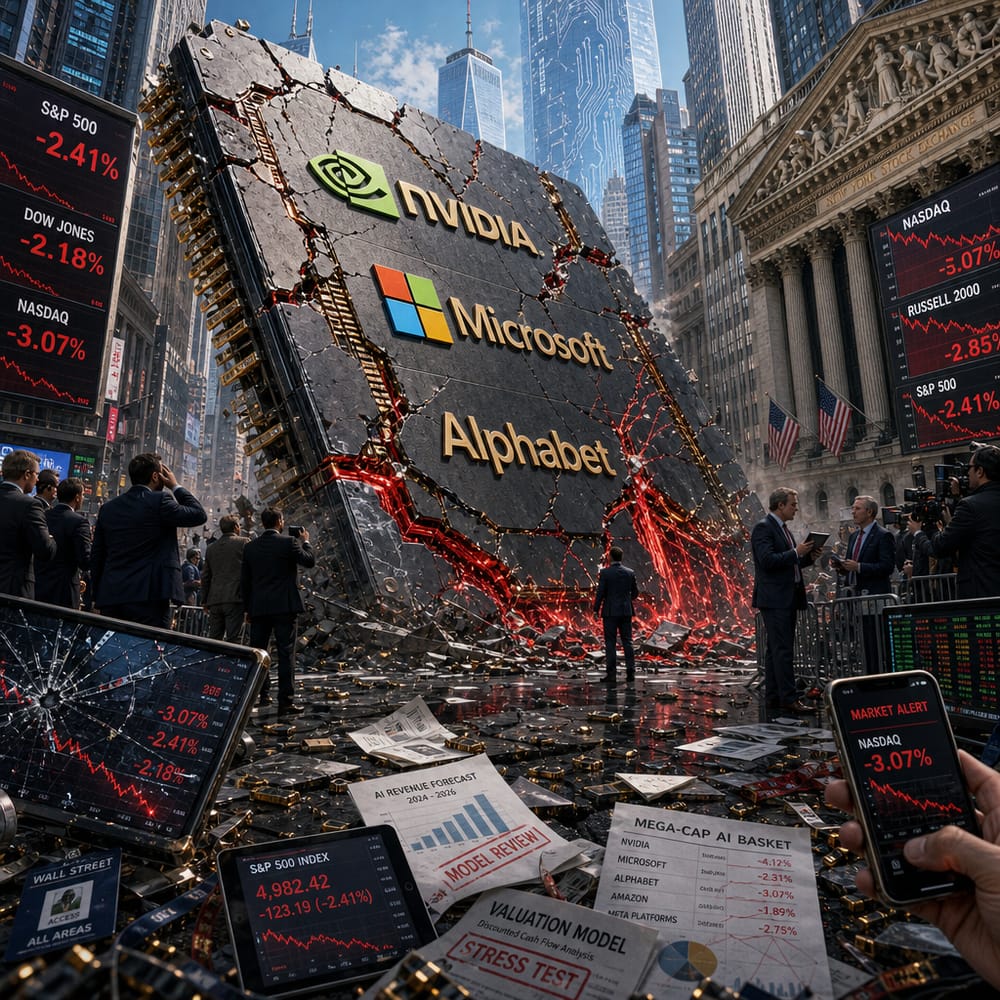
Gather 'round, investors. The stock market is throwing another twist our way—all thanks to artificial intelligence stocks, those flashy tech darlings that everyone loves to love, except when they don't. This time, Nvidia, Microsoft, and Alphabet—the superheroes of AI—found themselves in the red, dragging the broader market indices down with them. A little shake-up in AI heaven has everyone asking: What just happened?
So, why did these AI giants suddenly lose their charm? Let's start with the basics: these companies have been basking in the glow of AI-driven optimism for a while, making their valuations soar like an over-caffeinated hawk. But high valuations mean high expectations—and when those expectations wobble, like they just did, investors get shaky.
Add to that a cocktail of concerns over rising bond yields and inflation, and you've got a recipe for market jitters. The 30-year Treasury yield just hit a 19-year high at 5.33%, and it's not the kind of high that makes investors giddy. This yield spike is the financial equivalent of finding out your favorite band is going on hiatus—it's unsettling and makes you rethink your life choices. Higher yields mean borrowing costs rise, which could throttle economic growth and tech stock valuations, sending investors running for cover.
The market environment isn’t exactly throwing confetti either. As inflation concerns mount, Wall Street is not just staring at a bump in the road but a full-blown traffic jam. The once invincible mega-cap stocks like Nvidia, which were riding an AI wave to dizzying heights, are suddenly looking a bit wobbly. Investors are reassessing whether the AI hype justifies the sky-high prices or if it's time to play it safe.
But what does all this mean for the broader market trends? The dip in AI mega-cap stocks is more than a solitary hiccup. These tech titans often lead the charge, setting the tone for growth in tech sectors. Their stumble could be a bellwether, indicating a shift in investor sentiment from the heady optimism of exponential growth to cautious realism. If AI stocks catch a cold, the rest of the tech sector might just sneeze too.
Comparing today's turbulence to previous AI rallies is like watching a suspenseful movie for the second time—you start noticing the subtle cues. In past tech surges, a similar pattern emerged where sky-high valuations met cold, hard market realities. The excitement around AI is real, but the market is realizing that these companies, impressive as they are, can't defy gravity forever.
This brings us to the sentiment drivers behind the rollback. Sure, the AI revolution is still a game-changer, but when the cost of money—i.e., those dreaded interest rates—creeps up, it cranks the pressure on growth stocks. Investors start looking for safe harbors and less risky bets, favoring dividends over daring leaps into AI dreams.
So, are we witnessing the beginning of the end for AI stocks? Hardly. More likely, we're seeing a natural recalibration. After all, even the most enduring hype needs an occasional reality check. While Nvidia, Microsoft, and Alphabet might be feeling the heat now, their long-term prospects remain robust. They still hold the keys to technological advances that are reshaping everything from how we work to how we live.
For retail investors trying to navigate this market seasaw, the key takeaway is not to panic but to reassess. Understand that market waves are as much part of the game as euphoria. Riding them requires not just holding your nerve but also knowing when to adjust your sails. Stay informed, stay flexible, and maybe most importantly—stay invested in your own financial education.
In a world where the only constant is change, Wall Street's latest AI-induced slide underscores a fundamental truth: markets are dynamic, and while they can be unpredictable, they're always full of opportunity for those willing to look beyond the headlines. So, keep your eyes on the prize, and remember: today's dip could be tomorrow's buy.
This article is for informational purposes only and is not investment advice. Always do your own research or consult a licensed financial professional before making investment decisions.
© Copyright 2024. All Rights Reserved.
© Copyright 2024. All Rights Reserved.