

AI-Linked Selloff: CoreWeave, Oracle, Dell Plunge Following Hot CPI Report
Thursday, October 15, 2026
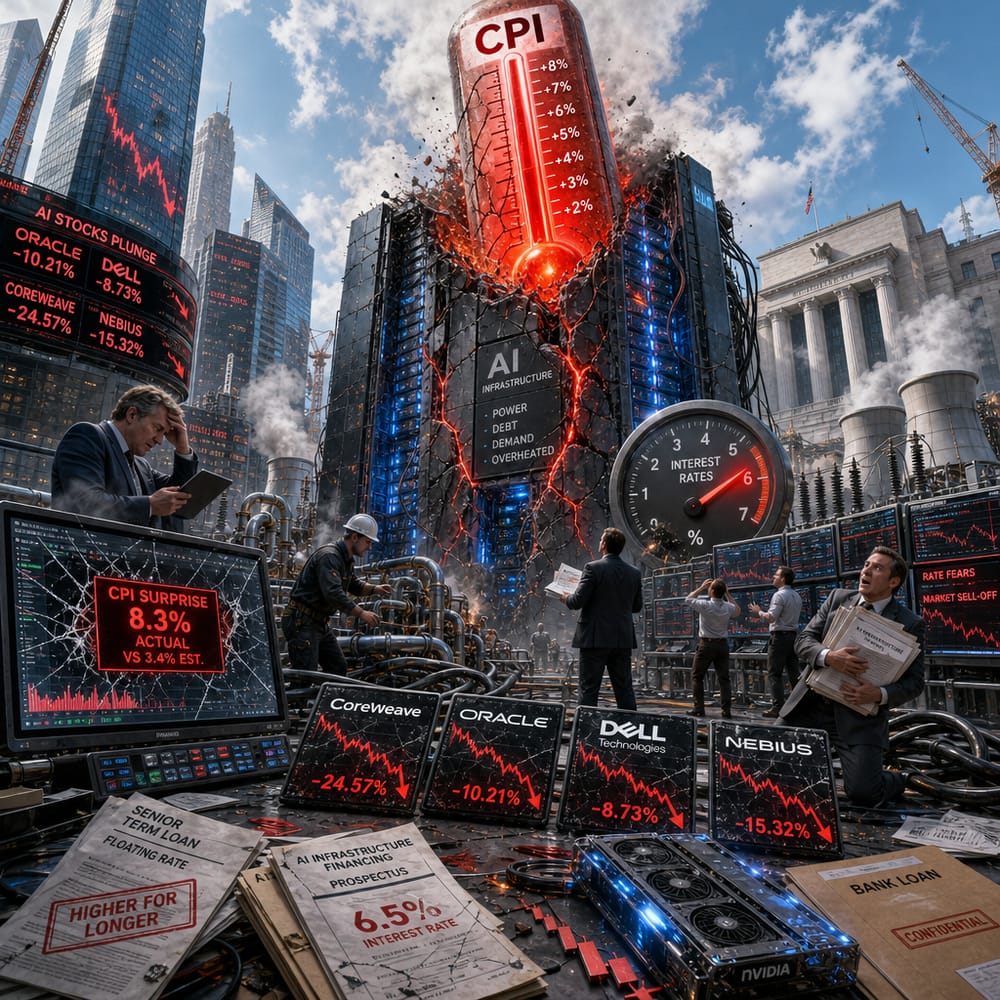
AI'S SHAKY FOOTING: WHY TECH STOCKS ARE REELING FROM INFLATION
If you've looked at your tech-heavy stock portfolio and flinched recently, you're not alone. It's been a rough ride for AI-linked companies as inflation takes the mic, and not in a Taylor Swift kind of way. The latest U.S. inflation numbers came in hotter than a jalapeño, sending shockwaves through the markets and triggering a selloff in the AI sector that's left retail investors reaching for their Tums.
Let’s talk about the stars of this market drama: CoreWeave, Oracle, and Dell. They all took a nosedive after the Consumer Price Index (CPI) report went public like a celebrity breakup on Instagram. CoreWeave, in particular, is feeling the heat, plummeting more than 15% after investors realized that the company's balance sheet might be too debt-heavy for comfort. In plain English: they’re borrowing a boatload to fund their AI ambitions, and in a high-interest-rate world, that’s as appetizing as a soggy sandwich.
SO, WHAT'S THE BIG DEAL WITH AI AND INTEREST RATES?
Imagine you're trying to build a sandcastle while the tide's coming in. That's basically what AI companies are doing when they borrow cash to fund their tech dreams. Rising interest rates are the tide, making it harder and more expensive to finance those futuristic fantasies. CoreWeave isn't alone; other AI darlings like Dell and Oracle are caught in the wave, their valuations taking hits as investors question if these companies are burning through cash faster than they can say “machine learning.”
While AI is the shiny Lamborghini of the tech world, it runs on the fuel of hefty investments. And with interest rates cranking up the cost of gas, investors are understandably nervous about running out of road.
WHAT DOES THIS MEAN FOR YOUR PORTFOLIO?
Investors who have filled their portfolios with tech stocks linked to AI might be feeling like they're on a rollercoaster without a safety bar. The market is assessing whether these companies' growth prospects can justify their sky-high valuations. If AI investments start looking less like the golden ticket and more like a lottery scratch-off, tech stocks could continue to wobble.
And let's not forget the chipmakers. They're the backbone of AI infrastructure, but their stock performance is no picnic either. With big players like Micron and Advanced Micro Devices also slipping, the selloff signals broader concerns about the sustainability of AI investment strategies.
AI'S FUTURE: SHOULD YOU HOLD YOUR BREATH?
Despite the current market jitters, the AI dream isn’t about to pack its bags and leave town. But the journey might require a new map. Companies may need to rely less on debt and more on partnerships, innovations, or—dare I say—profits, to fuel their AI aspirations.
The selloff underscores a fundamental truth: AI, while revolutionary, isn't immune to the laws of economics. Rising interest rates are like gravity, keeping companies grounded—or at least forcing them to rethink how high they can fly.
Tech stocks exposed to AI might be in for more turbulence, but they're not alone. The entire tech sector could face similar challenges as borrowing costs rise and economic pressure mounts. Investors should keep an eye on how these companies manage their balance sheets and adapt to this high-rate environment.
BOTTOM LINE: KEEP YOUR EYES ON THE PRIZE
If you're invested in AI or tech, don’t start panic-selling and stuffing your cash under the mattress just yet. It's a time for patience and strategy, not blind reaction. Watch how companies like CoreWeave, Dell, and Oracle adjust their strategies. Are they finding new ways to fund their growth without over-leveraging? Are they able to deliver on their promises despite a rougher economic terrain?
The selloff might feel like a storm, but remember, every storm runs out of rain. Keep your wits about you, pay attention to the fundamentals, and be ready to adapt your investment approach as the landscape evolves. After all, AI may be having a moment, but it's one piece of a much larger puzzle.
This article is for informational purposes only and is not investment advice. Always do your own research or consult a licensed financial professional before making investment decisions.
© Copyright 2024. All Rights Reserved.
© Copyright 2024. All Rights Reserved.