

AI-Led Market Sell-Off: Broader Sector Implications & Long/Short Ideas
Monday, November 09, 2026
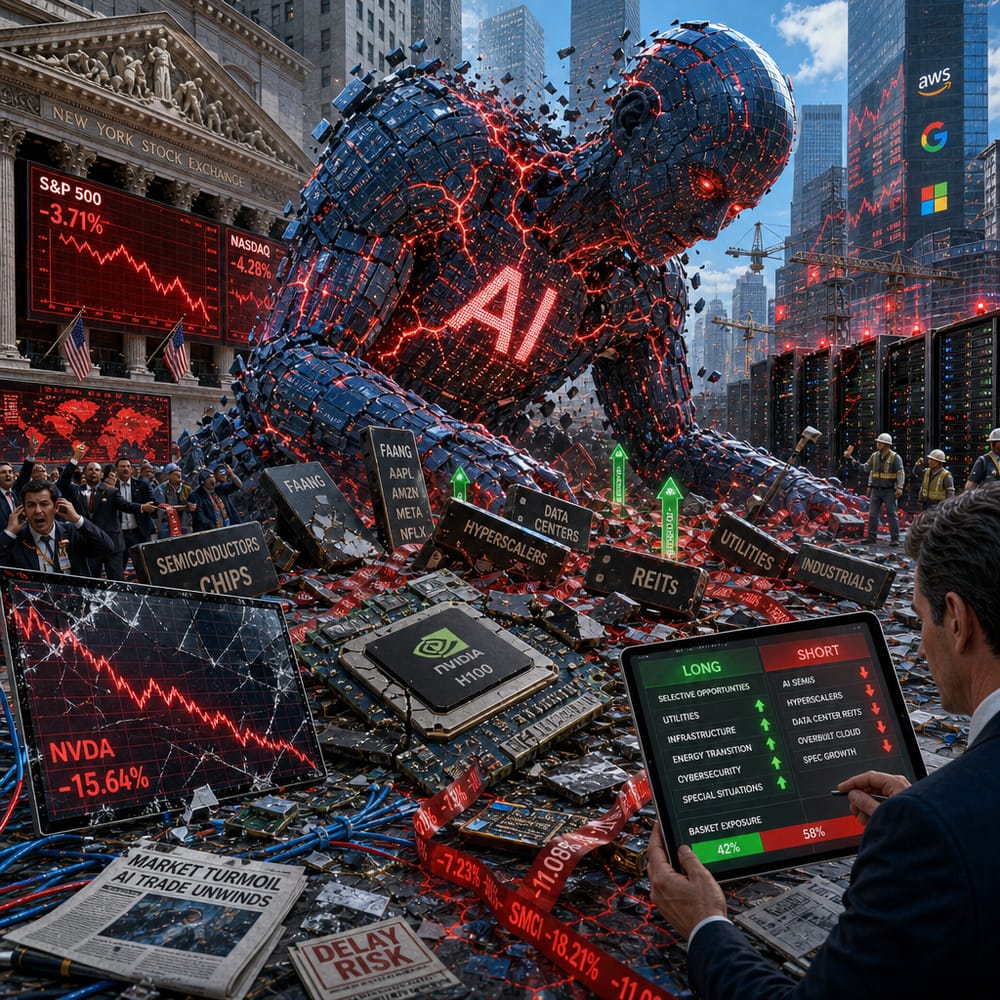
AI’S MARKET MELTDOWN: IS IT TIME TO DUMP YOUR TECH STOCKS OR DOUBLE DOWN?
You’d think that artificial intelligence would be the superhero of the stock market, but recently, our high-tech hero seems to have taken a tumble and lost its cape. Investors are clutching their portfolios with sweaty palms as AI-linked equities nosedive faster than you can say "machine learning." Get ready, because the marketplace’s love affair with AI is hitting a serious rough patch, and it might just open the door to some strategic investing opportunities.
So, what’s behind the curtain of this AI-induced sell-off? The same whisper that sparked Gatsby's parties — fear. Specifically, concerns about the future of AI data-center buildouts have sent investors running for the hills. Imagine this: You’re building a high-tech empire, but someone pulls the plug on your power supply. That's how chipmakers are feeling right now. Delays in infrastructure development mean that the demand for chips may not be as robust as anticipated, and this has put a serious dent in the sector.
But it’s not just about delayed construction or supply chain woes. There’s another boogeyman in the room — the possibility of regulatory changes. A political whirlwind post-midterms has investors on edge, fearing that new policies could slow down the pace of AI expansion. Imagine trying to win a race with one hand tied behind your back; that’s the situation AI companies might find themselves in if new regulatory hurdles crop up.
In this jittery environment, let's talk shop: Which stocks are most vulnerable, and which have the resilience of a rubber band? Chipmakers, like Nvidia, are feeling the heat. As the world's leading chip supplier, Nvidia's got a lot riding on AI's success. Throw in an investigation into its CEO, Jensen Huang, over some cloak-and-dagger espionage concerns, and you've got a recipe for shaky investor confidence. If you're looking to place some bets, you might want to keep an eye on this drama.
Meanwhile, FAANG stocks (that’s Facebook, Amazon, Apple, Netflix, and Google for the uninitiated) are likely to see some turbulence. Remember, these tech titans have ridden the AI wave to stratospheric heights, but any perceived slowdown can send them plummeting back to earth. Google, for instance, had to face the music when Bloom Energy's stock tumbled despite massive data center deals. The market sometimes loves to play the tune of "what have you done for me lately?"
But it’s not all doom and gloom. Some sectors are better at playing defense than offense. Data-center REITs, real estate investment trusts that lease space for data centers, could weather the storm better. They might be a perfect hedge against the AI rollercoaster, providing stable returns even when the broader tech market hiccups.
For retail investors eyeing potential plays, diversification is your new best friend. You’ve heard it before: don’t put all your eggs in the AI basket. Consider spreading your investments across various sectors and asset types. Sprinkle in some bonds and commodities to cushion the blow when one sector hits a rough patch. Remember, while AI makes headlines, sometimes the old-school assets like gold quietly shine in the background.
So, what’s the final word for you, the eagle-eyed investor? Consider this sell-off a market rotation, an opportunity to reevaluate your strategies. If you’ve got a taste for risk, you might eye some undervalued tech stocks poised for a rebound. If you’re leaning a bit conservative, maybe it’s time to look into those resilient sectors like data-center REITs.
Either way, keep your wits about you, stay informed, and don’t let fear of the unknown steer your financial ship. The AI saga is far from over, and whether it’s a blockbuster sequel or a surprise twist, staying nimble and diversified can help you ride through the storm. Just remember, in the world of investing, the only constant is change.
This article is for informational purposes only and is not investment advice. Always do your own research or consult a licensed financial professional before making investment decisions.
© Copyright 2024. All Rights Reserved.
© Copyright 2024. All Rights Reserved.