

AI Investment Boosts GDP Amid Uncertainty
Monday, August 03, 2026
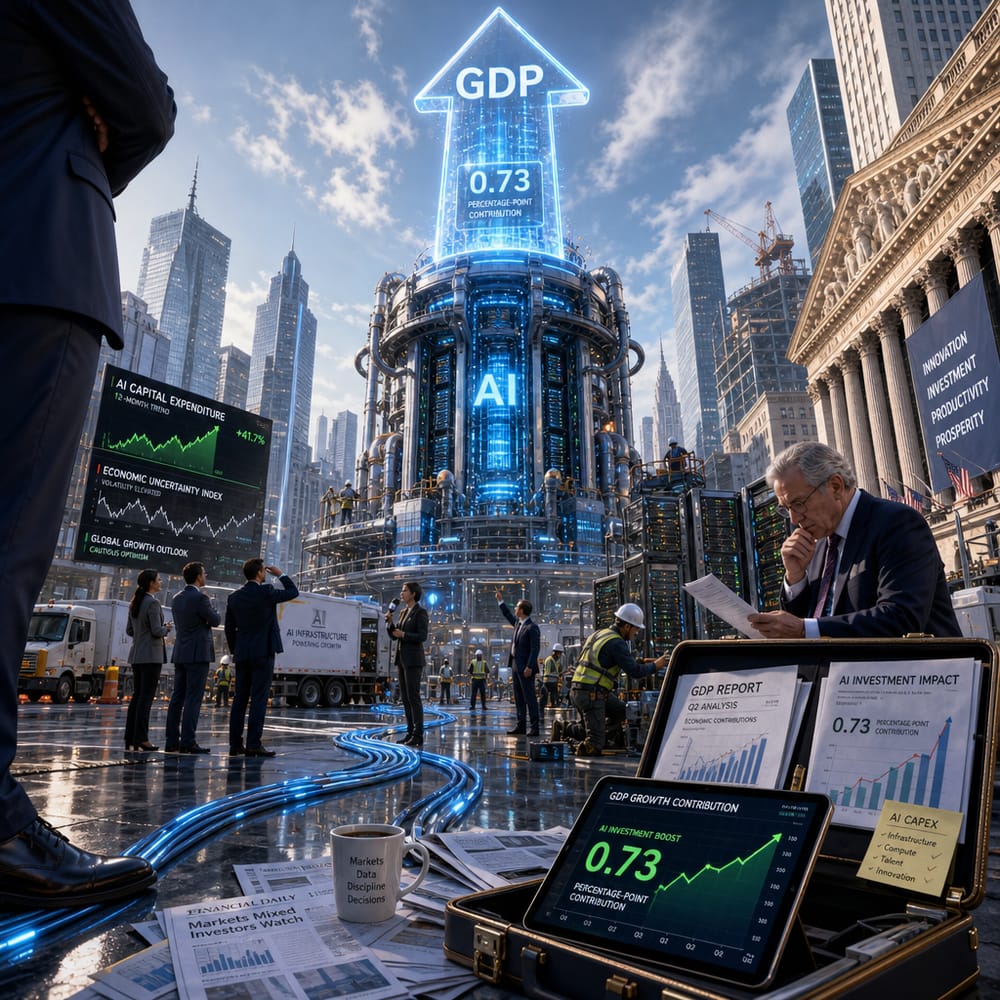
Artificial intelligence is doing more than just taking your job or beating you at chess—it’s giving the U.S. economy a shot in the arm. Welcome to the era of AI-driven GDP growth, where bots might just be the new financial lifeline. AI-related spending is contributing a hearty 0.73 percentage points to GDP growth. That might not sound like much, but when it comes to economic growth, every decimal counts. So, what’s really going on here?
Let’s take a peek under the hood. AI isn't just the shiny, futuristic tech we see in movies; it’s now a significant driver of economic growth. From self-checkout machines at your grocery store to the algorithms deciding what Netflix show you should binge next, AI is everywhere—and it's making a noticeable difference.
In the often fickle world of financial figures, a 0.73 percentage point bump is a big deal. It's like giving GDP a double espresso shot. Amid global uncertainties—like oil market shenanigans and geopolitical diplomatic dances—AI investments are proving to be a stable feather in the economic cap. But before you start imagining Wall-E holding up the economy, let’s consider the layers involved.
HOW SIGNIFICANT IS AI'S CONTRIBUTION TO GDP?
The contribution of AI to GDP growth marks a shift in the makeup of economic drivers. Remember when manufacturing was king? Then came the service sector. Now, we’re entering the AI age, where algorithms might be writing better love stories than Nicholas Sparks. AI is not just boosting productivity but is also creating new markets and opportunities. This isn’t just about robots replacing humans; it’s about creating new efficiencies and markets we never thought possible.
Industries across the board are banking on AI. Healthcare, finance, and even agriculture are adopting AI technologies to enhance operations and cut costs. The tech world is, of course, the front-runner here, as companies like AMD and Sandisk ride the AI wave with soaring earnings momentum. If you’re an investor, these are the stocks you want to keep an eye on.
WHAT ARE THE POTENTIAL LONG-TERM EFFECTS OF AI ON THE ECONOMY?
While AI's immediate contributions to GDP are measurable, predicting long-term effects is a bit like trying to forecast the weather—unpredictable at best. The optimistic view? AI could turbocharge economic growth, improve efficiencies, and lead to innovations we can’t yet imagine. The less rosy view? Potential job displacement and privacy concerns could create societal challenges.
From a long-term perspective, AI could potentially redefine economic structures. Imagine a future where AI manages supply chains, predicts market trends with precision, and automates complex tasks that currently require human intervention. The result? A leaner, meaner economic machine.
But let’s not get too carried away. The road to an AI-driven economy is not without bumps. Issues like data privacy, ethical AI use, and the potential for job displacement are significant hurdles. And while AI might be brilliant at crunching numbers, it’s still far from cracking the enigma of human creativity and intuition.
As policymakers and market strategists weigh AI's role in shaping the future, the focus is not just on embracing technology but also on managing its integration into everyday life. Think of AI as the newest team member who’s just joined the company—exciting, innovative, but a little unpredictable. The challenge is to harness its potential while mitigating risks.
In a nutshell, AI is not just a tech trend; it’s a transformative force with the power to redefine economic growth. From contributing to GDP to revolutionizing industries, AI is here to stay. So, whether you’re a tech enthusiast, an investor, or just someone who enjoys the occasional Netflix binge, it’s time to recognize AI’s growing role in your economic reality.
In the ever-evolving economic landscape, AI is both a catalyst and a conundrum, promising growth and posing questions. The future might be uncertain, but one thing’s for sure: AI’s role in the economy is only just beginning, and it’s going to be one wild ride.
This article is for informational purposes only and is not investment advice. Always do your own research or consult a licensed financial professional before making investment decisions.
© Copyright 2024. All Rights Reserved.
© Copyright 2024. All Rights Reserved.