

AI Infrastructure Rally Sparks Semiconductor Relief—Micron Soars 13%
Monday, November 16, 2026
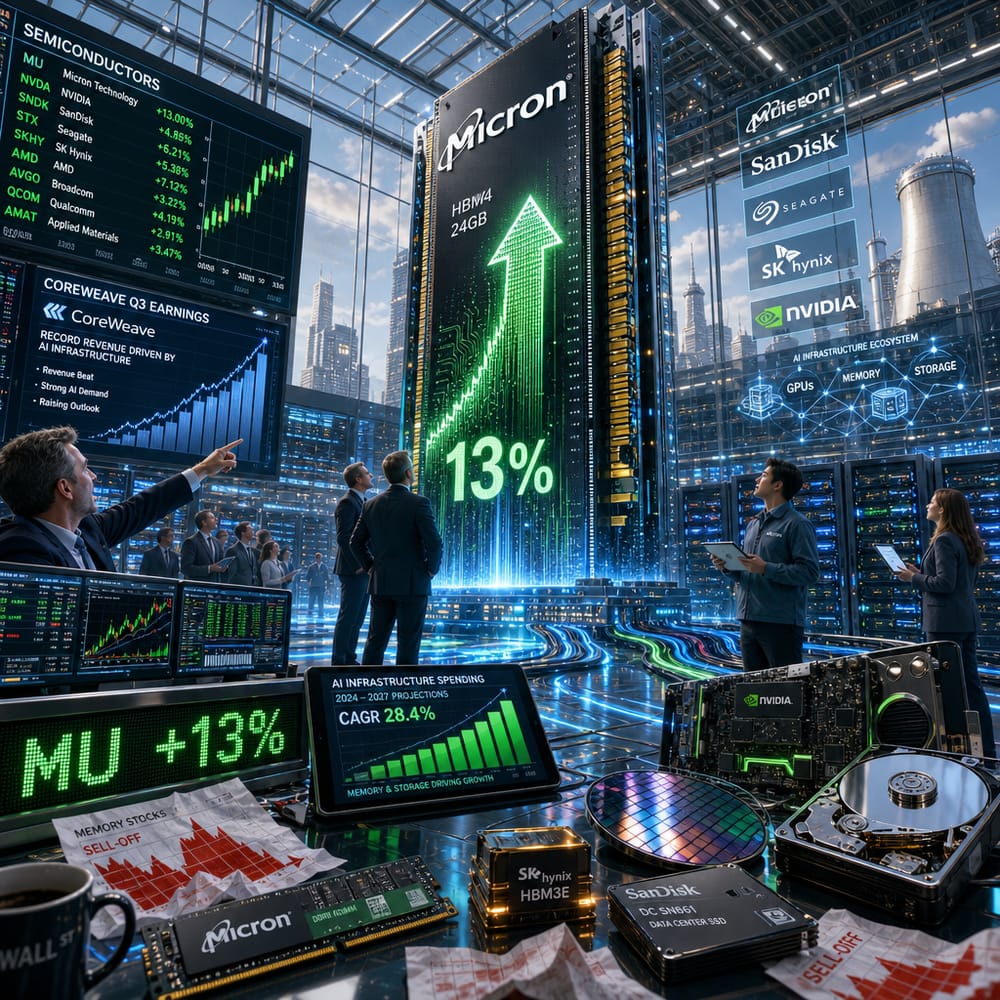
When was the last time you saw a stock jump 13% and thought, "meh"? If you’re a Micron investor, that was your Friday. Buckle up, because Micron's meteoric rise wasn’t just a lucky roll of the dice. No, this was a carefully crafted plot twist in the semiconductor soap opera, fueled by the AI infrastructure boom and a little sprinkle of CoreWeave magic.
So, what’s the deal with CoreWeave and its Q3 earnings that have everybody buzzing? Think of CoreWeave as the muscle behind the brains of AI. They’ve been quietly ramping up the hardware needed for AI operations—like the unsung hero behind the curtain while AI steals the spotlight. Their blowout earnings weren't just good, they were "pass the champagne" spectacular. CoreWeave is riding the AI wave, selling the hardware and cloud services that power everything from chatbot gibberish to your phone's uncanny ability to recognize your face after a rough night out.
Micron, folks, is dancing to a similar tune. With AI's unquenchable thirst for data, all those servers and data centers—think of them as the digital Fort Knox—are demanding more memory and storage than ever. And who’s one of the main suppliers of this sweet, sweet memory? You guessed it, Micron.
The surge in demand for memory and storage is the silver lining in the somewhat turbulent sky of the semiconductor industry. Sure, some corners of this sector have been tossing and turning, maybe even losing sleep over inventory pile-ups or the slowdown in personal electronic sales. But AI, my friends, is the caffeine shot this industry needed. It’s breathing new life into the market, and investors are paying attention, hoping to catch the next big wave.
Micron’s leap is more than just a solitary jump for joy—it's a signal flare for the whole memory and storage crew. Take SanDisk and Seagate, for instance. They’re part of the same ecosystem, and what's good for Micron now might eventually spill over. If you’re holding shares in these companies or considering a buy, you might want to start paying attention to how this AI demand unfolds.
And speaking of attention, let’s not forget Nvidia. They’ve been the poster child for the AI-driven demand surge this year. While we’re on the edge of our seats waiting for their earnings report, Nvidia’s already been living its best life, thanks to its role in powering AI applications. Their GPUs—those are graphics processing units, the brainiacs of computing—are the magic wands making AI systems more efficient.
So, what should you, dear retail investor, do with this information? Well, it’s tempting to go all in, but let’s not get ahead of ourselves. Investing in semiconductors isn’t just about following the glittering AI trail. There’s a broader market context to consider. Japan’s economic hiccups, the Anthropic IPO buzz, and even Intel’s recent stock plunge are all parts of the messy, interconnected web that is the global economy.
Micron's rally is a clear sign that the semiconductor industry’s pulse is tied to AI’s whims. For all the volatility, there’s a steady beat of opportunity for those who can stomach the ups and downs. So, keep an eye on those earnings reports, track the AI trends, and maybe—just maybe—you’ll ride this semiconductor wave to your own financial shore.
Remember, in investing as in life, timing and information are everything. You don’t have to be an AI to figure out that the right move, at the right time, could make a world of difference. As always, do your homework, stay curious, and never shy away from asking the tough questions. The market may be unpredictable, but your strategy doesn’t have to be.
This article is for informational purposes only and is not investment advice. Always do your own research or consult a licensed financial professional before making investment decisions.
© Copyright 2024. All Rights Reserved.
© Copyright 2024. All Rights Reserved.