

AI Infrastructure Funding: Risk Focus on Oracle Amid Methodology Mix-Up
Thursday, October 08, 2026
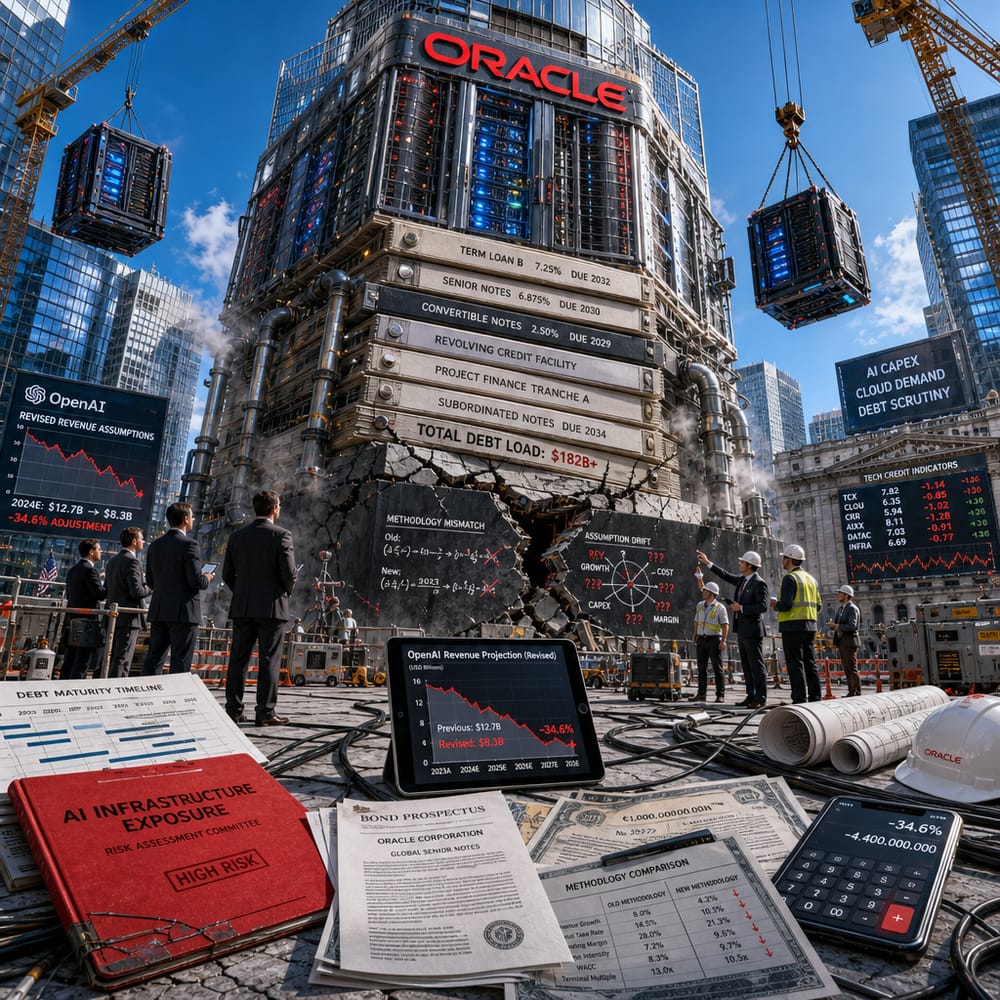
Oracle, the tech giant that usually hides behind an impenetrable fortress of enterprise software, is now on the frontline of a battlefield that could shape the future of AI infrastructure. With its heavy investments in AI capabilities, Oracle has been betting big on the future — but recent developments have cast a pall over its strategy. The latest curveball? A revenue revision from OpenAI, which might just be the wrench in Oracle's well-oiled machine.
OpenAI, the company behind ChatGPT and other AI marvels, recently revealed that its annualized revenue is around $50 billion — a far cry from the previously reported $68 billion. This discrepancy, my friends, has sent shockwaves through the tech sector, impacting other giants like Nvidia and CoreWeave, and causing Oracle's stock to take a nosedive. But what exactly does this mean for Oracle and its ambitious AI infrastructure investments?
First off, let's talk risks. Oracle has been aggressive, pouring substantial resources into AI infrastructure — a move that seemed golden when AI was the crown jewel of tech innovation. But OpenAI's revised revenue figures have thrown some serious shade on the AI hype. If OpenAI, one of the industry's titans, is missing targets, it raises the question: Is demand for AI as robust as companies like Oracle anticipated? And if not, could Oracle’s investments turn into costly white elephants?
Oracle's investment strategy is akin to playing poker with a pile of chips while keeping a poker face. But the weight of its investments could be heavier than it appears. With substantial debt already on its books, Oracle's financial juggling act becomes a circus stunt where a misstep could lead to its financial health teetering dangerously. If revenues in the AI sector don't live up to expectations, Oracle might find itself in a precarious position.
Now, how does Oracle stack up against its peers? Compared to competitors like Microsoft and Amazon, who also have skin in the AI game, Oracle’s strategy appears more focused on infrastructure rather than consumer-facing AI apps. This is a double-edged sword. While infrastructure is crucial, it's also capital-intensive and less forgiving if the market shifts away from AI. Microsoft and Amazon, by contrast, have diversified AI offerings, which could cushion them against any bumps in the road.
Let's circle back to OpenAI's revenue revelation and its ripple effects on Oracle. The revised figures stir uncertainty about the profitability trajectory of AI investments. If OpenAI is struggling to meet lofty revenue projections, it doesn't bode well for Oracle, considering that its AI infrastructure relies heavily on partnerships and revenue from AI-driven ventures. This could spell trouble for Oracle’s bottom line if AI doesn't deliver the gold rush investors were promised.
What's next for Oracle? It needs to reassess its strategy and possibly pivot, much like a basketball player avoiding a block. Oracle has some moves left in its playbook — it’s a tech titan for a reason — but it will need to ensure its AI bets align with a realistic market outlook. Diversifying its investment focus and preparing for a broader range of scenarios could be Oracle’s insurance policy against AI-induced turbulence.
For retail investors keeping an eye on Oracle, the message is clear: buckle up. The company's strategy could impact the broader AI infrastructure sector, potentially influencing market trends and investment flows. Oracle’s next steps could either reinforce its position as a leader in tech infrastructure or expose it to vulnerabilities that could ripple through the market.
In the world of tech investments, the stakes are sky-high, and Oracle’s next move is one to watch. Whether it doubles down on its AI investments or shifts gears to mitigate risks, its decisions will be pivotal. Keep a close eye on Oracle as it navigates these choppy waters, because its journey might just redefine the AI infrastructure landscape.
This article is for informational purposes only and is not investment advice. Always do your own research or consult a licensed financial professional before making investment decisions.
© Copyright 2024. All Rights Reserved.
© Copyright 2024. All Rights Reserved.