

AI Hyperscaler Earnings Spark Unusually Large Stock Swings
Friday, August 21, 2026
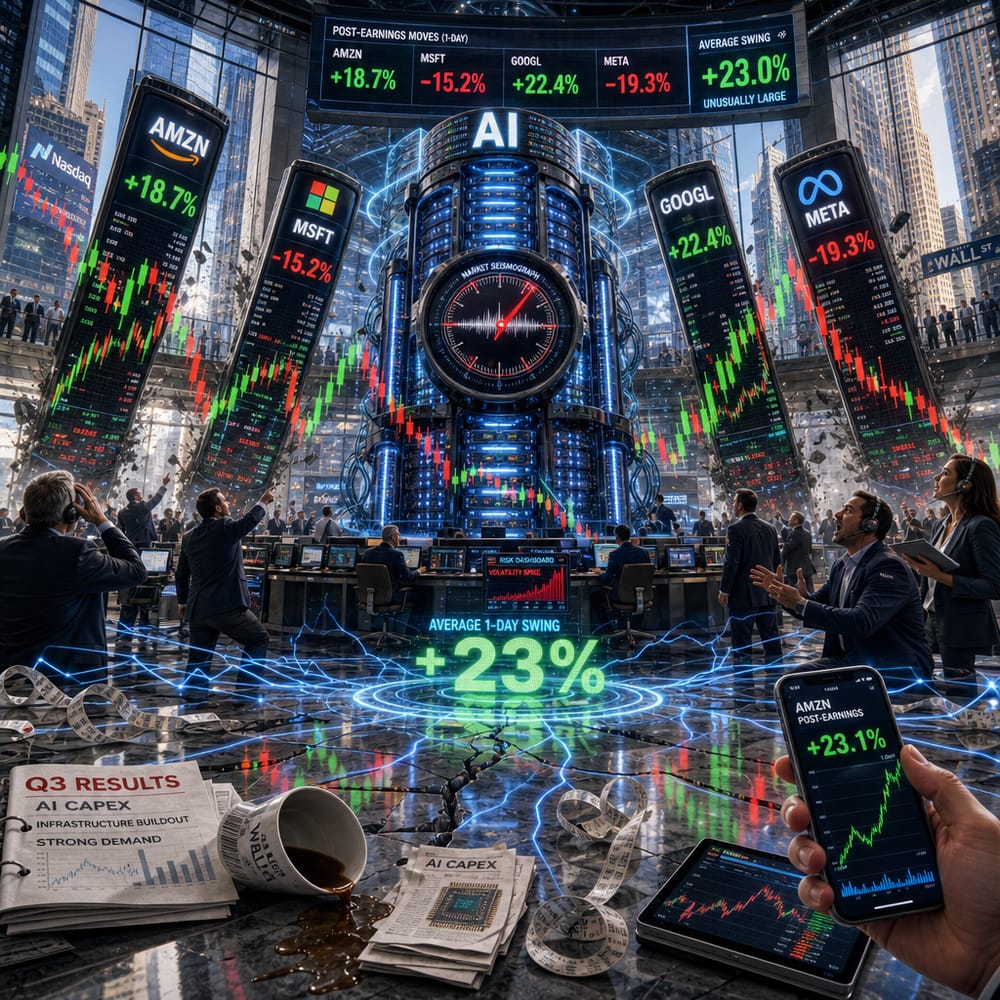
Earnings Season Just Got a Lot More Chaotic: Welcome to the AI Hyperscaler Rollercoaster
Hold onto your hats, folks. The latest earnings season has turned the stock market into something resembling a high-stakes poker game—and the chips are bigger than ever. Amazon, Microsoft, Alphabet, and Meta aren’t just reporting earnings; they’re leading investors on a rollercoaster ride that’s not for the faint of heart. If you've been tracking these AI hyperscaler heavyweights, you already know the week-one swing after their earnings reports has averaged a jaw-dropping 23%. Yes, you read that right. Buckle up, because we're about to unpack why these seismic shifts are happening—and how you might just ride this wave to some tidy profits.
WHY ARE STOCKS SWINGING SO WILDLY?
You might be wondering if the big tech players are doing some kind of synchronized dance routine. The truth? The market is throwing a tantrum, and the AI hyperscalers are giving it plenty of reasons to do so. Let's dive into what's stirring the pot.
First up, inflation fears have set the investment world on edge. With rising Treasury yields breathing down everyone's necks, investors are jittery about future interest rate hikes. This has made mega-cap tech stocks, often seen as the safer bets, a volatile playground.
Then there’s the fact that AI is no longer science fiction; it’s the backbone of innovation for companies like Microsoft and Alphabet. They're not just tech companies; they're the architects of our digital future. That kind of responsibility—and potential payoff—brings wild swings in investor sentiment whenever earnings reports hit the street.
And let’s not forget the FOMO—Fear Of Missing Out. Speculators are on edge, knowing that with every positive earnings beat, they risk missing out on the next big breakout. Just look at what's happened with Bitcoin recently; the story is eerily similar.
HOW TO TURN VOLATILITY INTO OPPORTUNITY
Here’s where things get intriguing. While some investors are biting their nails, savvy traders see opportunity in this volatility. How? By employing strategies that capitalize on these massive swings.
One way to profit from this is by using options trading, which lets you place a side bet on whether a stock will rise or fall. This can be especially lucrative when you can anticipate sharp movements. Also, keep your eyes peeled for out-of-favor small-cap tech stocks, which often get overlooked when the giants make headlines. These little engines could pick up steam, driven by the same tailwinds propelling their larger counterparts.
Consider Amazon, a juggernaut in both retail and cloud computing. Its plunge or spike post-earnings could offer a prime entry point for those willing to embrace calculated risk, especially if you believe in Amazon's long-term potential in AI and logistics.
LOOKING AHEAD: STRATEGIZE OR STEP ASIDE
If you're thinking, "This all sounds way too risky for me," take a moment to consider your financial goals. Volatility is nerve-wracking, sure, but it’s also where fortunes can be made. While it's not a game for everyone, having a diversified portfolio can allow you to weather these swings, potentially using index funds to balance your exposure to high-risk investments.
In essence, this isn’t just a challenge—it's an opportunity. If you can stomach the ups and downs, now might be the perfect time to dip your toes back into tech stocks or even dive into new sectors that are gaining traction amid this sea of change.
Remember: the smartest investors don't react to market noise; they anticipate, strategize, and execute. So, whether you strap in for the AI hyperscaler ride or watch from the sidelines, just know this: volatility is the new norm, and it’s here to stay. If you play your cards right, you might just find that the market's wild ride is more of a golden ticket than a house of horrors. Happy trading!
This article is for informational purposes only and is not investment advice. Always do your own research or consult a licensed financial professional before making investment decisions.
© Copyright 2024. All Rights Reserved.
© Copyright 2024. All Rights Reserved.