

AI Hardware Outperforms Software Giants
Wednesday, August 19, 2026
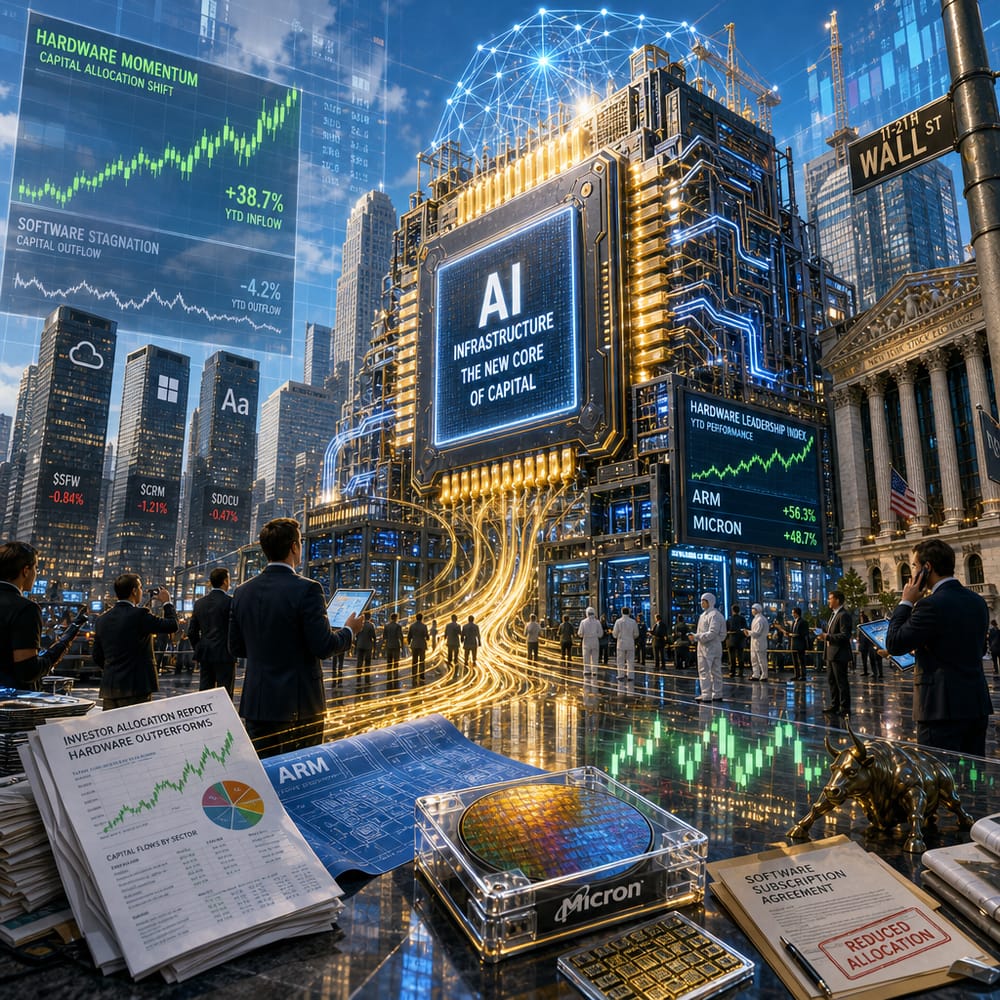
THE HARDWARE REVOLUTION: WHY AI INVESTMENT IS SHIFTING FROM SOFTWARE TO SILICON
Picture this: the AI revolution is chugging along like a high-speed train, and everyone is scrambling to get a seat. But while you might think the buffet car would be the software, it's actually the hardware that's serving the main course. Investors are cozying up to AI hardware companies like ARM and Micron Technology instead of the software giants that once dominated the scene. Now, why is this shift happening, and what does it mean for the future of AI?
For starters, AI hardware is where the magic actually happens. Imagine trying to run the latest AI algorithms on a computer from the Stone Age. Yeah, it's not going to work. ARM, known for designing the chips that power everything from smartphones to supercomputers, has become indispensable. And let's not forget Micron Technology, the unsung hero supplying the memory and storage solutions that today's high-performance AI systems gobble up like kids at a candy buffet.
The buzz around AI hardware has intensified recently, with companies like Marvell Technology striking major deals with tech titans like Google. In one high-profile agreement, Marvell has given Google the option to buy a massive stake in their AI chip operations, highlighting a growing appetite for custom silicon solutions tailored for heavy-duty AI workloads.
The market's shift towards hardware isn't just about cool gadgets, though. It's a response to some very real limitations in the software realm. While software can evolve with updates, it’s the hardware that sets the ceiling for what's possible. As AI models become increasingly complex and demanding, the need for robust, efficient, and powerful hardware solutions is more critical than ever. Investors see the writing on the wall: without cutting-edge hardware, even the most sophisticated software is just a set of pretty algorithms on paper.
So what about the software companies in this whole drama? Are they being left high and dry? Not exactly. While the spotlight might be shifting, software is still a crucial player. But the pressure is on for these companies to innovate and integrate more seamlessly with hardware advancements. The likes of Google, Amazon, and Microsoft are not sitting idly by; they're getting their hands dirty by diving into hardware themselves. Custom chips, developed in-house, are just one way these companies are ensuring they stay in the AI hardware race. Think of it as a tech world arms race, but instead of tanks and fighter jets, it's all about tensor processing units and memory controllers.
Looking ahead, it’s not just about which side – hardware or software – will come out on top. It’s about synergy. The future of AI investment lies in how well these two components can work together. Investors are realizing that true innovation will happen at the intersection, where software optimizes hardware potential, and hardware redefines software capabilities.
One key takeaway for everyday investors is that diversifying your portfolio might mean looking beyond the traditional tech stocks and considering these rising hardware stars. As high-tech companies increasingly value the infrastructure that powers AI over the flashy applications on our screens, the smart money is following suit.
In the coming months, expect more collaboration between tech giants and hardware firms as they attempt to push the boundaries of what AI can do. It’s a partnership not just based on necessity but on potential – the potential to drive innovation, efficiency, and, undoubtedly, profits.
So as you scroll through your investment app, remember this: the software may be the face of AI, but hardware is the backbone. And as we continue riding this AI wave, both are crucial players in the game. But for now, it seems, the spotlight is on silicon.
This article is for informational purposes only and is not investment advice. Always do your own research or consult a licensed financial professional before making investment decisions.
© Copyright 2024. All Rights Reserved.
© Copyright 2024. All Rights Reserved.