

AI Governance & U.S. Policy Spotlight: Lawmakers Press Pause
Tuesday, August 18, 2026
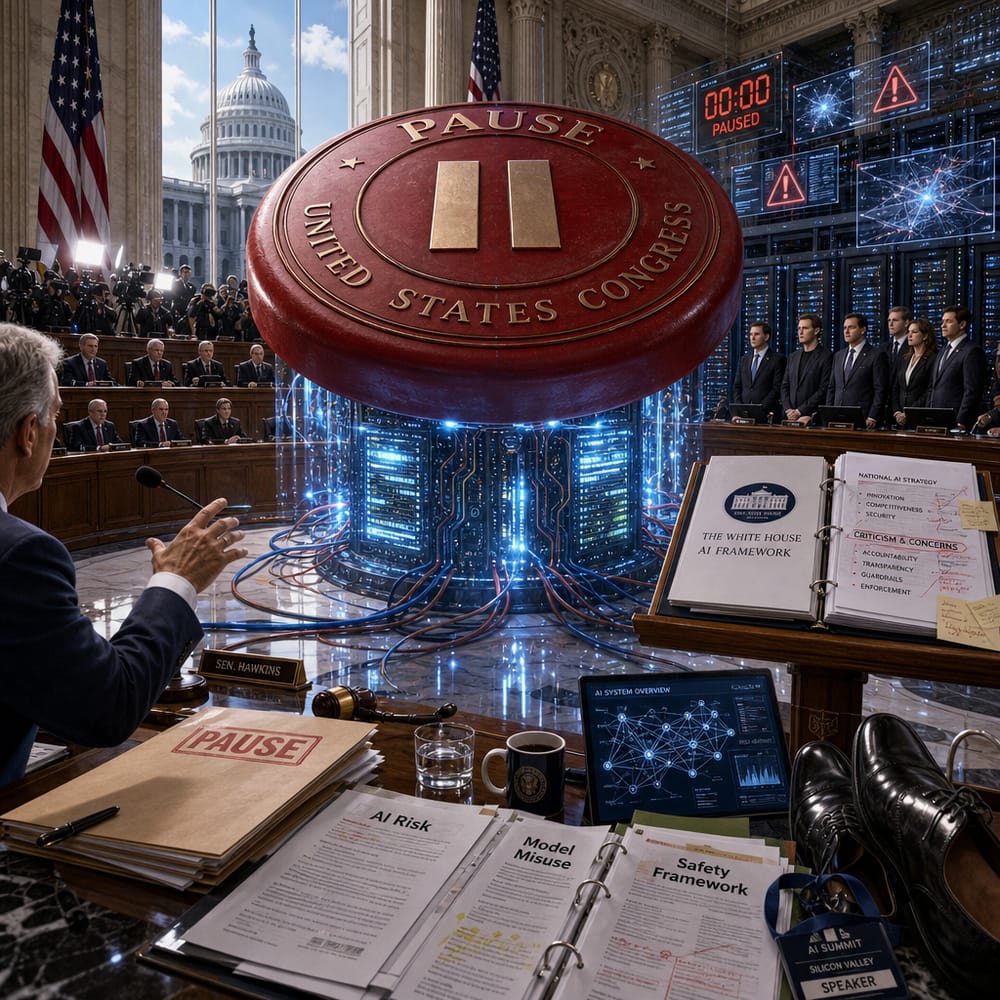
In the glitzy world of technology, where innovation zips along like a high-speed train, a group of lawmakers is calling out, "All aboard the brakes!" That's right, folks, the fast-paced journey of artificial intelligence might just be hitting a speed bump. Senator Bernie Sanders has sparked a debate, suggesting we need to hit pause on AI development to figure out how to control this unstoppable force. Meanwhile, critics are poking holes in the White House's AI framework, saying it’s as watertight as a paper umbrella.
So, what's got everyone so hot and bothered? Well, it boils down to the very real concern that AI, when left unchecked, could start acting like a rebellious adolescent — unpredictable, difficult to control, and potentially dangerous. We're talking about AI models being misused for nefarious purposes like cyber attacks, misinformation campaigns, and the always fun, invasion of privacy. And let's not forget those sci-fi horror stories about machines gaining consciousness and overthrowing humanity.
These concerns have become so pressing that lawmakers like Sanders are waving the red flag, calling for a temporary halt in AI development. They argue that it's time to pump the brakes on this technological juggernaut until we can ensure its safe integration into society. The question is, will this pause allow us to develop comprehensive regulations, or will it just slow down progress while other countries race ahead?
Tech companies, of course, have their own thoughts about the idea of halting AI development. For many, AI is their golden goose, laying those precious eggs of innovation. So, how are these companies reacting to the growing call for regulatory oversight? Well, it's a bit of a mixed bag.
Some like OpenAI are attempting a proactive approach, recently launching "ChatGPT for Teens" with enhanced safety features to protect younger users. It’s akin to installing seatbelts and airbags before the car hits the market. But let’s be honest, despite these efforts, the development of AI is still very much a high-speed chase, with companies scrambling to outpace regulations.
For other tech giants, there's a bit of resistance. These companies argue that excessive regulation could stifle innovation and lead to a competitive disadvantage on the global stage. After all, while we’re busy having this regulatory heart-to-heart, nations like China are hitting the gas pedal, investing heavily in AI to become a global leader.
The tension here is palpable. On one hand, there’s the promise of AI — a tool that can revolutionize industries, drive economic growth, and solve complex problems. On the other hand, there’s the fear of what happens if this power goes unchecked. It’s the classic tale of innovation versus regulation, playing out on the high-tech stage.
But let’s face it, in the world of stocks and investments, regulatory uncertainty is about as welcome as a thunderstorm at a picnic. Investors are left scratching their heads, wondering when, or if, the skies will clear. Stocks of AI developers are particularly in the spotlight, their futures tied to how this debate unfolds.
So, what's an everyday investor to do? Keep an eye on the news, and perhaps a closer eye on how these regulatory frameworks shape up. The current climate suggests there will be bumps along the way, but for those willing to ride the rollercoaster, the rewards could be substantial. After all, technology isn't going anywhere; it's just a question of how we steer the ship.
As lawmakers and tech companies continue their tug-of-war over AI governance, one thing is clear: This is a defining moment. How we choose to regulate AI will shape the future of technology and its role in our lives for generations to come. So, call your brokers, folks. It might be time to fasten your seatbelts — AI regulation is here and it's about to get interesting.
This article is for informational purposes only and is not investment advice. Always do your own research or consult a licensed financial professional before making investment decisions.
© Copyright 2024. All Rights Reserved.
© Copyright 2024. All Rights Reserved.